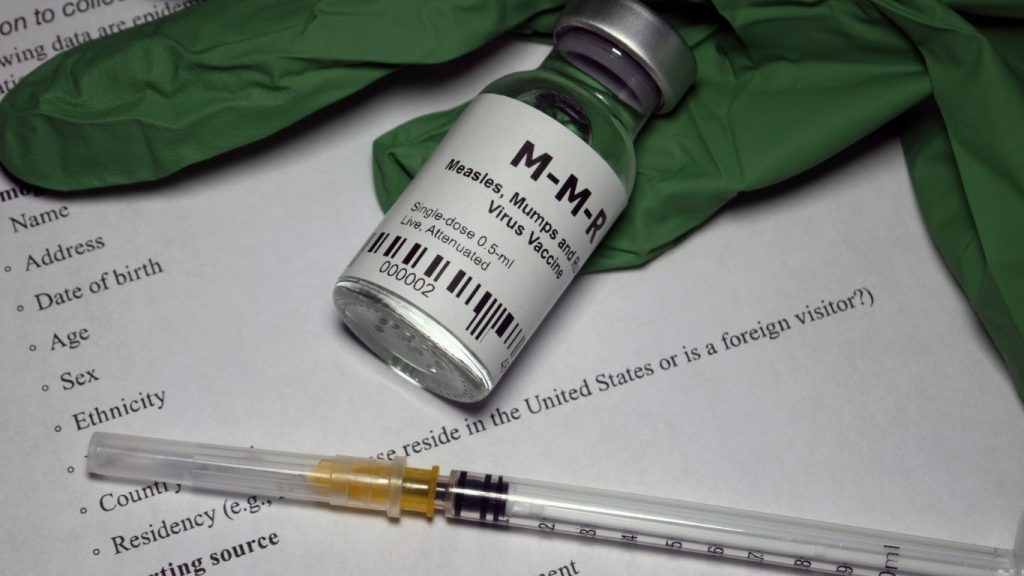










The Centers for Disease Control and Prevention on December 16 adopted a significant change to long-standing hepatitis B vaccination policy, shifting from a universal recommendation to an individual-based decision-making approach for certain newborns—a move that has already sparked pushback from multiple states and public health leaders.
This shift marks a significant change in how hepatitis B prevention is approached for newborns, raising questions about consistency, equity, and long-standing public health protections.
Under the new guidance, parents of infants born to women who test negative for hepatitis B are encouraged to engage in what the CDC calls “shared clinical decision-making” with healthcare providers when deciding whether to administer the hepatitis B vaccine at birth. For infants who do not receive the birth dose, the CDC suggests that the first dose be given no earlier than two months of age. The updated recommendation does not apply to infants born to mothers who test positive for hepatitis B or whose status is unknown; for those newborns, the universal birth dose and hepatitis B immunoglobulin remain unchanged, according to the agency’s announcement.
The CDC said the revised policy reflects recommendations approved by the Advisory Committee on Immunization Practices and formally adopted by Acting CDC Director and Deputy Secretary of Health and Human Services Jim O’Neill. In a statement, O’Neill said the change aims to “restore the balance of informed consent to parents whose newborns face little risk of contracting hepatitis B,” citing ACIP’s review of available scientific evidence.
Hepatitis B is a viral infection that can lead to chronic liver disease, cirrhosis, and liver cancer. The CDC estimates that approximately 2.4 million people in the United States are living with chronic hepatitis B, with disproportionately higher rates among Asian American, Pacific Islander, Black, and immigrant communities. The universal birth dose, recommended since the early 1990s, has been widely credited with reducing transmission and preventing missed diagnoses when maternal infection status is incorrect or incomplete.

While the CDC emphasized that insurance coverage and access to the vaccine will remain unchanged across federal programs such as Medicaid, the Children’s Health Insurance Program, and the Vaccines for Children Program, the policy shift has raised concerns among public health officials about inconsistent implementation and increased risk for vulnerable populations.
Within days of the announcement, several states and regional public health authorities said they would not adopt the new guidance and would continue recommending universal hepatitis B vaccination at birth. Health departments across the Northeast, including New York, New Jersey, Massachusetts, and Pennsylvania, publicly reaffirmed their existing policies, citing decades of evidence supporting the safety and effectiveness of the birth dose. Colorado health officials also announced they would maintain current recommendations, emphasizing that universal vaccination reduces the risk of transmission due to testing errors, delayed prenatal care, or unrecognized household exposure.
In a statement reported by regional media, New York State Department of Health officials said the CDC advisory change would not alter the state’s immunization recommendations, underscoring concerns that moving away from universal vaccination could widen existing health disparities. Oregon and Los Angeles County similarly indicated they would continue recommending the birth dose, reinforcing a growing divide between federal guidance and state-level public health practice.
Medical organizations have also voiced opposition. The American Academy of Pediatrics and the American Medical Association have raised alarms about the potential consequences of delaying vaccination, particularly for infants born into households with undiagnosed hepatitis B exposure or limited access to consistent healthcare. Public health researchers have long noted that maternal screening alone does not capture all transmission risks, including exposure from caregivers or family members with undiagnosed infection.

Health equity advocates warn that the new guidance could disproportionately affect communities already facing barriers to prenatal care, language access, and healthcare continuity. Studies published in journals such as Hepatology and data from the CDC itself show that missed opportunities for early vaccination have historically contributed to higher rates of chronic hepatitis B in communities of color, especially among Black, Asian, Pacific Islander, and immigrant populations.
The CDC said it is still reviewing a secondary ACIP recommendation regarding post-vaccination serology testing to determine whether additional doses are needed later in infancy. In the meantime, the updated child immunization schedule will reflect the shift toward shared clinical decision-making for eligible newborns.
As states chart their own course in response to the federal guidance, the debate highlights a broader tension between parental choice, public health consistency, and the goal of preventing infectious disease at the population level. With hepatitis B continuing to pose serious long-term health risks and disparities in diagnosis and treatment persisting, how the new policy is implemented—and whether states follow or reject it—may shape the next chapter of hepatitis B prevention in the United States.
Stay Informed. Stay Empowered.
Also Read: Hepatitis A and B Vaccination: Closing the Access Gap