











[ad_1]
We’re curating a list of COVID-19 research and other useful content, and updating it regularly.
Since March 2020, TCTMD reporters and editors have been keeping tabs on breaking research and policy news–our COVID-19 Dispatch is now updated three days a week. If you have something to share, tell us. Our in-depth coverage of COVID-19 and the heart can be found on our COVID-19 Hub.
February 14, 2022
On Friday, the US Food and Drug Administration (FDA) authorized an additional monoclonal antibody therapy for the treatment of COVID-19. Bebtelovimab (Eli Lilly), which is said to maintain activity against the Omicron variant, is indicated for mild-to-moderate disease in patients 12 and older who have a positive COVID-19 test, are at high risk for progression to severe disease, and for whom other options are not accessible or clinically appropriate. STAT has more.
 The FDA also postponed an advisory committee meeting to discuss authorization of the vaccine from Pfizer/BioNTech to children ages 6 months to 4 years after the companies informed the agency that new data have emerged. “Based on the agency’s preliminary assessment, and to allow more time to evaluate additional data, we believe additional information regarding the ongoing evaluation of a third dose should be considered as part of our decision-making for potential authorization,” FDA officials said in a statement. According to STAT, “both the FDA and the companies suggested the application for authorization won’t proceed until there are data showing how well the vaccine works after a third dose. Those data should be available in early April, the companies said.”
Even with a booster dose of mRNA vaccine, protection against COVID-19-associated emergency department and urgent care encounters and hospitalizations waned over time during the periods of Delta and Omicron predominance, but remained relatively strong by the fourth month, according to a study in Morbidity and Mortality Weekly Report. “The finding that protection conferred by mRNA vaccines waned in the months after receipt of a third vaccine dose reinforces the importance of further consideration of additional doses to sustain or improve protection against” these outcomes, the authors say. Additional data in MMWR showed that adverse reactions were less frequent after a homologous mRNA vaccine booster dose than after the second dose of the primary series; myocarditis was rare after a booster dose.
The US Centers for Disease Control and Prevention (CDC) updated its guidance on vaccination for moderately or severely immunocompromised people on Friday, shortening the recommended interval between completion of the primary mRNA vaccination series and a booster dose from at least 5 to at least 3 months. In addition, those who initially received the single-shot Janssen vaccine from Johnson & Johnson should receive an additional dose using one of the mRNA vaccines and then a booster dose (preferably with an mRNA vaccine) in order to be considered up to date.
For people who complete a primary vaccination series with either the Pfizer/BioNTech or Moderna vaccine, the protection derived from a third booster dose may be greater when the other type of shot—rather than the same one—is used, a study out of Singapore suggests. “Heterologous boosting was associated with lower SARS-CoV-2 incidence rates than homologous boosting,” researchers report in JAMA.
 Patient safety has taken a hit during the pandemic, US government researchers highlight in a New England Journal of Medicine perspective. That includes increases in central line-associated bloodstream infections, catheter-associated urinary tract infections, ventilator-associated events, and MRSA bacteremia, as well as jumps in rates of pressure ulcers and falls causing major injury in skilled nursing facilities. “The healthcare sector owes it to both patients and its own workforce to respond now to the pandemic-induced falloff in safety by redesigning our current processes and developing new approaches that will permit the delivery of safe and equitable care across the healthcare continuum during both normal and extraordinary times,” the authors write. “We cannot afford to wait until the pandemic ends.”
When clinical trials went virtual during the COVID-19 pandemic, it may have increased the diversity of the patients enrolled, a study in JAMA Network Open suggests. Two trials conducted remotely with online recruitment in the early days of the pandemic saw increases in racial, ethnic, and geographic diversity among participants compared with a third clinic-based trial conducted around the same time. “These findings suggest that remote clinical trials with online advertising may be considered as a strategy to improve diversity among clinical trial participants,” the researchers conclude.
A Turkish man has tested positive for SARS-CoV-2 on 78 straight tests, leaving him isolated from his family for 14 months, Reuters reports. The 56-year-old man, who has leukemia, “has Turkey’s longest recorded continuous COVID-19 infection, doctors say, possibly due to a weakened immune system from the cancer. Despite being in and out of hospital since November 2020, his spirits have been high.”
February 11, 2022
As TCTMD’s Caitlin Cox reports, evidence now suggests that COVID-19 infection should be considered a CV risk factor. Data from the US Department of Veterans Affairs healthcare system show that even those who experience a mild infection and have no known CV risk factors are at increased risk for cerebrovascular disorders, dysrhythmias, inflammation of the heart or pericardium, ischemic heart disease, other CV disorders, and thromboembolic disorders through 1 year.
In a similar vein, a BMJ study of Americans aged 65 and older infected with COVID-19 in 2020 finds that nearly one-third developed at least one new serious health issue in the ensuing months, ranging from respiratory failure and hypertension to memory difficulties and mental health diagnoses. The risk for new health problems was 11% higher that of an age-matched group who never had COVID-19.
 A population-based study in JAMA Pediatrics provides reassurance that getting vaccinated against COVID-19 during a pregnancy does not have a detrimental effect on offspring. Women in the study who received the Pfizer/BioNTech vaccine were no more likely than unvaccinated pregnant women to experience preterm birth or to have higher rates of all-cause neonatal hospitalizations, postneonatal hospitalizations, congenital anomalies, or infant death.
Areas with higher concentrations of primary care physicians (PCPs) have better COVID-19 vaccination rates than areas with fewer PCPs. Reporting in JAMA Network Open, researchers say the findings support expanding COVID-19 vaccine distribution to PCPs who they say “play a critical role in ensuring vaccine acceptance, especially in resource-limited and vaccine-hesitant regions, potentially through counseling and building local community trust and partnerships . . .”
 In an attempt to find out what the government is paying for the four “free” rapid COVID test kits promised to every American household, Kaiser Health News reached out to the companies awarded the contracts, the Army Contracting Command, and the Department of Defense. They found email addresses years out of date, wrong phone numbers, and voicemail problems, but no answers. Government contracts worth $10,000 or more are required to be posted to SAM.gov or FPDS.gov, but the information is not there.
Amid falling COVID-19 cases and several states announcing their intentions to do away with mask mandates, the CDC’s latest update from its COVID data tracker shows the 7-day average of daily new cases at 215,418, which is 42.8% lower than last week.
 Regardless of how many exposures they have, some people just never get COVID-19 and scientists want to know why. Reporting for AXIOS, Eileen Drage O’Reilly, spoke with scientists who say the “never COVID” population could point toward new vaccine targets or other protections. Working theories—other than luck—include cross immunity, genetics, and mucosal immunity.
A plan by the World Health Organization (WHO) to help African countries learn to make COVID-19 vaccines appears to be in trouble, according to an investigation by the BMJ. Their reporting uncovered evidence that a firm representing BioNTech claims the WHO’s plan will infringe on company patents and instead proposes shipping full mRNA production lines from Europe to Africa, staffing them with BioNTech workers, and using licensing by the European Medicines Agency (EMA) rather than local regulators.
At the time of his death, comedian Bob Saget was positive for COVID-19 on a PCR test and had an enlarged heart with a 95% blockage on one side, according to information from his autopsy that was released today, CNN and other outlets are reporting. However, the cause of the 65-year-old’s death in January was blunt head trauma, as previously concluded.
L.A. McKeown contributed today’s Dispatch.
February 9, 2022
The number of confirmed COVID-19 cases across the world has topped 400 million, according to the Johns Hopkins Coronavirus Resource Center. As the New York Times notes, that comes just a month after the tally reached 300 million: “The actual number of cases is undoubtedly higher, and probably drastically so. Many at-home rapid test results are never officially reported, and not all infected people get tested because they may lack access, have no symptoms, or choose not to.”
 As the number of COVID-19 cases continues to fall across the US, several states are removing mask mandates for schools and indoor spaces (CIDRAP News). Connecticut, Delaware, New Jersey, and Oregon have all announced plans to drop requirements for face coverings in schools, with California saying that it will end an indoor mask mandate for people who are vaccinated. New York’s indoor mask mandate will end today, too (New York Times). Rochelle Walensky, MD, director of the US Centers for Disease Control and Prevention (CDC), said Tuesday, however, that it’s too soon to change mask guidance (CNN).
A note of caution comes from the Washington Post, which points out that even though Omicron is considered a milder variant, it “has infected so many people that it has driven the number of daily deaths beyond where it was last spring, before vaccines were widely available.” People older than 75 and those who are unvaccinated or “medically vulnerable” are taking the biggest hit. “Even if on a per-case basis fewer people develop severe illness and die, when you apply a small percentage to a very large number, you get a substantial number,” one epidemiologist said.
A paper published this week in Nature Medicine delves into the long-term cardiovascular consequences of COVID-19, showing that after 30 days following infection, there continue to be increased risks of cerebrovascular disorders, dysrhythmias, ischemic and nonischemic heart disease, pericarditis, myocarditis, heart failure, and thromboembolic disease. Heightened risks were seen even among patients who were not hospitalized for the acute infection. “Our results provide evidence that the risk and 1-year burden of cardiovascular disease in survivors of acute COVID-19 are substantial,” the authors say. Stay tuned for full coverage on TCTMD.
Male sex, Black/African American race, obesity, and several pediatric complex chronic condition subcategories are associated with greater disease severity in children and teens infected with SARS-CoV-2, researchers report in JAMA Network Open. In addition, vital signs and various lab test values from the day of admission to the hospital were tied to peak disease severity. These factors “could assist with early identification of children at risk for severe disease due to SARS-CoV-2 infection,” the researchers suggest.
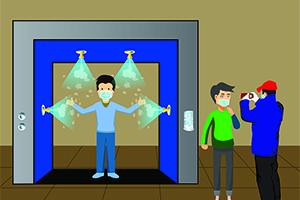 Earlier this week, the US Food and Drug Administration (FDA) announced “a policy discouraging sponsors from developing or seeking approval or authorization for the use of sanitation tunnels, which are tunnels, walkways, chambers, and similar systems, that spray humans with a mist of disinfectant or aerosolized antiseptic with the aim of preventing or treating COVID-19.” The agency cites a lack of data supporting their use and potential adverse effects from the sanitation chemicals.
SARS-CoV-2 infection is associated with an increased risk of maternal mortality/serious morbidity from obstetric complications among pregnant and postpartum patients (adjusted relative risk 1.41; 95% CI 1.23-1.61), according to a study in JAMA. The relationship was driven by COVID-19 of at least moderate severity. CIDRAP News has more.
The first research definition for long COVID in children and young people, created through the consensus of 120 experts, has been released in the Archives of Disease in Childhood. The definition, which aligns with the clinical case definition for adults from the World Health Organization (WHO), is as follows: “Post-COVID-19 condition occurs in young people with a history of confirmed SARS CoV-2 infection, with at least one persisting physical symptom for a minimum duration of 12 weeks after initial testing that cannot be explained by an alternative diagnosis. The symptoms have an impact on everyday functioning, may continue or develop after COVID-19 infection, and may fluctuate or relapse over time.”
February 7, 2022
 COVID-19 case numbers have spiked in many parts of Asia after Lunar New Year celebrations last week, the Associated Press reports. Hong Kong, Singapore, Thailand, Indonesia, Malaysia have all seen a recent rise in infections, whereas other countries—including South Korea and Vietnam—are warning of potential surges. Numbers are fluctuating in China, where officials “have imposed strict local lockdowns and mass testing, as the country kicked off the Beijing Winter Olympics last week.”
The official COVID-19 death tally has topped 900,000 in the United States, with more than 2,600 Americans dying each day, the New York Times reports. “Yet another, simultaneous reality of the pandemic offers reason for hope,” the story notes. “The number of new coronavirus infections is plummeting, falling by more than half since mid-January. Hospitalizations are also declining, a relief to stressed healthcare workers who have been treating desperately ill coronavirus patients for nearly 2 years.”
Removing all restrictions on people’s movements in “COVID-zero” regions like China could cause about 2 million deaths in a year, according to a paper published Friday in the weekly bulletin of the China Center for Disease Control and Prevention (CCDC). “Even with a global vaccination rate of 95%, if population mobility was restored to 2019 levels, the researchers estimated that all COVID-zero regions would see more than 234 million infections within a year, including 64 million symptomatic cases and 2 million deaths,” Reuters reports.
Unvaccinated people can have anti-spike antibodies detected up to 20 months after a positive COVID-19 test result, adding to prior data showing antibodies for up to 6 months, according to a research letter in JAMA. The authors caution, however, that “although evidence of natural immunity in unvaccinated healthy US adults up to 20 months after confirmed COVID-19 infection is encouraging, it is unclear how these antibody levels correlate with protection against future SARS-CoV-2 infections, particularly with emerging variants.”
 Australia announced that it will reopen its borders to vaccinated travelers later this month (Reuters). “The country had taken steps in recent months to relax border controls, like allowing in skilled migrants and quarantine-free travel arrangements—“travel bubbles”—with select countries like New Zealand. But the reopening, which takes effect on February 21, represents the first time since March 2020 that people can travel to Australia from anywhere in the world as long as they are vaccinated.”
On Friday, the Advisory Committee on Immunization Practices (ACIP) recommended use of the Moderna COVID-19 vaccine (Spikevax) in all people 18 and older after the US Food and Drug Administration (FDA) granted it full approval earlier in the week (CIDRAP News). Americans now have access to two fully approved vaccines (the shot from Pfizer/BioNTech is the other).
In patients on hemodialysis, the Moderna vaccine produces a stronger antibody response than does the Pfizer/BioNTech shot, a study in CMAJ shows. Several weeks after two-dose vaccination, the proportion of patients who achieved convalescent levels of anti-spike antibody was 95% with the former vaccine and 73% with the latter.
An Omicron-specific booster may not provide more protection against the virus than additional doses of the existing Moderna vaccine, suggests a primate study performed by US government researchers. “Study of blood from the animals showed that many of the measurable immune responses—rises in neutralizing antibody levels, for instance—were not substantially different, regardless of which booster shot they were given, STAT reports.
 The exhaustion of making decisions during the pandemic around things like travel, masking, and testing has a name, according to KHN: decision fatigue. “Faced with a stream of difficult choices about health and safety during a global pandemic, [psychologist Barry] Schwartz suggests, we may experience a unique kind of burnout that could deeply affect our brains and our mental health.”
February 4, 2022
 The second Olympic Games under COVID-19’s shadow have kicked off in Beijing. ABC News takes a comprehensive look at the stringent measures in place to keep athletes safe and spectators at home.
In what will be the most sweeping vaccine mandate in Europe, Austria is moving ahead with plans for compulsory vaccination of everyone 14 years and older, effective this Sunday. “Roughly 69% of Austria’s population is fully vaccinated against COVID-19, one of the lowest rates in western Europe, which the conservative-led government says justifies the measure and its fines of up to 3,600 euros ($4,109) for breaches,” Reuters reports. Austria’s upper house of parliament passed the legislation yesterday “by a large margin.”
More than 3.6 million Americans missed work in January due to COVID-19, setting a new record, Reuters reports, with the dates coinciding with Omicron’s peak. Labor Department data released today show that figure has more than doubled since December—the rate is the highest ever recorded since data on workplace absences started to be collected back in 1976.
Different countries have staved off or succumbed to the COVID-19 pandemic in starkly different ways. An analysis in the Lancet this week examines the factors behind the variations in cumulative infections as well as infection-to-fatality ratios. Median age and gross domestic product tended to explain some of the variation between countries, but other aspects played a role. National mean BMI, for example, tended to impact mortality, whereas things like trust in the government and interpersonal trust, as well as less government corruption, had larger, statistically significant associations with lower infection rates. Much of the variation, however, could not be fully explained in modeling.
“Omicron’s rapid spread throughout South Africa has resulted in fewer hospitalizations and deaths per documented case than were seen during previous COVID-19 waves, an observation that some members of a weary public are understandably eager to ascribe to an intrinsic tendency of this variant to cause less-severe illness,” write Roby P. Bhattacharyya, MD, PhD, and William P. Hanage, PhD, in the New England Journal of Medicine. But as their perspective sets out, “caution is warranted” in assuming that successive generations of COVID-19 will lead to less-severe disease.
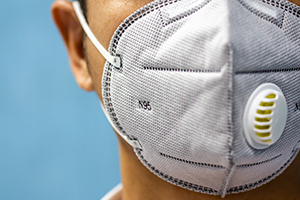 Masks work. That’s the take-away from the latest analysis to dig into this. PhD candidate Kristin L. Andrejko and colleagues conducted a test-negative design case-control study that enrolled randomly selected residents of California who underwent SARS-CoV-2 testing between February 18 and December 1, 2021. Compared with no mask use, a cloth mask cut the odds of testing positive by 56%, a surgical mask by 66% and an N95/KN95 by 83%. Full results are published in Morbidity and Mortality Weekly Report.
Several reports in recent months have shown that children are making up a larger proportion of hospitalizations than at any other point in the pandemic. A Nature news story explores whether that’s something unique to the Omicron variant, and what other factors are at play.
Symptoms such as “brain fog,” shortness of breath, fatigue, and muscle weakness, as well as more-serious new-onset neuropsychiatric conditions and type 2 diabetes, have been frequently described in people who’ve recovered from COVID-19, but background rates among people who never tested positive for COVID-19 are unknown. An analysis of 338,024 people under the age of 20 and 1.7 million people 20 years or older confirms that new diagnoses of shortness of breath, heart rate abnormality, and type 2 diabetes were more common among those hospitalized after a positive versus negative test result. Fatigue was more common among those ages 20 or older, while anxiety and depression were more common in the younger subjects. “These estimates highlight the need for healthcare professionals and patients to monitor for development of new symptoms and conditions beyond the first month after SARS-CoV-2 infection, particularly for individuals who required hospitalization for acute COVID-19,” investigators conclude in JAMA.
Monoclonal antibodies (mAb) have been FDA-approved for use in people with mild-to-moderate COVID-19 at risk for progression to severe illness, but the limited quantities have led the agency to prioritize their use in people with risk factors such as age and comorbidities. But as Caroline L. Behr, AB, and colleagues report in JAMA, between November 2020 and August 2021, only 7.2% of eligible, nonhospitalizated Medicare beneficiaries received the agents. Worryingly, “in many cases, patients at the highest risk of severe disease were the least likely to receive mAb therapy. There was also extreme variation geographically.”
 The US Centers for Disease Control and Prevention (CDC) has added wastewater to its arsenal of tools for tracking COVID-19 levels. The tool tracks 15 percent changes in the levels of SARS-CoV-2 RNA measurements in the “sewershed.” A New York Times story explains how and why.
February 2, 2022
Fully 10 billion COVID-19 vaccines have “gone into arms,” making this the largest, swiftest vaccination program in history. Marking this milestone, a news story in Nature notes that while more than 60% of the world’s population has received at least one dose, only 5.5% of the world’s poorest nations have received two doses. “Until we correct this inequity, the world will continue to see new variants,” warns Mosoka Fallah, founder of Refuge Place International, a public-health organization based in Bassa Town, Liberia.
“Death rates are so high in the States — eye-wateringly high,” a global public health expert said. Despite having one of the world’s most powerful arsenals of vaccines, the U.S. has failed to inoculate as much of its population as other wealthy nations. https://t.co/wj5vcBTi9w
— The New York Times (@nytimes) February 2, 2022
Nearly 2 years into the global pandemic, the United States has the highest death rate of any country in the world. “The coronavirus is killing Americans at far higher rates than people in other wealthy nations, a sobering distinction to bear as the country charts a course through the next stages of the pandemic,” the New York Times reports. While other countries had higher per capita death rates earlier in the pandemic—for example, Britain and Belgium—the US has taken over that top spot. It’s also weathered a much steeper rise in deaths due to the Omicron variant than any other nation.
Pfizer and BioNTech have started a “rolling submission” for emergency use authorization of their COVID-19 vaccine in children under the age of 5, the joint venture announced today. “With pediatric COVID-19 cases surpassing 10 million and at the request of the FDA, the companies have submitted available data on the safety and efficacy of two 3-µg doses as part of a three-dose primary series for this age group to address the urgent public health need,” a press release notes. Additional data on a third 3-µg dose in this age group will head to the FDA in the coming months.
US data are shoring up reports from other parts of the globe during Omicron’s surge: full vaccination appears to be protective against severe disease, hospitalization, and death following infection with this strain. The addition of a booster shot, write investigators in Morbidity and Mortality Weekly Report, dropped rates of infection and severe disease, hospitalization, and death even further. “Efforts to promote COVID-19 vaccination and boosters are critical to preventing COVID-19–associated hospitalizations and severe outcomes,” they conclude.
A study of workplace antigen tests in Canada between January 11 and October 13, 2021, published in JAMA, indicates that the number of false-positives generated from among more than 900,000 volunteers was low overall, representing just 0.05% of workers screened. But false-positives also made up 46% of the positive tests confirmed on PCR testing. Those false-positives appeared to be clustered temporally and geographically, and subsequently were traced to a single batch of Abbott’s Panbio COVID-19 Ag Rapid Test Device. “These results inform the discussion of whether rapid antigen tests will result in too many false-positives that could overwhelm PCR testing capacity in other settings,” the authors write, adding that the findings also “demonstrate the importance of having a comprehensive data system to quickly identify potential issues.”
 As seen for other emergent conditions, the number of patients presenting to US hospitals with acute type A aortic dissections dropped during the initial phase of the COVID-19 pandemic, according to new nationwide data presented at the virtual Society of Thoracic Surgeons (STS) 2022 meeting this week. As Todd Neale reports for TCTMD, operative repair outcomes remained reassuringly similar.
People have used everything from pantyhose and tape to rubber bands and first-aid gauze to improve the fit and seal of both surgical and KN95 masks, and now a paper in PLOS ONE has assessed a range of “fit hacks” to help keep users safe. Here, pantyhose prove the most efficacious, but in news that won’t come as a huge surprise to women the world over, “many of the most effective hacks are very uncomfortable and unlikely to be tolerated for extended periods of time.”
And the question on everyone’s mind: will Omicron end the pandemic? Nature reached out to several international experts to get their predictions. The consensus: Omicron will by no means be the last variant, but there are hopeful signs that variants may get milder with each iteration. Full transition to an “endemic” virus, however, will likely take decades.
 A number of news outlets have launched their own “Olympic Games COVID-19 Tracker” to keep tabs on which athletes have tested positive, which ones now have to forego their events, and which ones may yet test negative again in time to compete. These last face a week of nail-biting, hoping their symptoms or any lasting effects don’t hold them back in their events.
January 31, 2022
 In England, the government announced today that it will make a “U-turn” on vaccine mandates for health and social care workers in England. Health Secretary Sajid Javid made the announcement on Monday evening amid fears that mandating all National Health Service (NHS) workers get the jab could lead to an “exodus of thousands of health workers,” the Guardian reports.
The US Food and Drug Administration has formally approved Moderna’s mRNA vaccine (Spikevax) for the prevention of COVID-19 in individuals 18 years and older, making it the second vaccine to be officially cleared in the United States. The Pfizer/BioNTech vaccine was approved last summer. Both have been available under emergency use authorization since December 2020. “The public can be assured that Spikevax meets the FDA’s high standards for safety, effectiveness, and manufacturing quality required of any vaccine approved for use in the United States,” acting FDA Commissioner Janet Woodcock, MD, said in a press release, noting that “hundreds of millions” of doses have already been given.
Meanwhile, Novavax said in a press release Monday that it has submitted its application to the FDA for emergency use authorization of its COVID-19 vaccine after demonstrating an overall efficacy of approximately 90% in its PREVENT-19 trial. As a New York Times article points out, however, “it is not clear what, if any, role Novavax’s vaccine will play in the United States if it wins clearance. The federal government ordered 110 million doses of the shot in two deals reached with the company in 2020, but the United States is now flush with other vaccines and does not need more supplies.”
This morning, I tested positive for COVID-19. I’m feeling fine – and I’ll continue to work remotely this week while following public health guidelines. Everyone, please get vaccinated and get boosted.
— Justin Trudeau (@JustinTrudeau) January 31, 2022
Canadian Prime Minister Justin Trudeau has tested positive for COVID-19, he announced on Twitter earlier today, adding that he “is feeling fine” and is isolating. His announcement comes as downtown Ottawa has been transformed “into a parking lot” by long-haul truckers protesting vaccine mandates, an effort that has “snowballed into a movement against all pandemic restrictions” marred by hate messaging and vandalism, the Globe and Mail reports. Trudeau later said, at a news conference, that two of his three children have also tested positive.
Immunocompromised adults who received a third dose of an mRNA vaccine were significantly less likely to be hospitalized for COVID-19, according to an analysis in Morbidity and Mortality Weekly Report, although protection was not as high as that seen in nonimmunocompromised adults who’d received two doses plus a booster. “In a study of hospitalized adults, compared with receipt of two mRNA COVID-19 vaccine doses, receipt of a third dose increased vaccine effectiveness against hospitalization among adults without and with immunocompromising conditions, from 82% to 97% and from 69% to 88%, respectively,” investigators write. Of note, the study was conducted when the Delta variant was predominant.
Another analysis, this one from Qatar during periods of circulation of the Beta and Delta variants, confirms the pattern of peak efficacy and subsequent waning seen in other studies of mRNA vaccine effectiveness. Writing in a research letter in the New England Journal of Medicine, investigators conclude that while protection against infection appears to wane “month by month” following a second mRNA dose, protection against hospitalization and death “appeared to be robust, with no evidence of waning for several months after the second dose.”
In a “technical briefing” released last Friday, the UK Health Security Agency concluded that Omicron sublineage BA.2 has a higher growth rate than the original Omicron, but said a preliminary assessment showed no evidence of a difference in vaccine effectiveness against symptomatic disease between the two. A press release provides an explainer.
As Andrew Joseph writes in STAT, Omicron had already been outsmarting existing vaccines in that even vaccinated people have been testing positive or falling ill. “But crucially,” he notes, “the vaccines’ protection against severe disease with Omicron has broadly stood up, and booster doses have helped shore up much of the protection that was lost.”
Two studies published last week in Science—one by researchers at Clalit Health Services in Tel Aviv, Israel, and the other a partnership between Yale University and Maccabi Healthcare Services in Tel Aviv—confirm that COVID-19 can help prevent household transmissions, with one of the papers warning that protections wane over time. CIDRAP News has the details.
An “easy-to manufacture elastomeric harness” could be used to improve the fit of standard surgical masks, reducing the risks of infection, researchers write in JAMA Network Open. Their study used infrared imaging to identify areas of air leakage around standard surgical masks on mannequin heads, but showed this could be significantly reduced when different elasticized harnesses were used, bringing them closer to the fit of an N95 respirator. “The use of rubber-band harnesses with surgical masks has been reported, but they lack the consistency and comfort that can be achieved with manufactured harnesses,” the authors argue. Supplemental figures show the harness design and breathing simulation used in the study.
 In JAMA, a randomized clinical trial addressing how consumers interpret and act on results of at-home COVID-19 tests suggests that many people who test negative fail to take into account a high pretest probability of infection and ignore federal self-quarantine recommendations. Others may quarantine unnecessarily because they misinterpret the implications of test results. “Redesigned instructions may increase the benefits and reduce the harms from at-home self-test kits,” the authors conclude.
On Friday, the FDA announced a Class I recall for the Empowered Diagnostics, LLC, CovClear COVID-19 Rapid Antigen Test and ImmunoPass COVID-19 Neutralizing Antibody Rapid Test, noting that neither has been authorized, cleared, or approved by the agency. This recall joins a list of others in recent weeks. The FDA maintains a list of all of its authorized molecular and antigen diagnostic tests.

[ad_2]
Source link