










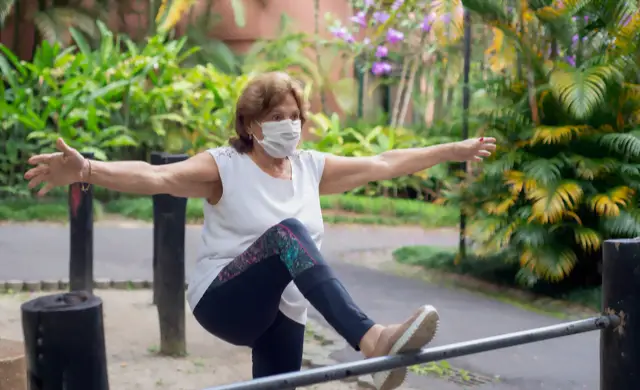
Culturally adapted exercise program helps Hispanic older adults be more active

[ad_1]

CHAMPAIGN, Ill. — Hispanic older adults tend to be one of the most sedentary populations in the U.S., further escalating their increased risks of various chronic diseases and disability.

However, a new study of 565 Hispanic older adults found that a culturally adapted exercise program developed specifically for this population showed promise at improving their physical functioning, but had less success changing participants’ mindsets that poor health is inevitable in later life

Kinesiology graduate student Brett Burrows and social work professor Rosalba Hernandez, both of the University of Illinois, Urbana-Champaign, led the program.

“Regardless of whether they were in the treatment group or the control group, participants showed significant improvements in their physical capabilities after 12 and 24 months compared with baseline,” Burrows said.

When the intervention began, most of the participants reported having at least two chronic conditions, such as heart disease, cancer and diabetes. About 84% were overweight or obese, and many showed moderate physical impairment in their lower extremities based upon their scores on a battery of tasks commonly used to assess older adults’ balance and mobility.

The average age of participants in the study was 73, and the majority were women.

According to Burrows and Hernandez, few exercise interventions have been tailored for Hispanic older adults, who may face multiple personal, social, environmental and cultural barriers to physical activity. These barriers may include financial constraints, unsafe neighborhoods, gender norms and a lack of programs with bilingual or bicultural instructors and materials.

“Many Hispanics have low expectations about how healthy they will be as they grow older, which can further diminish their motivation to remain active,” Hernandez said. “And the consequences of that inactivity are disproportionately higher rates of chronic health problems and disabilities that negatively impact their quality of life and ability to remain independent.”

The current study was part of the Caminemos! research project, which provided culturally adapted activity programs for Hispanics age 60 and older who were recruited from 27 senior centers in the Los Angeles area.

Many of the researchers associated with the project were co-authors of the current study, published in the Journal of Applied Gerontology.

Participants’ physical conditioning was assessed using the Short Physical Performance Battery, which tests a person’s balance using three different foot positions, records how quickly they can stand up and sit down again five consecutive times, and times them as they walk an 8-foot course on two occasions.

At baseline, both the control and the treatment groups’ average scores on the battery were below 10, which indicated moderate physical impairment in their legs, Burrows said.

Participants met weekly for a one-hour group exercise class taught by a certified instructor that targeted muscle strength, balance, endurance and flexibility. They also met once a week for a one-hour group discussion led by a bilingual health educator that covered either general health topics for people in the control group or an age-reattribution curricula that emphasized the benefits of physical activity in preventing or diminishing chronic health conditions often associated with aging.

After the first four weeks, the discussion and exercise classes met once a month for the next 11 months, then bimonthly for the final year of the program.

As the program progressed, people in the control group steadily improved in their performance on the battery tasks, while people in the treatment group improved during the first month, slightly declined over the next 11 months – and rebounded by the 24-month mark.

“We observed a trend among participants in the treatment group that they performed better on almost all the physical battery tests and ended the program with higher physical function scores than their counterparts in the control group,” Burrows said. “These improvements were found even after controlling for body mass index, preexisting chronic diseases or socioeconomic status.”

Unlike some prior studies, however, the current researchers did not find that the age- reattribution curricula conveyed any additional benefits for people in the treatment group, such as increasing their motivation to remain physically active or changing self-defeating cultural beliefs that conflate aging with poor health.

The researchers said the findings suggest that some Hispanic older adults are willing to pursue recreational physical activities that improve their physical conditioning when low-cost, culturally adapted fitness programs are available to them.

Additional co-authors of the study were social work professors Flavia Cristina Drumond Andrade and Lissette Piedra, and kinesiology and community health professor Susan Aquiñaga, all of the U. of I.; and Dr. Catherine Sarkisian of the University of California.

Nessa Steinberg and Shuo Xu, then-graduate students at the U. of I., also contributed to the research.

[ad_2]

Source link
Trending Topics

Features

Download and distribute powerful vaccination QI resources for your community.

Sign up now to support health equity and sustainable health outcomes in your community.

MCED tests use a simple blood draw to screen for many kinds of cancer at once.

FYHN is a bridge connecting health information providers to BIPOC communities in a trusted environment.

Discover an honest look at our Medicare system.

ARC was launched to create a network of community clinicians to diversify and bring clinical trials to communities of color and other communities that have been underrepresented.

The single most important purpose of our healthcare system is to reduce patient risk for an acute event.

Related Posts
Employers Pull Back on GLP-1 Coverage
There’s Levels to High Cholesterol
World Alzheimer’s Month: Why Starting the Conversation About Memory Matters
Scroll to Top
Featured Articles
Woman holding a GLP-1 injection pen as employers reconsider weight-loss drug coverage
Employers Pull Back on GLP-1 Coverage
There’s Levels to High Cholesterol
Alzheimer’s Awareness During World Alzheimer’s Month
World Alzheimer’s Month: Why Starting the Conversation About Memory Matters
Peptide safety and injectable wellness treatments
Peptides Are Everywhere. But Are They Safe?
Brain-Eating Amoeba Infection Leaves North Carolina Teen Critical
North Carolina Teen Hospitalized With Rare Brain-Eating Amoeba Infection
Breaking the Silence and Finding Support in the Black Man's Mind
Categories
AI
ATTR-CM
BIPOC News
Cancer
Clinical Trials
Covid19
Diseases of the Body
Environment
Health Data
Health Equity Events
Health Policy
Health Tips
Subscribe to our newsletter to receive our latest news​
All Stories
Woman holding a GLP-1 injection pen as employers reconsider weight-loss drug coverage
Employers Pull Back on GLP-1 Coverage
There’s Levels to High Cholesterol
Alzheimer’s Awareness During World Alzheimer’s Month
World Alzheimer’s Month: Why Starting the Conversation About Memory Matters
BIPOC News
There’s Levels to High Cholesterol
Alzheimer’s Awareness During World Alzheimer’s Month
World Alzheimer’s Month: Why Starting the Conversation About Memory Matters
Breaking the Silence and Finding Support in the Black Man's Mind
Environment
Gary, Indiana Tap Water Raises Health and Environmental Justice Concerns
UV Safety Awareness Month Raises Urgency on Skin Cancer Prevention and Sun Protection Equity
UV Safety Awareness Month Raises Urgency on Skin Cancer Prevention and Sun Pr...
Extreme Heat Safety Tips 5 Ways to Protect Your Health This Summer fyh.news
5 Heat Safety Tips That Could Protect Your Health This Summer
Work Force
A multigenerational Black and Hispanic family sitting together in a park, showing how Social Security helps support older adults, people with disabilities, and families across generations.
Millions of Older Americans Could Face Smaller Social Security Checks by 2032...
dreamstime_s_243253251
The Caregiver Journey: The Hidden Backbone of American Healthcare
Families gather at a Bronx community festival with live music, kids’ activities, and health booths sharing SOMOS social care resources and free screenings.
Celebrating Hispanic heritage while learning about health care

[xyz-ips snippet=”Output-Source-Name”]

Clinical Trials
Historic Cancer Leadership Milestone Highlights the Importance of Early Detection and Community Outreach
Historic Cancer Leadership Milestone Highlights the Importance of Early Detec...
House Advances Bipartisan EARLY Act Reauthorization, Renewing Focus on Early Breast Cancer Detection for Young Women
House Advances Bipartisan EARLY Act Reauthorization, Renewing Focus on Early ...
Early Cancer Detection Is Entering a New Era. Flint Is Helping Lead the Way.
Vaccines and Outbreaks
Summer COVID Surge Builds Across U.S. Fyh.news
Summer COVID Surge Builds Across U.S. as Cases Rise Again
Class I Salmonella Egg Recall What to Know Fyh.news
FDA Gives Egg Recall Highest-Risk Class I Designation Over Salmonella Outbreak
Taylor Farms Recalls Jalapeño-Containing Foods as Salmonella Outbreak Sickens 345 Across 27 States
Taylor Farms Recalls Jalapeño-Containing Foods as Salmonella Outbreak Sickens...
Other Categories
AI
Read the latest AI News stories trending around the world
ATTR-CM
Cancer
Read the latest Cancer stories trending around the world
Covid19
Diseases of the Body
Read about the latest Diseases of the Body trending around the world
Friday Webinars
Every Friday, we bring you insightful webinars covering critical topics in healthcare, data equity, and policy reform.
Health Data
Read the latest Health Data stories trending around the world
Health Equity Events
Read the best Health Equity Events around the country.
Health Policy
Read the latest Health Policy stories trending around the world
Health Tips
Heart Health
Read the latest on Heart Health News, Stories and Tips.
kidney Health
Read more trending News about Kidney Health, Stories and Tips.