










- By FYH News Team
[ad_1]
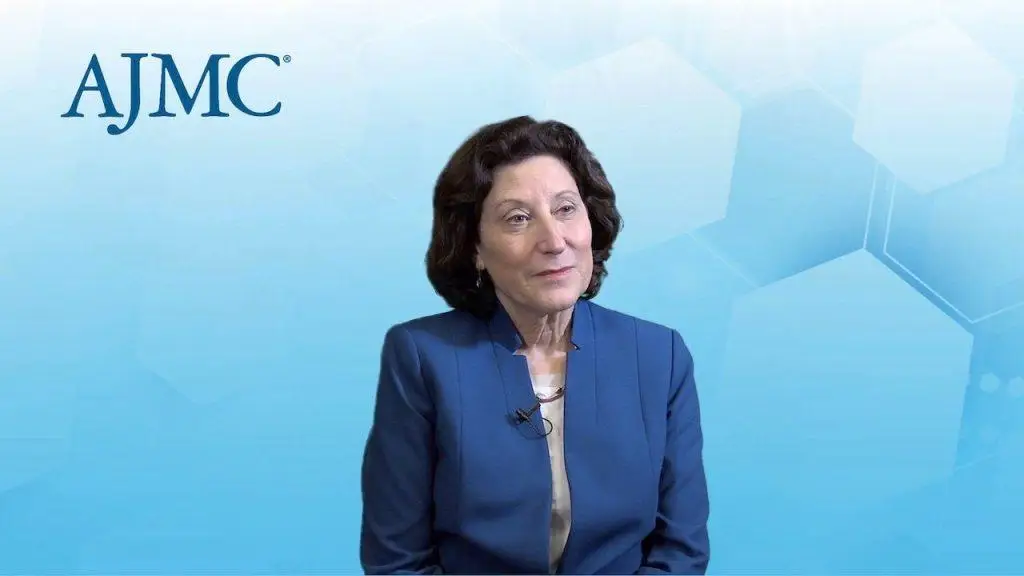
Hope S. Rugo, MD, FASCO, is professor of medicine and the director of the Breast Oncology and Clinical Trials Education program at the University of California San Francisco Helen Diller Family Comprehensive Cancer Center.
Here she discusses overall survival (OS) results for PALOMA-2 that were presented during the 2022 American Society of Clinical Oncology Annual Meeting. Many were surprised that PALOMA-2 did not show improved OS for palbociclib and letrozole in advanced breast cancer; investigators said missing data could have been a factor in the results.
Transcript
How do PALOMA-2 overall survival results compare with your experience in clinical practice?
You know, it’s hard to know. It just doesn’t align with what we’ve seen in clinical practice at all. And we have a real-world data study that, again, suggests that there is a survival benefit—it’s real-world data—but it just was so surprising to not see this survival benefit in PALOMA-2, with all of the hazard ratios the same across the different trials. And then, you know, the first four patients I put on PALOMA-2 are still on at 7 and 8 years—and lots of my other patients in practice—so it just doesn’t make sense to me that somehow there would be some magic with that drug where there wasn’t survival.
The bottom line is, the trial is what it is and was reported the way it’s reported, and maybe some additional analyses will help us understand this better. I think that looking at the combination of PALOMA-1 and -2, and taking out those patients who had the disease-free interval of less than 12 months was really helpful, because it shows that those patients probably had the biggest contribution to the lack of overall survival difference.
Can you offer guidance on how ASCO can implement its recommendations to improve clinical trial diversity?
This is just such an important area. And actually, it was a question asked at the plenary session for DESTINY-Breast04, where the question really was, how come there’s so little minority patients enrolled? How come they’re all Caucasian? Why was that? That’s a big question with clinical trials. We really have to work hard to try and improve that minority enrollment in clinical trials and then access to care outside of the setting of trials.
What can we do to improve the enrollment and trials? We know there are some countries where reporting ethnicity and race is not allowed, because there’s concern about bias. It may be that ASCO as an organization has the power to have people reported in the setting of trials, but not regularly, and maybe that would answer some of the questions of countries like France that don’t allow reporting. But then how do we improve the accrual?
I think it has to do with, as a community, really working with our pharma partners to improve the funding for minority patients to go on to trials, because what happens is patients generally who are of lower socioeconomic status—not all minorities, by any means—they live farther away, they have children to take care of, they’re doing jobs that are not forgiving. And gas prices in California are $7 a gallon. People can’t go anywhere. So I think what we need to do is to provide support for people to have an opinion, to see whether or not we benefit them, to then come in and participate in the trial and to get compensation for the amount of money and time that they have to put in to participating in the trial.
I think that’s the only way we’re going to fix this, because right now, it’s all—in my mind—more lip service, because they’re saying, “Well, you know, we just have to have alliances and tell people the trials are there and they’ll come.” But that’s not actually the case. I think we really have to provide some support mechanism, too.
ASCO has, in all fairness, made a lot of collaborations with different groups, including the World Health Organization and UICC [Union for International Cancer Control], and within this affiliation with the World Health Organization they’ve created a lot of different ASCO presence, education, and support in different countries. So that’s great. But I think we also need to have this other part of it where the drugs are expensive and trials are difficult, so there has to be some way to get around that.
[ad_2]
Source link
Trending Topics

Features
- Drive Toolkit
Download and distribute powerful vaccination QI resources for your community.
- Health Champions
Sign up now to support health equity and sustainable health outcomes in your community.
- Cancer Early Detection
MCED tests use a simple blood draw to screen for many kinds of cancer at once.
- PR
FYHN is a bridge connecting health information providers to BIPOC communities in a trusted environment.
- Medicare
Discover an honest look at our Medicare system.
- Alliance for Representative Clinical Trials
ARC was launched to create a network of community clinicians to diversify and bring clinical trials to communities of color and other communities that have been underrepresented.
- Reducing Patient Risk
The single most important purpose of our healthcare system is to reduce patient risk for an acute event.
- Subash Kafle
- Victor Mejia
- Jessica Wilson