









Nearly a decade after the Flint water crisis health impacts became a national warning about government failure, many Flint residents say they are still living with the consequences. Sen. Elissa Slotkin took to the U.S. Senate floor last week to deliver a message Flint residents have been repeating for nearly a decade: the crisis may no longer dominate headlines, but the harm has not ended. “An American city was poisoned,” Slotkin said, describing families who reported discolored water, rashes, seizures, hair loss, and chronic health problems as officials insisted the tap water was safe.
The Flint water crisis began in April 2014, when the city switched its water source to the Flint River without adding corrosion-control treatment, a safeguard that helps prevent lead from leaching out of aging pipes. Public health officials later warned that tens of thousands of residents were exposed to elevated lead levels, and President Barack Obama declared a federal emergency in January 2016. Health officials say families concerned about lead exposure should follow clinical guidance on testing and follow-up care from the Centers for Disease Control and Prevention. Flint is a majority-Black city with high poverty rates, and the crisis quickly became a national symbol of how infrastructure failures and government neglect can compound longstanding racial and economic inequities.
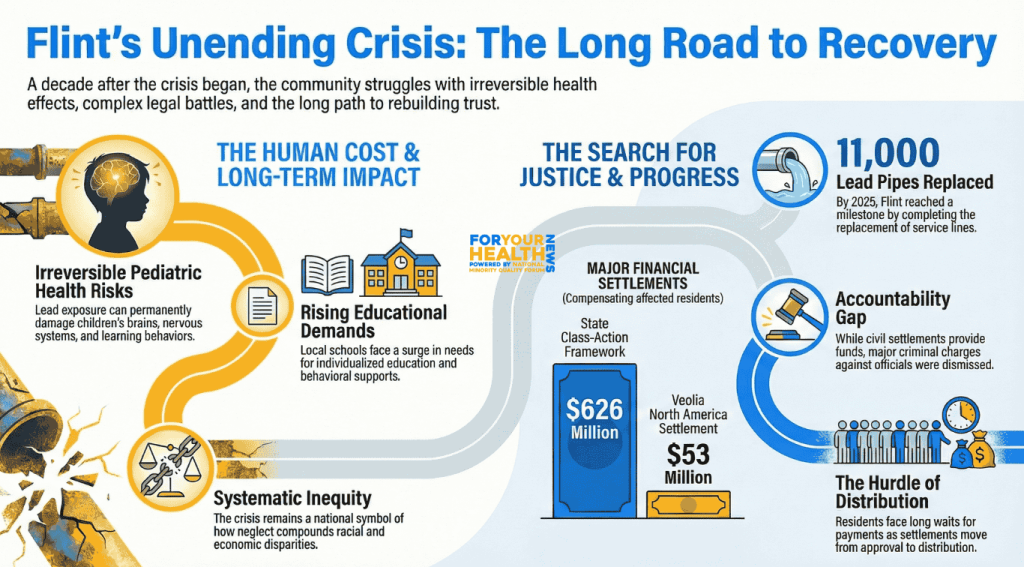
Lead exposure is especially dangerous for children. The Centers for Disease Control and Prevention has warned that lead can damage children’s brains and nervous systems and contribute to learning and behavioral problems—harms that can be irreversible. Research examining pediatric blood lead testing patterns in Flint underscores how the crisis altered health behavior and monitoring, even years after the worst contamination became public.
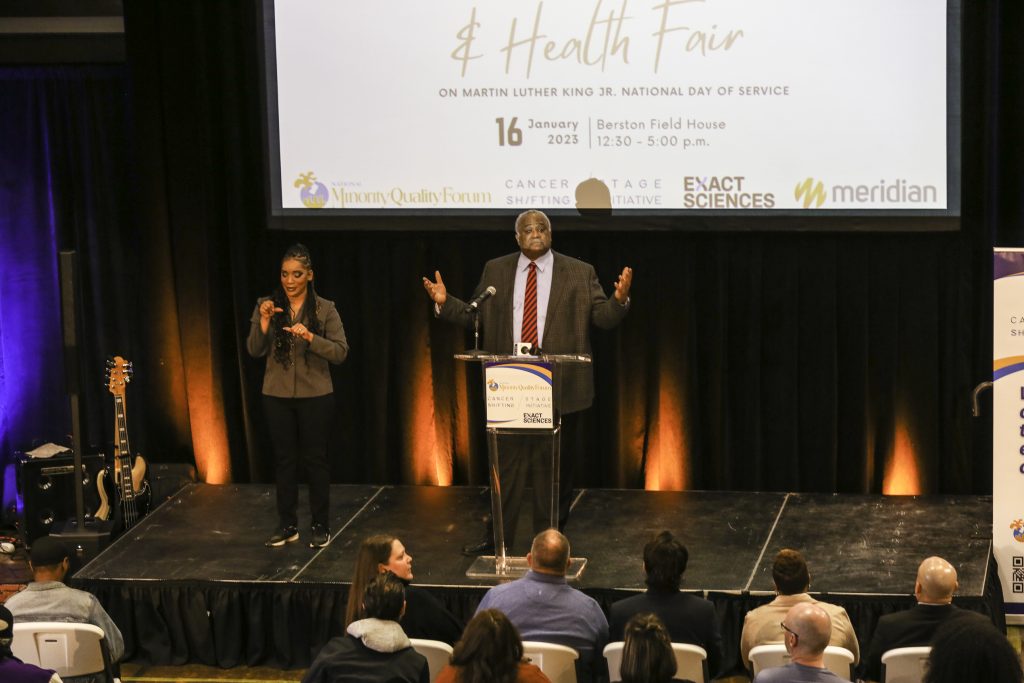
In Flint, local and national groups are also trying to turn long-term concern into on-the-ground health support. The National Minority Quality Forum is scheduled to host ‘Flint Forward – Cancer Community Townhall 2026’ on January 31 at the Flint Development Center, an event billed as a community townhall and mini clinic offering free screenings, education, and resources aimed at early cancer detection. Organizers say the gathering is part of the Cancer Stage Shifting Initiative, a national effort focused on catching cancers earlier in communities that have faced persistent health inequities.
Event Details: https://nmqf.org/events/flint-forward-cancer-community-townhall-2026/
The long road to accountability, including the courtroom
While the physical infrastructure is improving, Flint’s search for accountability has played out in courtrooms for years. In a highly watched civil “bellwether” trial in 2022, jurors could not reach a verdict in a case involving engineering firms accused of failing to prevent or mitigate the crisis, leading a judge to declare a mistrial. Since then, major civil settlements have continued to reshape what “justice” looks like for many families—often less about a single guilty verdict than about whether compensation and long-promised services actually reach affected residents.
In February 2025, Michigan Attorney General Dana Nessel announced a $53 million civil settlement with Veolia North America tied to allegations that the company’s work contributed to prolonging the crisis; the settlement was described as a way to provide closure after years of litigation. The settlement added to earlier agreements, including the state’s broader $626 million class-action settlement framework meant to compensate people harmed by lead exposure. A court-supervised claims process has approved tens of thousands of claims, but residents have faced long waits as payments move from approval to distribution.
The criminal cases tied to the crisis, meanwhile, largely collapsed. A Michigan judge formally dismissed misdemeanor charges against former Gov. Rick Snyder in 2023 after appellate rulings ended the prosecutions, effectively closing that chapter of the legal response. For many Flint families, that outcome deepened the sense that high-level decision-makers escaped meaningful consequences.
Health and education impacts also remain a pressing concern. A New York Times report in 2019 described Flint schools struggling with rising needs for individualized education plans and behavioral supports for children who were exposed to lead—needs that educators and parents say require sustained resources, not short-term attention. Separate academic work has linked the crisis to measurable setbacks in educational outcomes, adding to evidence that environmental disasters can shape children’s trajectories long after the immediate emergency fades.

There has been visible progress on the city’s pipes. Michigan reported in 2025 that Flint had completed replacement of nearly 11,000 lead water service lines under a legal settlement that required free replacement offers to residents, a milestone that public health leaders framed as nationally significant. Pediatrician Mona Hanna—one of the early voices warning the public about the crisis—told The Washington Post that when water runs through lead pipes, it is “flowing through a straw that is a poison and has no safe level.”
Still, Slotkin’s Senate speech captured what many residents say is the unresolved heart of the crisis: trust. She pointed to families who felt dismissed when they first complained, and she said Flint residents are still seeking justice—including through legal action involving federal regulators—while living with the long-term health, educational, and economic consequences of a disaster they did not cause.
As Flint marks another year since the emergency declaration, the question for public health and policy leaders is not only how to prevent another Flint, but how to support a community living with the aftershocks—through healthcare access, developmental and educational services, and timely delivery of promised compensation—so that recovery is more than a milestone on paper.
Also Read: A New Year, A Fresh Start for Health
Stay Informed. Stay Empowered.