









[ad_1]

“Bioethicists and IRBs typically ethically recoil from offering an incentivizing compensation for research participation, potentially unduly influencing vulnerable individuals/communities.”
– Dr. Sivan Tamir, Policy Counsel and Sr Research Fellow, Israel Tech Policy Institute
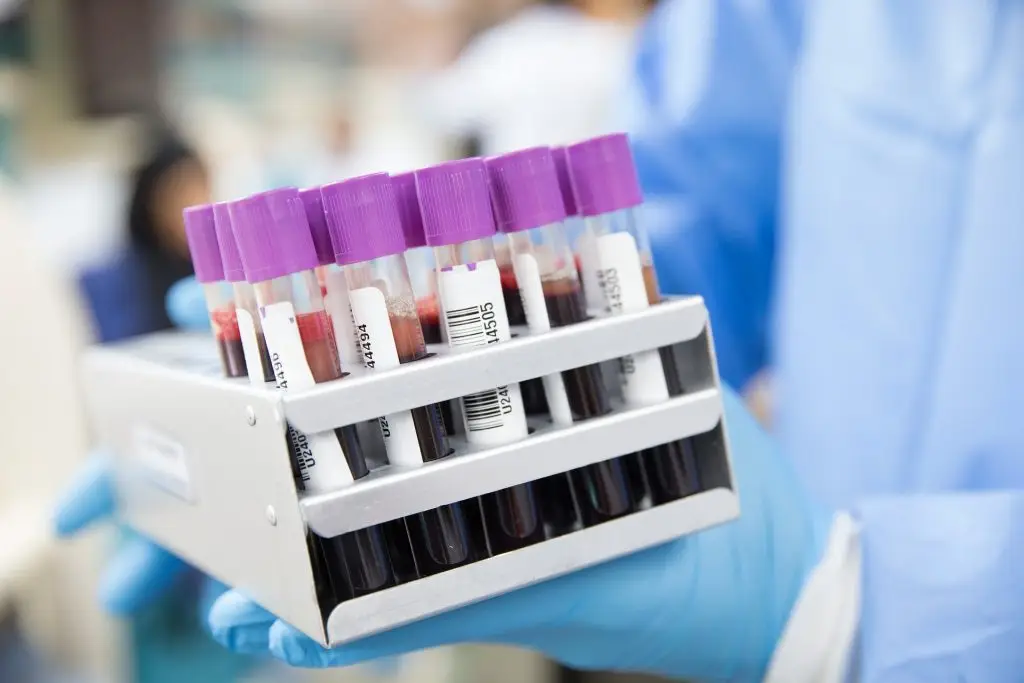
While bona fide bioethicists and institutional review boards (IRBs) frown on excessive compensation as an inducement to recruitment, that hasn’t stopped a group of economists from designing a study evaluating what level of compensation would encourage research participation among minorities and the impoverished. Ostensibly, this was done to determine why minorities and the poor don’t participate at levels commensurate with Whites and those above the poverty line. Or at least so represents the study title: “What Drives (Gaps in) Scientific Study Participation? Evidence from a COVID-19 Antibody Survey.”
The study examined what financial sum would induce volunteerism (which those of us scientifically inclined might translate as the right (monetary) ‘dose’). The only other concern investigated as a possible deterrent to participation was an inability to contact the potential volunteer, a cause discounted by the authors.
The fact that $100 did not vastly increase participation in lower income households “was super striking.”
– Michael Greenstone, co-author, professor of economics University of Chicago, director Becker Friedman Institute.
Counterintuitively, the economists found that a “monetary dose” of $100 was insufficient to attract minorities and the impoverished at levels sufficient to equalize participation with the White and non-impoverished groups. (It is not clear if these groups intersect). Interestingly, a $100 inducement actually widened the gap between the groups. But when the “dose” was upped to $500, the disequilibrium in participation between minorities and the poor and Whites and affluent vanished.
As the researchers write:
“…. [We found that] hesitancy among contacted households is a cause of both low participation and underrepresentation. High incentives for participation appear to restore representativeness.” [emphasis added]
Crafting Policy
Can we rely on this study’s findings to induce participation by minorities? Do we use this compensation level for everyone or just the under-represented? If the latter, isn’t that reverse discrimination? Or is this a case of cultural mismatch, be it in communication, mutual understanding, evaluation of costs and benefits, or lack of recognition of the importance of diversity in recruitment?
Before arriving at a conclusion regarding the effectiveness and propriety of high-level compensation, let’s look at the study’s validity – or infirmities:
- It appears the results are not statistically significant at conventional levels.
- No breakdown is given by age, gender, or education, conventional measures that identify confounders (i.e., concerns that may be correlative but not causal). While one might assume the researchers didn’t have this information, it appears they did; their initial questionnaire requested it. Hence, it must be assumed that, for whatever reason, they chose not to report their results.
- The overall participation rate was so low that the study was terminated early.
- This was an ecological study – based on zip codes and categorical variables, not on individuals. Such studies are typically considered weak and only used to generate, not confirm, hypotheses.
The no dose-response
A major concern is the failure to consider or appreciate the reasons underlying the variegated response. While the researchers correctly craft the research question as one of investigating research hesitancy because the costs are assumed to outweigh any perceived benefits, they too literally focus on costs as financial. (What do you expect? These are economists.)
What other “costs” could account for an incentive (or benefit) of $100 failing to tantalize while that of $500 works? Here are two possibilities:
We should note that this research concerned antibody production in the context of COVID. The Black community, generally (and appropriately), has been spooked by fear of improper experimentation that they’ve suffered, to wit, the Tuskegee debacle. As I have written, in the context of COVID-19, this fear has been fostered by the anti-vax community preying on these fears. [1].
Indeed, at the pandemic’s outset, presidents of four historically Black US medical schools called for measures to increase Black patients’ participation in clinical trials. The pushback from parents and students was extreme:
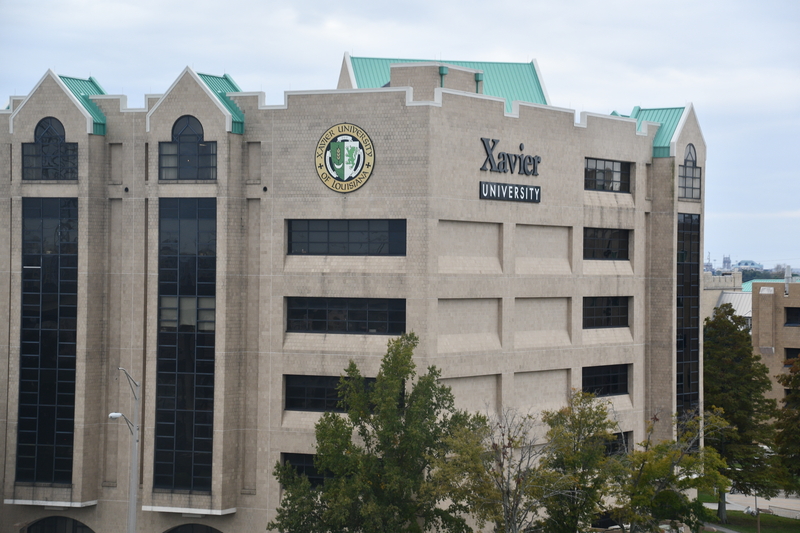
“Our children are not lab rats for drug companies. I cannot believe that Xavier is participating in this. This is very disturbing given the history of drug trials in the black and brown communities.”
For Black individuals not harboring such fear, given that the study was predicated on zip-code designation, we cannot discount the possibility of group alliance; people picking up the attitudes of their local friends and neighbors.
Money talks
Considering the likelihood that opposition to research participation was based on ignorance and fear, one might hypothesize that at a certain level, especially among the impoverished, this group was willing to accept the risk of dangerous experimentation if offset by a bountiful – what might be considered – bribe.
This is precisely the concern that guides research in academia and government. For example, the University of Oregon website for Research provides:
“Compensation cannot be so great that it entices participants to engage in any activity to which they are averse, or to act against their better judgement.”
Isn’t that just what these researchers were doing?
Dr. Tamir and others propose that education might be a better way to excite participation in these underrepresented groups. I wholeheartedly agree. Thus, rather than throwing a $500 bill at someone, getting their one-time participation, and walking away, might it not be more effective and sensitive to provide continuing educational outreach, to foster a sense of community, and work together with leaders of minority communities to enlist cohesive willingness to contribute to community health?
I can only imagine that to a relatively impoverished academic researcher, especially an economist, more money might address a host of ills. To a Black person, it is likely not the driving motivator when it comes to research participation. It seems to me these researchers were entirely out of touch, not only with research ethics in general, but culturally tone-deaf, unwittingly fostering the divide that creates the resistance.
[1] Anti-vaccination leaders fuel black mistrust of medical establishment as COVID-19 kills people of color, The Washington Post, July 18, 2020
[ad_2]
Source link