








[ad_1]

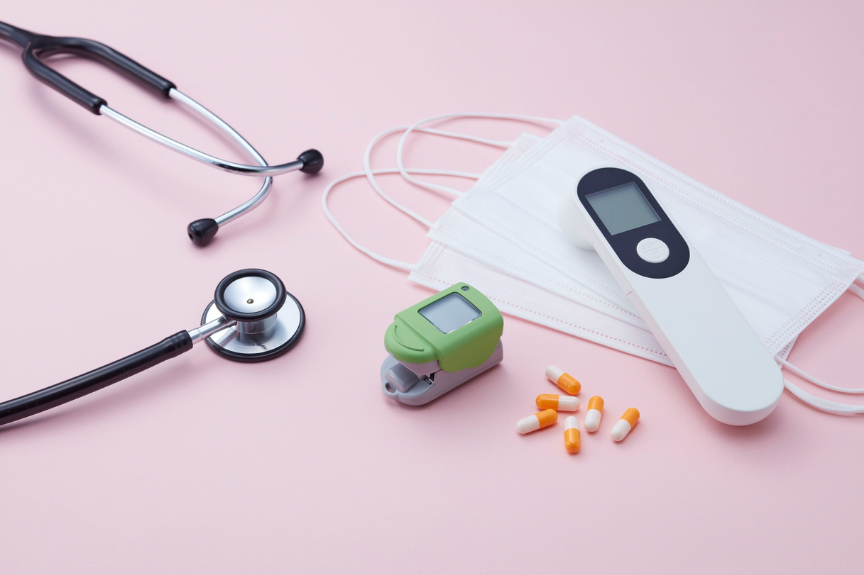
In a study of hospitalized patients with confirmed or suspected COVID-19, pulse oximetry produced falsely high oxygen saturation readings for patients who were identified as Black, Asian, and of mixed ethnicity, with mean values almost 5% higher than actual oxygen saturation levels measured via arterial blood gases testing. This was among research findings from a single-center United Kingdom study published in the European Respiratory Journal.
Previous research has shown that darker skin pigmentation affects the accuracy of oxygen saturation readings derived from pulse oximetry, a technology that relies on light wave transmission. Researchers have further suggested that the level of inaccuracy that results from differing skin pigmentation has the potential to adversely affect patient care.
To explore the differential in blood oxygen readings yielded via pulse oximetry vs arterial blood gases testing in patients of varying races and ethnicities hospitalized for COVID-19, researchers conducted an observational study using electronic data collected from patients admitted to Nottingham University Hospitals in the United Kingdom between February 2020 and September 2021. All patients had suspected or confirmed COVID-19. The investigators said they focused specifically on patients with COVID-19 based on previous research indicating that patients with more highly pigmented skin have a higher risk of serious disease.
Continue Reading
The study analysis used 5374 paired pulse oximetry and arterial blood gas measurements from 2997 patients, with all pairings taken within a 30-minute window of time. A 10-minute window between paired samples was also evaluated as a sensitivity analysis. Mean differences in oximetry and arterial blood gas measurement pairings were stratified according to the race/ethnicity of the patient as recorded in the electronic health record. Researchers categorized the pairings into 5 groups based on patient race/ethnicity: “White” (n = 3946 pulse oximetry/arterial blood gas pairings); “Black” (n = 151 pairings); “Asian” (n = 246 pairings); “mixed ethnicity” (n = 36 pairings); and “not recorded” (n = 995 pairings). Due to the small numbers of individuals categorized as Black, Asian, and mixed ethnicity, researchers also combined data from these 3 categories for a collective comparison with the much larger White patient cohort. Measurements were also stratified by level of oxygen saturation as measured by arterial blood gases.
Study results indicated variances in the mean difference between oxygen saturations as measured by pulse oximetry vs arterial blood gases testing (P =.02, analysis of variance [ANOVA]). The highest differential occurred in the data from the mixed race/ethnicity cohort (6.9%; 95% CI, -21.9 to 35.8), and the lowest was observed in the data from the White cohort (3.2%; 95% CI, -22.8 to 29.1). Data from the Black cohort (5.4%; 95% CI, -25.9 to 36.8) and the Asian cohort (5.1%; 95% CI, -23.8 to 34.0) had intermediate differentials. Sensitivity analysis restricting paired samples to a 10-minute window of time did not change these differences.
Pulse oximetry overestimated the measurements of oxygen saturation compared with that measured by arterial blood gas across all racial/ethnic groups when the arterial blood gas oximetry-measured saturations fell below 90% and underestimated these levels when arterial blood gas oximetry-measured saturations rose above 95%. The researchers noted the mean differences were especially striking in the clinically important range, in which arterial blood gas showed a true oxygen saturation of 85% to 89%.
When compared with results of arterial blood gas testing, mean blood oxygenation levels measured via pulse oximetry were 3.9% higher in Black patients (95% CI, -8.0 to 15.9); 5.8% higher in Asian patients (95% CI, -1.6 to -13.2); and 2.4% higher in White patients (95% CI, -14.2 to 19.0). Similarly, in a mixed effects linear model, patients identified as Black, Asian, or of mixed ethnicity had a higher oxygen saturation reading as measured by pulse oximetry than White patients, excluding patients with no recorded race/ethnicity and adjusting for arterial blood gas oxygen saturation (Black cohort, 1.8%; 95% CI, 0.2-3.4; P =.04; Asian cohort, 1.9%; 95% CI, 0.6-3.2; P =.005; mixed ethnicity cohort, 3.2%; 95% CI, -0.1 to 6.6, P =.06).
A final mixed effects model of the difference between oxygen saturation measured by pulse oximetry vs that measured by arterial blood gases testing showed that pulse oximetry overestimated arterial oxygen saturation by a mean 1.4% (95% CI, 0.5-2.3; P =.003) in a collective cohort including patients identified as Black, Asian, and of mixed ethnicity compared with White patients after adjusting for sex, age, and arterial blood oxygen level.
“High levels of skin pigmentation are associated with the ethnic groups who have a poorer outcome from COVID-19 infection, and hence would require the most accurate oxygen measurements available to titrate supplemental oxygen and deliver timely treatment,” the authors explained. “Although these data cannot quantify the impact of these measurement errors of pulse oximetry on clinical care, our experience is that any delay in appreciating the severity of COVID-19 pneumonitis is likely to be detrimental to patient care, especially now that new therapeutic options are becoming available,” the investigators concluded.
Reference
Crooks CJ, West J, Morling JR, et al. Pulse oximeters’ measurements vary across ethnic groups: an observational study in patients with Covid-19 infection. Eur Respir J. Published online January 27, 2022. doi:10.1183/13993003.03246-2021
This article originally appeared on Pulmonology Advisor
[ad_2]
Source link