











- By FYH News Team
[ad_1]
Nearly three-quarters of US adults with undiagnosed prediabetes reported no perceived risk for the overt disease, say authors of a new analysis of National Health and Nutrition Examination Survey (NHANES) data, with persons in racial/ethnic minority groups being less likely to appreciate the risk.
Specifically, researchers found that identifying as non-Hispanic Black was associated with a 34% greater likelihood and identifying as Hispanic with a 29% higher likelihood of reporting no perceived risk of developing type 2 diabetes (T2D) vs those identifying as non-Hispanic White. The paper was published online in the journal Preventive Medicine.
Study authors, led by Matthew Davis, MD, PhD, from the Department of Learning Health Sciences, University of Michigan Medical School in Ann Arbor, emphasize that the risk for developing T2D over a subsequent decade is less than 10% for adults with normoglycemia but for those with HbA1c in the prediabetes range, the risk increases to 30%. Further, up to 70% of those in the prediabetes range will develop T2D within their lifetime. The lower the perceived T2D risk among minority populations, according to Davis et al, the greater the potential for an increase in the already disproportionate impact of T2D on these racial/ethnic groups and the more difficult it becomes to effectively promote prevention.
Davis and colleagues point to a lack of population-based studies that specifically evaluate the degree to which perceived T2D risk may differ by race/ethnicity among US adults with undiagnosed prediabetes as additional context for their current research.
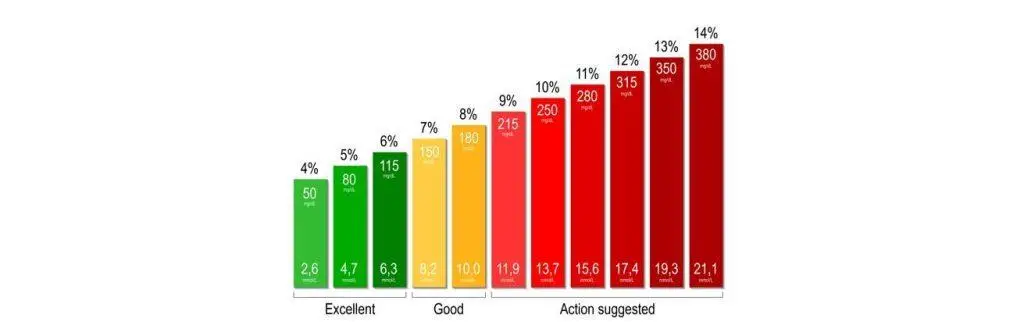
The investigators performed a cross sectional analysis of data from NHANES participants between 2011 and 2018. Eligibility criteria were age ≥20 years, reporting no previous diagnosis of diabetes or prediabetes or gestational diabetes, and an HbA1c level in the prediabetes range established by the American Diabetes Association, ie, ≥5.7% and <6.5%.
Using logistic regression, the team estimated the association between race and ethnicity and perceived risk of diabetes, adjusting for covariates—age and sex, educational level, family history of diabetes, body mass index, health insurance coverage, and routine setting for health care.
The final cohort eligible for analysis numbered 4005 (representing 36.3 million US adults with undiagnosed prediabetes). Mean age of the group was 55.3 years (45% age >60 years) and 48% were men. More than half (58.7%) identified as non-Hispanic White, 16.5% identified as non-Hispanic Black, and 15.5% identified as Hispanic. (See additional characteristics, at right)
The investigators found that almost three-quarters (71.8%) of this cohort with undiagnosed prediabetes reported no perceived risk for future T2D. Compared with individuals who did report a perceived risk for T2D, those who did not were on average older (56.8 vs 51.5 years of age) and more likely to be men. Davis and colleagues found that between those who did and did not report a perceived T2D risk, the factor that differed most was family history of T2D.
When the researchers analyzed for potential change between 2011 and 2018 in rates of perceived risk, they found no statistically significant differences for any of the racial/ethnic groups.
Associations with race/ethnicity
The study team reports that in unadjusted analyses, there were no statistically significant associations between race/ethnicity and perceived risk for T2D. However, after fully adjusting for individual characteristics, the researchers found that identifying as non-Hispanic Black was associated with a 34% higher likelihood of reporting no perceived risk compared to identifying as non-Hispanic White (OR 1.34, 95% CI, 1.03–1.74). Identifying as Hispanic was associated with a 29% higher likelihood of reporting no perceived risk compared to identifying as non-Hispanic White (OR 1.29, 95% CI, 1.01-1.66).
When they adjusted for health insurance status and location for receipt of health care, the associations were only slightly attenuated for identifying as non-Hispanic Black (OR 1.33, 95% CI, 1.02- 1.73) and identifying as Hispanic (OR 1.25, 95% CI, 0.98-1.60).
“Our results suggest that current communication efforts regarding diabetes risk may be inadequate in essential subpopulations, such as racial and ethnic minority groups disproportionately affected by diabetes,” the authors write in the study conclusion.
They stress the importance of risk perception in models of behavior change, noting that the awareness serves as a “precursor to the pathway” that can predict the likelihood of someone taking an action, such as engaging in protective-health behaviors.
“Thus, the importance of continued research to further understand risk perception for diabetes among diverse populations cannot be overstated,” they add.
Reference: Joiner KL, Adams MP, Lee KA, Piatt G, Davis MA. Perceived risk for diabetes among U.S. adults with undiagnosed prediabetes. Prevent Med. 2022;160. https://doi.org/10.1016/j.ypmed.2022.107809.
[ad_2]
Source link
Trending Topics

Features
- Drive Toolkit
Download and distribute powerful vaccination QI resources for your community.
- Health Champions
Sign up now to support health equity and sustainable health outcomes in your community.
- Cancer Early Detection
MCED tests use a simple blood draw to screen for many kinds of cancer at once.
- PR
FYHN is a bridge connecting health information providers to BIPOC communities in a trusted environment.
- Medicare
Discover an honest look at our Medicare system.
- Alliance for Representative Clinical Trials
ARC was launched to create a network of community clinicians to diversify and bring clinical trials to communities of color and other communities that have been underrepresented.
- Reducing Patient Risk
The single most important purpose of our healthcare system is to reduce patient risk for an acute event.
- Victor Mejia
- Jessica Wilson
- Jessica Wilson




