










[ad_1]
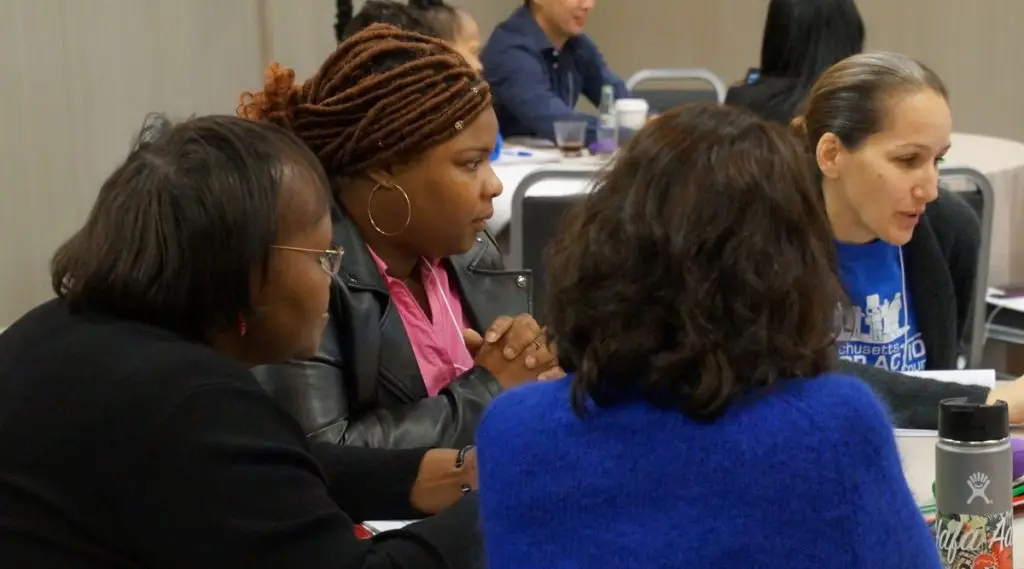
Photo credit: Community Catalyst
It is no secret that Black people face a number of health inequities in the United States. Spanning the entire lifespan from birth to end of life, there are disparate health outcomes for Black people versus their other racial counterparts. During 2018-2020, Black newborns had the highest preterm birthrate (14.2 percent), compared to 9.2 percent for white babies. Hospitalization for Black people diagnosed with COVID is 2.5 times greater than the rate for white people. Young Black adults are living with chronic conditions that are more common later in life and they are more likely to die at early ages of all causes. The inequities are deep and stark.
To combat inequities, many organizations conduct listening sessions, focus groups, key informant interviews, and surveys. Although the data and community needs change, the strategies to engage community members stay the same. During Black History Month where this year’s theme is Black Health and Wellness, let’s reimagine community engagement.
Power With vs. Power Over
The desire to get to the root of the problem often means that, too often, funding, strategic plans, and program designs are created without the input of the communities we serve. It’s vital to include Black leaders and community members from the beginning. From funding to program design to staffing, community members can offer necessary context to make a greater impact. Collaborating with community changes the power dynamic by allowing people to lead without borders and confinement. There is power in Black communities. Honor that power by working with community members in each step of the work instead of soliciting engagement in prescriptive ways that may not reflect the needs of the community. This can lead to creative health outreach and health promotion in both traditional and non-traditional settings and mediums, like houses of worship, community centers, salons and barbershops, social media, and open mics.
Build Relationships
Typically, research seeks out community participation, synthesizes the data, and then concludes each project. What would it look like to build and maintain relationships? Community members would be more than data points and statistics. There would be mutual benefit between organizations and communities, resulting in continuous interactions before and after research. Stronger relationships lead to more effective outreach. If community leaders from various sectors (e.g., education, housing, faith-based, childcare, etc.) are engaged regularly, they can help with reaching community members who may not traditionally be engaged with existing efforts. Consider facilitator trainings, community-based participatory research, town halls to share research findings, community advisory boards led by community members, and funding community partners.
Imagine Thriving Through a Lens of Joy and Resilience
In order to understand health inequities, research questions and interventions often focus on risk factors. It is important to understand social determinants of health and systemic factors that impact chronic conditions. However, work that only focuses on risks, without protective factors, is one-dimensional and outdated. Black people are more than what ails us. We are also resilient change makers. There is hope, joy, and innovation in imagining healthier futures. As Black History Month comes to a close, this is the perfect time for organizations to take the time to restructure community engagement strategies. A promising future awaits.
[ad_2]
Source link
Trending Topics

Features
- Drive Toolkit
Download and distribute powerful vaccination QI resources for your community.
- Health Champions
Sign up now to support health equity and sustainable health outcomes in your community.
- Cancer Early Detection
MCED tests use a simple blood draw to screen for many kinds of cancer at once.
- PR
FYHN is a bridge connecting health information providers to BIPOC communities in a trusted environment.
- Medicare
Discover an honest look at our Medicare system.
- Alliance for Representative Clinical Trials
ARC was launched to create a network of community clinicians to diversify and bring clinical trials to communities of color and other communities that have been underrepresented.
- Reducing Patient Risk
The single most important purpose of our healthcare system is to reduce patient risk for an acute event.
- Jessica Wilson
- Victor Mejia
- Jessica Wilson