











- By Subash Kafle

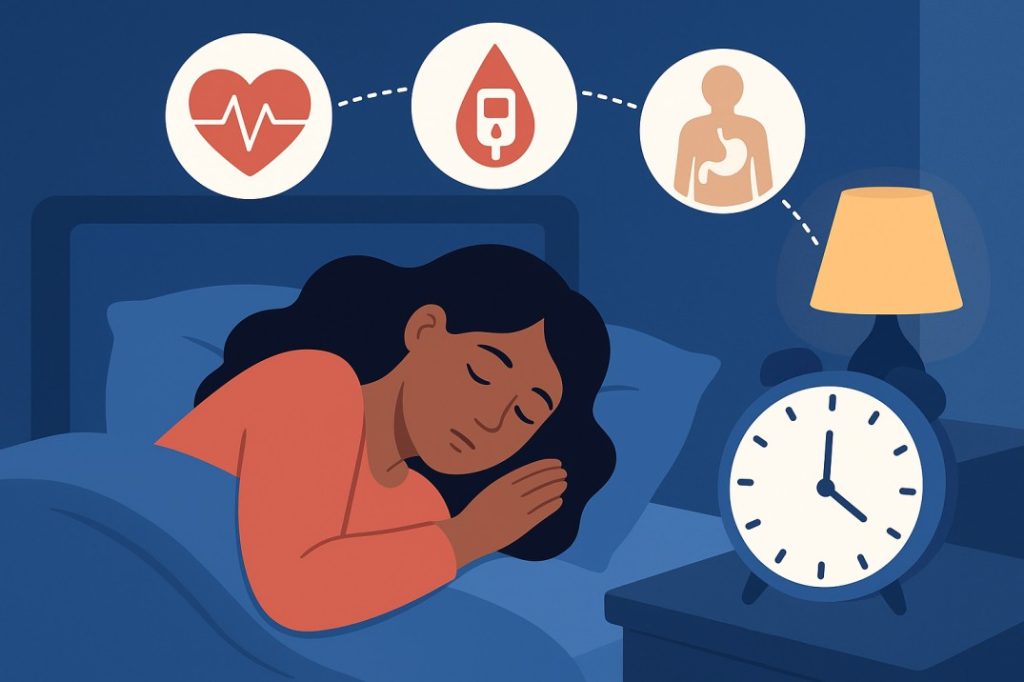
Sleep may be more than a quality-of-life issue for older women worried about Alzheimer’s disease. A new report in the December 2025 issue of Alzheimer’s & Dementia suggests that sleep duration could help explain why some women appear to develop less tau buildup than expected for their risk level, or maintain stronger thinking and memory even when tau is present.
Tau, a protein that can accumulate abnormally in the brain, is closely tied to the memory and thinking problems seen in Alzheimer’s disease. In research settings, “resistance” generally refers to showing less Alzheimer’s-related pathology than expected, while “resilience” refers to functioning better than expected despite pathology. Scientists have increasingly focused on these concepts because they may point to modifiable factors that protect brain health, even when risk factors such as age or genetics cannot be changed.

The new sleep-and-tau findings align with a growing body of work linking sleep patterns to Alzheimer’s biology. They also add urgency to long-standing concerns about women’s Alzheimer’s risk. The Alzheimer’s Association estimates that about 7.2 million Americans age 65 and older are living with Alzheimer’s dementia, and its 2025 report notes that women make up a larger share of cases, with 4.4 million women and 2.8 million men age 65 and older living with Alzheimer’s dementia. Alzheimer’s Association
For communities of color, the stakes are even higher. The Alzheimer’s Association notes that older Black Americans are about twice as likely as older White Americans to have Alzheimer’s or other dementias, and older Hispanic Americans are about one-and-a-half times as likely. Researchers and advocates have long pointed to inequities in access to timely diagnosis, brain health care, and management of risk factors as contributors to these disparities.
Why sleep may matter for tau
Researchers studying women’s brain aging have increasingly turned to sleep because it is both biologically powerful and potentially treatable. The Women, Inflammation and Tau (WITS) study at UC San Diego, for example, has been examining how sleep, diet, and physical activity may contribute to inflammation that could “accelerate the buildup of tau,” according to a 2025 report by KPBS.

In that KPBS report, UC San Diego neuropsychologist Sarah Banks, a co-leader of the WITS study, pointed to a specific sleep problem that clinicians say is often missed: “Sleep apnea is this under-recognized, highly treatable” factor that may be driving some sleep and memory problems in Alzheimer’s disease. KPBS also reported that about 70% of the women in the study had undiagnosed sleep apnea.
Erin Sundermann, a cognitive neuroscientist and co-leader of the study, told KPBS that disrupted sleep may increase tau, “especially in women with a genetic predisposition.” KPBS Public Media She also underscored why tau has been a focus in women’s research: “Women tend to have more tau,” she said, adding that the team is trying to understand why, and whether inflammation plays a role.
Biology offers plausible pathways for the sleep–tau connection. In 2025, researchers reported in a randomized crossover study that slow-wave sleep reduced cerebrospinal fluid concentrations of beta-amyloid and tau, supporting the idea that deep sleep may help regulate or clear proteins tied to neurodegeneration. Other studies have also linked objective sleep measures to tau-related biomarkers, reinforcing the possibility that sleep changes can show up alongside early brain changes.
Even so, experts caution that sleep is not a simple on-off switch for Alzheimer’s risk. Alzheimer’s disease develops over many years, and researchers still debate which sleep changes are drivers of pathology, which are early symptoms, and which reflect shared underlying risks such as cardiovascular disease. What the new Alzheimer’s & Dementia paper adds is a more targeted look at sleep duration in older women already considered at elevated risk, using a framework that distinguishes between resisting tau buildup and remaining cognitively resilient when tau is present.
The work also intersects with equity concerns in sleep health. The CDC recommends at least seven hours of sleep per night for adults, and tracks “short sleep duration” as fewer than seven hours. But sleep duration and sleep quality are not evenly distributed across the population. National surveys have found higher prevalence of short sleep among some racial and ethnic groups, a pattern researchers often connect to social and structural factors such as shift work, neighborhood noise, housing instability, stress, and discrimination. When sleep disorders like apnea are also underdiagnosed or undertreated—especially in women, whose symptoms may present differently than men’s—the result can be a compounding disadvantage for communities already facing higher dementia risk.
Researchers behind WITS have said they want their findings to be broadly applicable. “We hope to get a diverse group of women that reflect the population,” Sundermann told KPBS, emphasizing the goal of making results generalizable beyond a single demographic group.
For now, clinicians say the practical takeaway is less about tracking every night’s sleep score and more about recognizing sleep as a core part of brain health. As scientists continue to map how sleep duration and sleep disorders relate to tau, the most immediate opportunity may be improving access to screening and treatment for sleep problems—particularly in older women and in communities of color where both dementia risk and barriers to care remain high.
Also Read: Vitamin D, depression symptoms, and diabetes: what researchers saw in older Hispanic adults
Stay Informed. Stay Empowered.
Trending Topics

Features
- Drive Toolkit
Download and distribute powerful vaccination QI resources for your community.
- Health Champions
Sign up now to support health equity and sustainable health outcomes in your community.
- Cancer Early Detection
MCED tests use a simple blood draw to screen for many kinds of cancer at once.
- PR
FYHN is a bridge connecting health information providers to BIPOC communities in a trusted environment.
- Medicare
Discover an honest look at our Medicare system.
- Alliance for Representative Clinical Trials
ARC was launched to create a network of community clinicians to diversify and bring clinical trials to communities of color and other communities that have been underrepresented.
- Reducing Patient Risk
The single most important purpose of our healthcare system is to reduce patient risk for an acute event.
- Victor Mejia
- Subash Kafle
- Jessica Wilson