










Student-designed course examines mental health stigma in South Asian communities

[ad_1]

Until college, Mahika Nayak hadn’t realized how challenging it would be to find culturally specific resources for mental health.

The fourth-year neuroscience student said she felt it was difficult to seek resources or find a community where she could speak out about mental health, and many providers at the UCLA Counseling and Psychological Services center don’t always understand the cultural significance of certain stressors.

To bridge that gap for herself and other students, Nayak designed a class this quarter called Asian American Studies 88S: “Log Kya Kahenge: Understanding South Asian Mental Health Stressors, Challenges, and Stigma.” As the course instructor, she hopes to educate students about the stigma surrounding mental health in the South Asian community and facilitate community conversation and healing, she said.

Many South Asian languages lack words to describe mental health, she said. Additionally, in most South Asian cultures, notions of family reputation discourage individuals from seeking mental health services for fear of bringing shame to their families, she added.

Prioritizing mental health can be seen as making excuses or being lazy, Nayak said. Taboos surrounding relationship violence, substance abuse, body image, colorism and eating disorders can preclude open conversation or seeking help, she added.

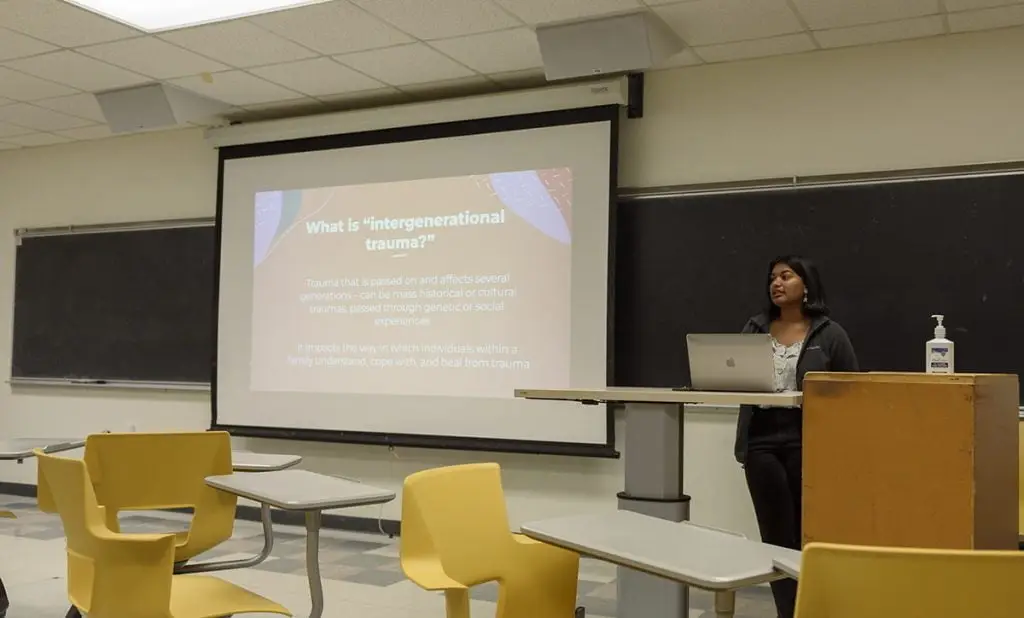
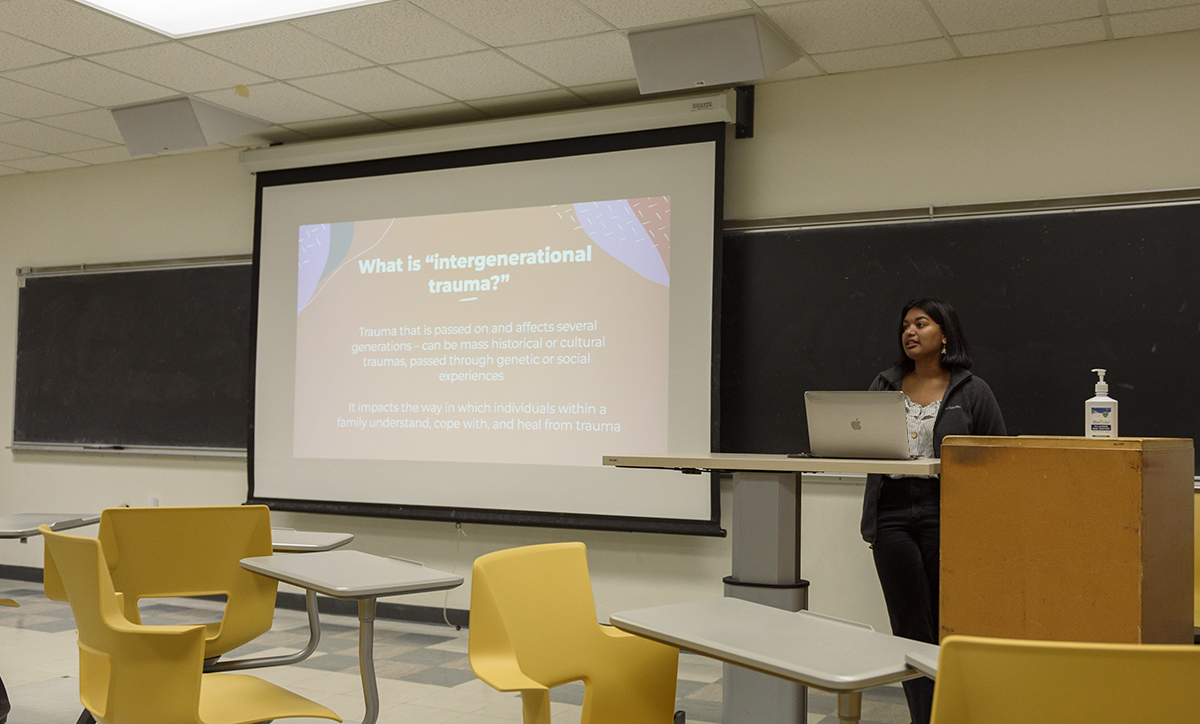
By discussing and analyzing topics such as immigration, the model minority myth, intergenerational trauma and other factors, Asian American Studies 88S explores the origin and development of mental health stigma and its presence in South Asian communities, according to the class syllabus.

“Until and unless there’s a broader community conversation around these things, there won’t be a sense of community healing and just also liberation from the stigma and shame that holds people back and perpetuates a lot of the mental health conditions and anxieties that we see,” Nayak said.

The class seeks to center South Asian voices and lived experiences through online and in-class discussions and other collaborative activities, Nayak added.

Astha Sahoo, a second-year neuroscience student enrolled in the course, said the anonymous nature of their class discussion forum made her feel comfortable sharing her ideas and experiences without revealing her identity.

Students also share their family history and how it has informed their mental health through coursework. One assignment requires students to construct a photo journal that traces their family’s immigration history and the social, political, historical and economic forces that define their community’s outlook on mental health, Nayak said.

First-year psychology and sociology student Namrata Poola said she was moved by a seminar that featured discussions and activities related to body image and colorism in South Asia. Students wrote negative comments that friends and family members had made about their bodies and challenged these comments through positive affirmations, Poola said.

She joined Asian American Studies 88S because she wants to become a clinical psychologist for people of color, she said, adding that the class helped her learn about mental health issues faced by the South Asian community in an academic context.

Sahoo and Poola said they heard about Asian American Studies 88S through Nayak, the president of the UCLA chapter of MannMukti, a national organization that aims to increase awareness and dialogue surrounding South Asian mental health.

Founded in fall 2020, MannMukti at UCLA combats stigma and promotes self-care within the South Asian community through advocacy, research, outreach and peer mentorship, said Isha Sai, a third-year neuroscience student and incoming president of the organization.

Maneesh Rajulapati, a first-year psychobiology student, said he had never had a community space to talk about mental health, coming from a high school environment where he did not often see other Indian people. Coming to UCLA and joining MannMukti and Asian American Studies 88S have allowed him to find this community of Indian people talking about issues that are traditionally hidden, he added.

“A lot of the topics that we talked about are ones that … are relevant in my life, … (but) I never really truly thought about or knew how to put into words,” Rajulapati said.

Asian American Studies 88S also aims to promote culturally specific care by helping students understand the nuances of an individual’s culture and how these perspectives and mindsets may shape someone’s health or ability to participate in certain health behaviors, Nayak said.

Nayak said that when launching the course, she received an overwhelming amount of feedback and support from students who were grateful the class offered a space to discuss mental health with students of similar identities.

“The responsibility of care to be representative of our student population is very important. And this is not only an issue for South Asian populations but also all racially biased populations on campus (and) all people of color,” Sai said.

Nayak said she aims for students to walk away from the course with a tangible set of resources to start conversations with their family and community, recognize cultural stressors and how they impact their mental health, and engage in meaningful discussion to reflect upon their own experiences.

“Being in a class that is reflective of your identity helps you understand that your experiences and your narrative and your struggles and your identity are real and valid and worthy of being studied and understood,” Nayak said.

[ad_2]

Source link
Trending Topics

Features

Download and distribute powerful vaccination QI resources for your community.

Sign up now to support health equity and sustainable health outcomes in your community.

MCED tests use a simple blood draw to screen for many kinds of cancer at once.

FYHN is a bridge connecting health information providers to BIPOC communities in a trusted environment.

Discover an honest look at our Medicare system.

ARC was launched to create a network of community clinicians to diversify and bring clinical trials to communities of color and other communities that have been underrepresented.

The single most important purpose of our healthcare system is to reduce patient risk for an acute event.

Related Posts
Early Cancer Detection Is Entering a New Era. Flint Is Helping Lead the Way.
Why Your “Ozempic” May Not Be Ozempic: FDA Warnings Highlight Growing Risks of Unregulated GLP-1 Drugs
The Communities Most Burdened by Disease Should Be the First to Benefit from Artificial Intelligence
Scroll to Top
Featured Articles
Early Cancer Detection Is Entering a New Era. Flint Is Helping Lead the Way.
Why Your “Ozempic” May Not Be Ozempic: FDA Warnings Highlight Growing Risks of Unregulated GLP-1 Drugs
Why Your “Ozempic” May Not Be Ozempic: FDA Warnings Highlight Growing Risks o...
The Communities Most Burdened by Disease Should Be the First to Benefit from Artificial Intelligence
The Communities Most Burdened by Disease Should Be the First to Benefit from ...
Cancer Pain Care Access Gap Hits Black, Asian Patients
Black and Asian Cancer Patients Wait Longer for Pain Relief in New Study
What Is Cyclosporiasis Symptoms, Food Safety, and Reasons
What Is Cyclosporiasis? The Foodborne Illness Showing Up in the News
Why Minority Mental Health Awareness Month Matters More Than Ever
Categories
AI
ATTR-CM
BIPOC News
Cancer
Clinical Trials
Covid19
Diseases of the Body
Environment
Health Data
Health Equity Events
Health Policy
Health Tips
Subscribe to our newsletter to receive our latest news​
All Stories
Early Cancer Detection Is Entering a New Era. Flint Is Helping Lead the Way.
Why Your “Ozempic” May Not Be Ozempic: FDA Warnings Highlight Growing Risks of Unregulated GLP-1 Drugs
Why Your “Ozempic” May Not Be Ozempic: FDA Warnings Highlight Growing Risks o...
The Communities Most Burdened by Disease Should Be the First to Benefit from Artificial Intelligence
The Communities Most Burdened by Disease Should Be the First to Benefit from ...
BIPOC News
Early Cancer Detection Is Entering a New Era. Flint Is Helping Lead the Way.
The Communities Most Burdened by Disease Should Be the First to Benefit from Artificial Intelligence
The Communities Most Burdened by Disease Should Be the First to Benefit from ...
Why Minority Mental Health Awareness Month Matters More Than Ever
Environment
UV Safety Awareness Month Raises Urgency on Skin Cancer Prevention and Sun Protection Equity
UV Safety Awareness Month Raises Urgency on Skin Cancer Prevention and Sun Pr...
Extreme Heat Safety Tips 5 Ways to Protect Your Health This Summer fyh.news
5 Heat Safety Tips That Could Protect Your Health This Summer
Lupus Awareness Event in Baltimore Aims to Support Research and Shine a Light on Health Disparities
Lupus Awareness Event in Baltimore Aims to Support Research and Shine a Light...
Work Force
A multigenerational Black and Hispanic family sitting together in a park, showing how Social Security helps support older adults, people with disabilities, and families across generations.
Millions of Older Americans Could Face Smaller Social Security Checks by 2032...
dreamstime_s_243253251
The Caregiver Journey: The Hidden Backbone of American Healthcare
Families gather at a Bronx community festival with live music, kids’ activities, and health booths sharing SOMOS social care resources and free screenings.
Celebrating Hispanic heritage while learning about health care

[xyz-ips snippet=”Output-Source-Name”]

Clinical Trials
Early Cancer Detection Is Entering a New Era. Flint Is Helping Lead the Way.
Why Your “Ozempic” May Not Be Ozempic: FDA Warnings Highlight Growing Risks of Unregulated GLP-1 Drugs
Why Your “Ozempic” May Not Be Ozempic: FDA Warnings Highlight Growing Risks o...
Clinical Trial Diversity Remains a Critical Challenge in Alzheimer’s Research
Vaccines and Outbreaks
A parent checking a child's temperature during summer, illustrating the changing RSV patterns and year-round respiratory virus risks.
Can You Get RSV During the Summer?
Michelle Lam, MBA, of NYC Health + Hospitals/Elmhurst & Amy Harris of NYC Health + Hospitals/Elmhurst
Healthcare Leaders Spotlight Vaccine Equity and Adult Immunization Strategies...
Measles Outbreaks Surge: Essential Facts and Prevention Strategies
Other Categories
AI
Read the latest AI News stories trending around the world
ATTR-CM
Cancer
Read the latest Cancer stories trending around the world
Covid19
Diseases of the Body
Read about the latest Diseases of the Body trending around the world
Friday Webinars
Every Friday, we bring you insightful webinars covering critical topics in healthcare, data equity, and policy reform.
Health Data
Read the latest Health Data stories trending around the world
Health Equity Events
Read the best Health Equity Events around the country.
Health Policy
Read the latest Health Policy stories trending around the world
Health Tips
Heart Health
Read the latest on Heart Health News, Stories and Tips.
kidney Health
Read more trending News about Kidney Health, Stories and Tips.