












- By FYH News Team
[ad_1]
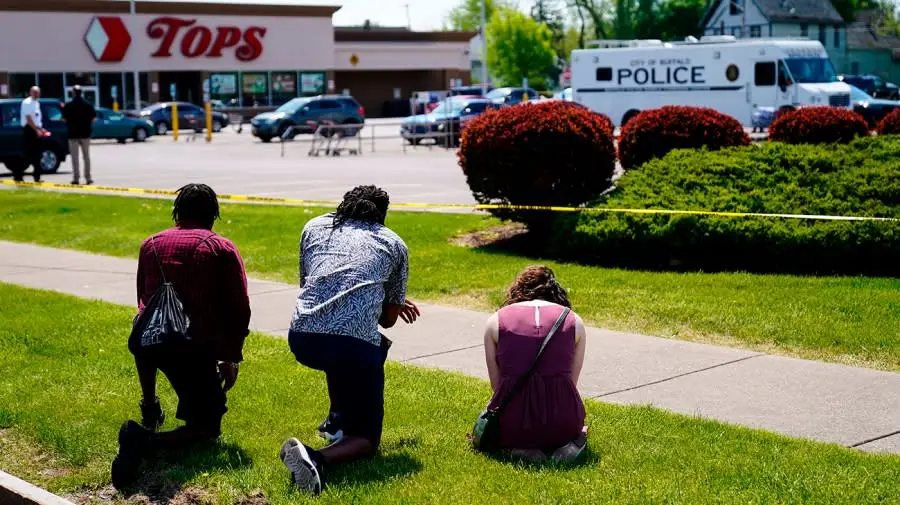
After mass shootings in Buffalo, N.Y. and Uvalde, Texas, left more than 30 people dead in two weeks, witnesses testified before Congress about how their lives were irrevocably changed.
But a pattern quickly emerged — almost all the witnesses were people of color.
These tragic events have reignited calls within communities of color for lawmakers to take action and curb gun violence, much of which disproportionately affects people of color.
The NAACP reported that 50 percent of all gun-related homicide victims are Black, and gun violence is the number one killer of Black Americans between the ages of 15 and 34.
However, advocates and survivors of gun violence say that in order to help communities of color, racism must also be addressed.
Gregory Jackson, a survivor of gun violence, told The Hill that he was interrogated by law enforcement before getting to see a doctor or surgeon after he was shot.
“I nearly bled to death,” he said. “Black and Brown folks are seen as criminals first and patients or people second.”
Jackson is now the executive director of the Community Justice Action Fund, a non-profit dedicated to ending gun violence in Black and Brown communities. The organization was founded after the 2015 massacre at Mother Emanuel AME Church in South Carolina.
When it comes to gun violence in predominantly Black communities, Jackson said, it’s often assumed to be part of gang violence or criminal activity. But only 11 percent of homicides in the Black community are connected directly to gang violence, and only 30 percent are connected to another felony.
“What’s really connected to all of the violence is not crime, but trauma and the lack of resources to treat that trauma,” said Jackson. “It’s very clear that most people who commit a violent offense were a victim first.”
Rep. Robin Kelly (D-Ill.), a member of the Congressional Black Caucus, called the experiences of trauma “the social determinants of life.”
“If people had the education, were not in poverty, if they had jobs, mentors, their neighborhoods were invested into, there were after school programs and hobbies that they could pursue, I think things would look different,” she said.
In Buffalo, most of the victims that died after the shooting were Black, and the incident took place in a majority-Black neighborhood that suffered economic inequality, food deserts and redlining that has historically prevented Black families from building wealth.
Jackson argued that when a community outsider attacked, it highlighted the systemic inequities that made the community “vulnerable.”
“In Buffalo, the community said they felt like because they had no real protection, they were vulnerable on top of everything else they were struggling with,” he said.
Latino leaders have also expressed concerns about widespread gun violence.
In her testimony to Congress following the Uvalde shooting, Janet Murguía, president and CEO of UnidosUS, demanded recognizing gun violence as a public health crisis, one that requires significant support for mental health services.
Laura MacCleery, senior policy director for UnidosUS, said that also includes requiring gun licenses the same way drivers’ licenses exist and limiting the number of firearms on the streets.
“For way too many communities, gun violence is an everyday phenomenon,” said MacCleery. “In countries that have more guns more easily obtainable to more people, there is more gun violence.”
Latino children and teens are three times more likely to be killed by guns than their white peers. Everytown for Gun Safety reported more than 4,100 Latino people die from gun violence in the U.S. every year, 60 percent of which are homicides.
“Too much gun violence happens between family members, between people who know each other in some other way, suicide and homicide,” MacCleery said. “A lot of the gun policies, if they are effective in reducing those kinds of “ordinary” forms of gun violence, are equally important to consider.”
But in recent years, the Latino community has been the victim of several mass shootings.
In 2019, a white nationalist killed 23 Latinos at a Walmart in El Paso, Texas; in 2016, a gunman massacred 49 people, 36 of whom were Hispanic, during “Latin Night” at Pulse, a gay nightclub in Orlando, Fla.
Rep. Veronica Escobar (D-Texas), a member of the Congressional Hispanic Caucus, said these attacks are, in some ways, “permissible.”
She pointed to the Walmart shooting, where the gunman drove 10 hours to kill Mexican immigrants.
“He repeated language and phrases that Donald Trump stated from the most powerful bully pulpit in the world,” she said. “We also saw in Buffalo a very similar pattern of white supremacy. Racism and white supremacy are absolutely nothing new in our country, but especially during the Trump years, there’s been permission granted to white supremacists to espouse their hate and there are very few consequences.”
Following these tragedies, Latino voters in battleground states are in favor of gun control legislation.
In a new Voto Latino poll, a majority of Latinos expressed concerns about their personal safety from gun violence. A majority also said they support “common sense gun safety laws” introduced by Democrats.
On Tuesday, the Senate agreed on a bipartisan bill that would provide funding for mental health services and take guns away from dangerous people, something Escobar said she wholeheartedly supports.
But the bill doesn’t ban assault-style rifles or high-capacity magazines or expand background-check requirements for gun purchases, which critics argue could bar white nationalists from obtaining these kinds of weapons.
Kelly argued that Congress may not be able to track all white nationalists, but there are steps that can be taken to create an environment that discourages hate groups from getting their hands on assault weapons.
“If the FBI or whoever has names of a white nationalist on a list then if they go to buy a gun, I think that’s something that should pop up that we need to vet as deeply as we can,” said Kelly.
“This is not saying take guns away from people but as a Black person, I don’t want to be a sitting duck or someone’s target practice because I’m Black.”
Kelly’s sentiments are indicative of a larger sense of anxiety in the Black community.
In the first half of 2021, over 90 percent of gun retailers reported an increase in Black men purchasing firearms and nearly 87 percent reported an increase in Black women purchasing firearms, according to the National Shooting Sports Foundation.
Those sales increases came after the FBI reported a nearly 40 percent rise in anti-Black hate crimes in 2020.
Lucretia Hughes Klucken, whose son died from gun violence at 19, testified before Congress that owning a gun provides a sense of safety.
“We must prepare to be our own first responders to protect ourselves and our loved ones,” Klucken said in her testimony. “I am a legal, law-abiding citizen. I don’t need the government to save me. I teach people how to use firearms and empower others that look like me to understand that the Second Amendment is their right, too.”
Jackson, who testified after Klucken, said these feelings are understandable. But he also said he knows a gun wouldn’t have saved his life.
“Most of these situations are happening extremely fast,” he said. That’s why getting guns off the streets and putting resources into communities instead is the best option, he added.
For the latest news, weather, sports, and streaming video, head to The Hill.
[ad_2]
Source link
Trending Topics

Features
- Drive Toolkit
Download and distribute powerful vaccination QI resources for your community.
- Health Champions
Sign up now to support health equity and sustainable health outcomes in your community.
- Cancer Early Detection
MCED tests use a simple blood draw to screen for many kinds of cancer at once.
- PR
FYHN is a bridge connecting health information providers to BIPOC communities in a trusted environment.
- Medicare
Discover an honest look at our Medicare system.
- Alliance for Representative Clinical Trials
ARC was launched to create a network of community clinicians to diversify and bring clinical trials to communities of color and other communities that have been underrepresented.
- Reducing Patient Risk
The single most important purpose of our healthcare system is to reduce patient risk for an acute event.
- Subash Kafle
- Victor Mejia
- Jessica Wilson



