











UW program supports underserved STEM students – GeekWire

[ad_1]

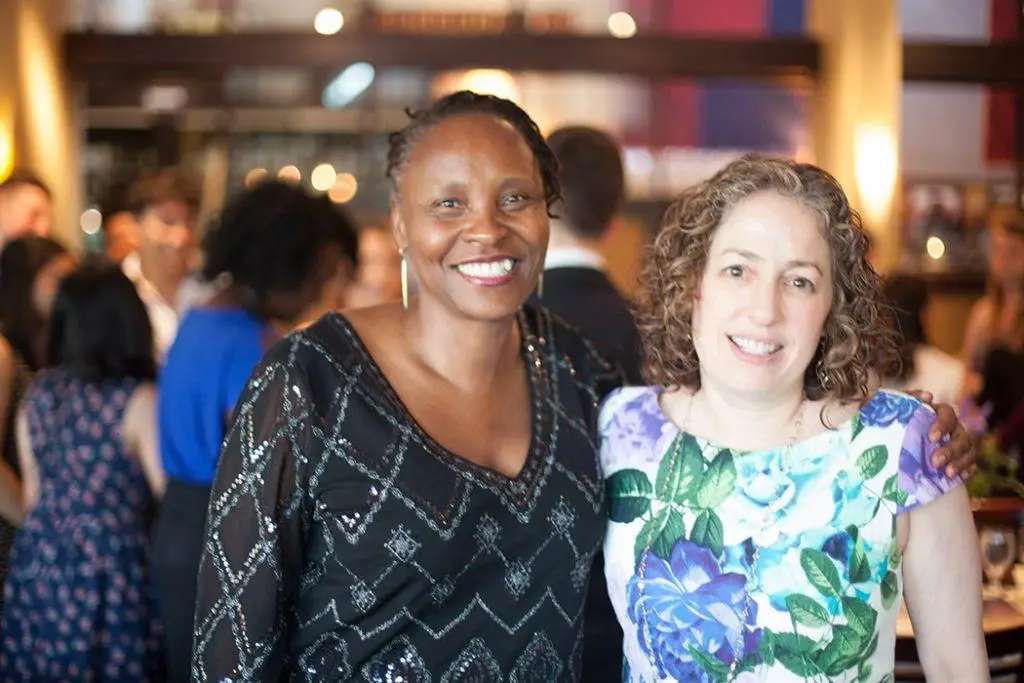
STAR executive director Sonya Cunningham (left) and faculty director Eve Riskin. (UW Photo)

A University of Washington program to support STEM students from low-income and underserved backgrounds is now nine years old. And it aims to spread the model to other institutions.

The Washington State Academic RedShirt program (STARS) takes a cue from college sports, where “redshirting” enables an extra year of eligibility for athletes. 

Students sign up for an extra year at the UW, strengthening their skills before diving into core math and science classes. They also work closely with mentors and advisors.

“I truly think this is the national model on how to get less-privileged students through STEM careers,” said STARS co-founder and faculty director Eve Riskin, a professor of electrical and computer engineering. The University of Colorado Boulder first developed the model and the UW is tasked with spreading it, said Riskin.

STARS hosted a national workshop this month to share its approach with 30 other universities and colleges. In addition, the UW leads a National Science Foundation grant that funds similar programs at six other universities, including Washington State University and the University of Illinois, Urbana-Champaign.

How it works

STARS has graduated 88 engineering or computer science majors, all from high schools in Washington state. They are now working at companies such as Amazon, Boeing, Accenture, Honeywell and Qualcomm.

Students in the two-year program take supplemental courses in math, chemistry, physics and computer science; receive guidance about study skills and internships; and tap into peer and faculty mentoring.

The program also goes beyond academic support, said executive director Sonya Cunningham.

“It takes a lot to help students to be successful,” said Cunningham, “It’s about holistic wraparound support within a culture of care. And that essentially means that we are really dedicated to helping students to overcome individual barriers to success.”

One student, for instance, was getting low grades because his parents visited every weekend and took him out — they didn’t have a college background so didn’t realize how hard he had to study, said Cunningham. Program advisors helped the student get back on track.

Bailey Griffin’s high school in rural Oroville, Wash., didn’t teach calculus, chemistry, or physics, unlike schools in wealthier urban areas.

“STARS really helped me build a better foundation for those subjects at UW that wouldn’t have been possible with my background,” said Griffin, who graduated from the UW in 2021 and is now an engineer with Parametrix, a transportation consultancy.

“Going through engineering school is very hard and can be really lonely. With STARS, I had a built-in support system of other students. The program was also invaluable for professional development,” said Griffin. “I wouldn’t be an engineer without the program.”

STARS graduate Bailey Griffin (right) during an internship working on light rail development. (UW Photo)

Filling in the gaps

Riskin has seen how students at the top of their high school class can hit a wall when they come to the UW.

“We see the discrepancy across the state between students who are growing up in privileged areas and students who are growing up in higher poverty regions,” said Riskin. And that discrepancy can grow during college. “You show up and you can run into racism, sexism, elitism, and you get these messages that you don’t belong.”

That feeling of not belonging can cause people to leave engineering fields, said Riskin, who also co-founded the UW ADVANCE program to support women STEM faculty.

Riskin thinks the STARS model fits best at flagship public institutions where the typical engineering student is less likely to qualify for financial aid than a student in the general university population.

NSF has provided funding to initiate programs similar to STARS, but institutions need to find other sources of support long term. UW program funders now include the Washington State Opportunity Scholarship and private philanthropies.

STARS students and alumni are starting to give back and support the program in their own way. One student organized his friends to give to STARS on Husky Giving Day. Others help with recruiting, and several have encouraged younger siblings to apply, said Riskin.

The recent meeting accelerated discussions with other institutions seeking to adopt a similar model. Said Riskin: “One of the comments during the meeting was ‘STARS fills all the gaps.’”

Impact on students

Below are some highlights of UW STARS program accomplishments.

  • 67% of STARS students are first-generation college students; 47% are “racially/ethnically minoritized”; 43% are women; and 83% hold Pell Grants, U.S. government grants for low-income students.
  • The program has about an 80% retention rate in engineering or computer science majors.
  • STARS students academically outperform their peers, with higher-than-average grades in classes such as Calculus I and II, and computational science and engineering I and II.
  • STARS pre-engineering students report a greater sense of belonging to the College of Engineering community than non-STARS students. They also report greater confidence in their math and science abilities, and in their time management, networking and interview skills.

[ad_2]

Source link

Trending Topics

Features

Download and distribute powerful vaccination QI resources for your community.

Sign up now to support health equity and sustainable health outcomes in your community.

MCED tests use a simple blood draw to screen for many kinds of cancer at once.

FYHN is a bridge connecting health information providers to BIPOC communities in a trusted environment.

Discover an honest look at our Medicare system.

ARC was launched to create a network of community clinicians to diversify and bring clinical trials to communities of color and other communities that have been underrepresented.

The single most important purpose of our healthcare system is to reduce patient risk for an acute event.

Related Posts
The Communities Most Burdened by Disease Should Be the First to Benefit from Artificial Intelligence
Black and Asian Cancer Patients Wait Longer for Pain Relief in New Study
What Is Cyclosporiasis? The Foodborne Illness Showing Up in the News
Scroll to Top
Featured Articles
The Communities Most Burdened by Disease Should Be the First to Benefit from Artificial Intelligence
The Communities Most Burdened by Disease Should Be the First to Benefit from ...
Cancer Pain Care Access Gap Hits Black, Asian Patients
Black and Asian Cancer Patients Wait Longer for Pain Relief in New Study
What Is Cyclosporiasis Symptoms, Food Safety, and Reasons
What Is Cyclosporiasis? The Foodborne Illness Showing Up in the News
Why Minority Mental Health Awareness Month Matters More Than Ever
From Childhood Cancer to Alzheimer’s and ALS Celebrity Health Stories Spark National Conversation on Disease, Caregiving, and Equity
From Childhood Cancer to Alzheimer’s and ALS Celebrity Health Stories Spark N...
Learn How NMQF Is Transforming Early Disease Detection in Flint
Categories
AI
ATTR-CM
BIPOC News
Cancer
Clinical Trials
Covid19
Diseases of the Body
Environment
Health Data
Health Equity Events
Health Policy
Health Tips
Subscribe to our newsletter to receive our latest news​
All Stories
The Communities Most Burdened by Disease Should Be the First to Benefit from Artificial Intelligence
The Communities Most Burdened by Disease Should Be the First to Benefit from ...
Cancer Pain Care Access Gap Hits Black, Asian Patients
Black and Asian Cancer Patients Wait Longer for Pain Relief in New Study
What Is Cyclosporiasis Symptoms, Food Safety, and Reasons
What Is Cyclosporiasis? The Foodborne Illness Showing Up in the News
BIPOC News
The Communities Most Burdened by Disease Should Be the First to Benefit from Artificial Intelligence
The Communities Most Burdened by Disease Should Be the First to Benefit from ...
Why Minority Mental Health Awareness Month Matters More Than Ever
From Childhood Cancer to Alzheimer’s and ALS Celebrity Health Stories Spark National Conversation on Disease, Caregiving, and Equity
From Childhood Cancer to Alzheimer’s and ALS Celebrity Health Stories Spark N...
Environment
UV Safety Awareness Month Raises Urgency on Skin Cancer Prevention and Sun Protection Equity
UV Safety Awareness Month Raises Urgency on Skin Cancer Prevention and Sun Pr...
Extreme Heat Safety Tips 5 Ways to Protect Your Health This Summer fyh.news
5 Heat Safety Tips That Could Protect Your Health This Summer
Lupus Awareness Event in Baltimore Aims to Support Research and Shine a Light on Health Disparities
Lupus Awareness Event in Baltimore Aims to Support Research and Shine a Light...
Work Force
A multigenerational Black and Hispanic family sitting together in a park, showing how Social Security helps support older adults, people with disabilities, and families across generations.
Millions of Older Americans Could Face Smaller Social Security Checks by 2032...
dreamstime_s_243253251
The Caregiver Journey: The Hidden Backbone of American Healthcare
Families gather at a Bronx community festival with live music, kids’ activities, and health booths sharing SOMOS social care resources and free screenings.
Celebrating Hispanic heritage while learning about health care

[xyz-ips snippet=”Output-Source-Name”]

Clinical Trials
Clinical Trial Diversity Remains a Critical Challenge in Alzheimer’s Research
Healthcare professional collecting a blood sample from a diverse patient as part of multicancer early detection screening.
Bridging the Gap: How Multicancer Early Detection Can Advance Health Equity i...
dreamstime_s_174488289
PCOS to PMOS: Why the 2026 Name Change Matters for Women’s Health

[xyz-ips snippet=”Output-Source-Name”]

Vaccines and Outbreaks
A parent checking a child's temperature during summer, illustrating the changing RSV patterns and year-round respiratory virus risks.
Can You Get RSV During the Summer?
Michelle Lam, MBA, of NYC Health + Hospitals/Elmhurst & Amy Harris of NYC Health + Hospitals/Elmhurst
Healthcare Leaders Spotlight Vaccine Equity and Adult Immunization Strategies...
Measles Outbreaks Surge: Essential Facts and Prevention Strategies
Other Categories
AI
Read the latest AI News stories trending around the world
ATTR-CM
Cancer
Read the latest Cancer stories trending around the world
Covid19
Diseases of the Body
Read about the latest Diseases of the Body trending around the world
Friday Webinars
Every Friday, we bring you insightful webinars covering critical topics in healthcare, data equity, and policy reform.
Health Data
Read the latest Health Data stories trending around the world
Health Equity Events
Read the best Health Equity Events around the country.
Health Policy
Read the latest Health Policy stories trending around the world
Health Tips
Heart Health
Read the latest on Heart Health News, Stories and Tips.
kidney Health
Read more trending News about Kidney Health, Stories and Tips.


