








[ad_1]
1. The risk of suicidal ideation and suicide attempt was elevated amongst adolescents belonging to sexual minorities in Canada compared to heterosexual individuals.
Evidence Rating Level: 2 (Good)
Among young adults and adolescents in Canada, suicide is a leading cause of death. It is well known that those belonging to a sexual minority are at increased risk of both suicidal ideation and attempt. However, suicidality among transgender adolescents, individuals whose assigned sex at birth does not match their gender identity, and gender non-conforming youth is not well studied in external literature. In this population-based study of Canadian adolescents who participated in the 2019 Canadian Health Survey on Children and Youth, 6800 adolescents were assessed for suicidal ideation and lifetime suicide attempt. In general, adolescents belonging to sexual minority groups were more likely to report suicidal ideation and attempt compared to their heterosexual counterparts. Specifically, the risk of suicidal ideation and suicide attempt in transgender adolescents was increased compared to heterosexual individuals (RR 4.95, 95%CI 3.63-6.75 and RR 7.60, 95%CI 4.76-12.1, respectively). Additionally, individuals attracted to multiple genders were 2.5 times more likely to have suicidal ideation (95%CI 2.12-2.98) and 2.8 times more likely to have a suicide attempt (95%CI 2.18-3.68). The burden of suicidality remains prevalent in this population despite recent efforts to destigmatize mental health. These findings warrant the need for increased research into suicide prevention specifically addressing transgender, gender non-conforming, and sexual minorities in Canada. However, the results of this study may be limited as other variables such as race, socioeconomic status, and education were not included in the analysis. Further research exploring the role of intersectionality with respect to mental health in adolescents in Canada could be valuable.
Intake of whole grain foods and risk of coronary heart disease in US men and women
1. Incorporation of whole grain foods to diet was associated with decreased risk of coronary artery disease.
Evidence Rating Level: 2 (Good)
Coronary heart disease (CHD) presents a significant healthcare burden in the USA. Studies have shown that a healthy lifestyle and diet can be significant preventative factors in CHD. While literature does discuss optimal dietary choices for cardiovascular health, the direct relationship between whole grain foods and risk of CHD is not well elucidated. In this retrospective cohort study, the dietary intake of 74,244 participants from the Nurses’ Health Study who did not have a history of cardiovascular disease at baseline was assessed using a semi-quantitative food frequency questionnaire. This present study focused on seven most common whole grain foods including cold breakfast cereals, dark bread, popcorn, oatmeal, bran added to food, wheat germ, and brown rice. Assessment for coronary heart disease including myocardial infarction was made by blinded physicians using participant medical records. Participants who consumed at least one serving a day of whole grain breakfast cereal (HR 0.83, 95%CI 0.78-0.89), oatmeal (HR 0.79 95%CI 0.74-0.84), and brown rice (HR 0.79, 95%CI 0.71-0.87) had a significantly lower risk of CHD compared to participants consuming less than 1 serving a month of whole grain foods. While this study does support whole grain intake decreasing CHD risk, the influence of confounding variables such as other dietary habits, physical activity, and BMI on this relationship is not investigated. As well, the role of culture on dietary habits and its subsequent effect on health outcomes is not discussed. Nonetheless, these findings still warrant further investigation into the association between whole grain intake and CHD risk.
1. Black and Hispanic patients with dementia used less hospice care and had increased hospital admissions compared to white patients in end-of-life.
Evidence Rating Level: 2 (Good)
End-of-life care for older adults with dementia is critical given the poor quality of life and multitude of distressing symptoms these patients and their families experience. While utilization of facilities such as hospices during end-of-life has increased in popularity, this service remains relatively underused. Studies suggest that among patients with dementia, racialized minorities experience more aggressive end-of-life care that often does not have a focus on comfort. The influence of race and ethnicity on hospice use among patients with dementia is not well elucidated in literature. In this retrospective cohort study, 5058 participants with dementia were assessed for race, as well as frequency of hospice care, emergency department visits, and hospitalizations during the last six months of life. Compared to White patients, Black patients were less likely to use hospice in end-of-life care (OR 0.65, 95%CI 0.55-0.78) and had more frequent hospital utilization in the last six months of life. Additionally, the proportion of adults with dementia who completed advance care planning was lower among Black and Hispanic participants compared to White participants. In conclusion, these findings highlight the importance of comfort-focused care and end-of-life measures such as hospice in individuals with end-stage dementia. Given the significant differences in end-of-life planning and increased hospitalizations among racialized populations, further research and awareness to encourage cultural competence in end-of-life care is essential. Hospice care may significantly improve quality of life for patients and their caregivers during end-of-life and should be encouraged by physicians to racialized populations to highlight the benefits of comfort-focused care and reduce unnecessary hospitalizations.
1. The frequency of endovascular thrombectomy in patients with acute ischemic stroke over the age of 80 has increased between 2012 and 2019.
2. Among patients treated with endovascular thrombectomy, individuals aged 80 and older had increased inpatient mortality, as well as difficulties with safe discharges and regaining functional independence compared to patients younger than 80 years.
Evidence Rating Level: 2 (Good)
Age continues to be one of the most important risk factors for stroke incidence which increases significantly with advancing age. The advantages of endovascular thrombectomy (EVT) among patients younger than 80 years with acute ischemic strokes secondary to large-vessel occlusion is well elucidated in many randomized control trials. However, patients older than 80 years are often excluded from these studies and the impact of EVT in this population is unclear and understudied. In this US nationwide retrospective cohort study, 302,965 patients with acute ischemic stroke were assessed for EVT eligibility based on time of arrival, as well as efficacy and safety of therapy. EVT use increased from 0.49 to 0.76 among eligible patients aged 80 years or older compared to those younger than 80 years between 2012 and 2019. Among patients eligible for EVT, 30.1% were aged 80 or older and 69.9% were younger than 80 years. With regards to efficacy of EVT therapy, older patients were less frequently discharged home than younger patients (OR 0.43, 95%CI 0.40-0.46). Additionally, older patients had increased inpatient mortality compared to younger patients (OR 2.74, 95%CI 2.61-2.89). In conclusion, this study highlights that the use of EVT among older adults has increased significantly over the last several years, although a low proportion of these individuals are able to undergo safe and functional discharges. Limitations in this analysis include the broad comparison of adults aged 80 or older with patients younger than 80 who may have significantly different health comorbidities and status depending on their age. Nevertheless, future research into outcomes and disparities among older adults with regards to EVT use is beneficial.
1. Male obese patients with cardiogenic shock had better health outcomes and decreased mortality compared to non-obese male patients, a phenomenon referred to as the “obesity paradox”.
2. Sex-related differences exist with respect to the obesity paradox in cardiogenic shock as this phenomenon was only observed in male patients and not in female patients.
Evidence Rating Level: 2 (Good)
Obesity is thought to be associated with better outcomes in patients experiencing cardiogenic shock (CS), a phenomenon often referred to as the “obesity paradox”. This paradox has additionally been confirmed in heart failure, myocardial infarction, valvular disease, and arrhythmias. Many of these studies suggest that varying presentations exist between sexes with regards to this phenomenon. To date, the role of sex pertaining to the obesity paradox in cardiogenic shock has not yet been elucidated. In this observational cohort study, 1227 patients from the RESCUE registry in Korea with cardiogenic shock were assessed for obesity status (BMI > 25) and inpatient mortality. The results of this study showed that male obese patients had a decreased risk of in-patient mortality compared to non-obese patients (OR 0.63, 95%CI 0.43-0.92, P=0.016). However, in comparison to non-obese patients, female obese patients interestingly had a similar risk of mortality (OR 0.94, 95%CI 0.55-1.61). This suggests that the obesity paradox only exists in men and not women with respect to cardiogenic shock when observing inpatient hospital survival. While this study presents an interesting outlook on cardiogenic shock, it has several limitations. For instance, BMI may not necessarily be a direct indicator of health status so it is possible many individuals classified as obese within this study may have better health predictors compared to their non-obese counterparts. The definition of “obese” used in this study (BMI > 25) may also not be applicable to other countries with varying cutoffs for obesity. As well, as this study was mostly conducted in Korea, its generalizability to other cultures and countries is limited. However, the findings of this study do warrant further investigation into sex-related differences in the obesity paradox with respect to cardiogenic shock.
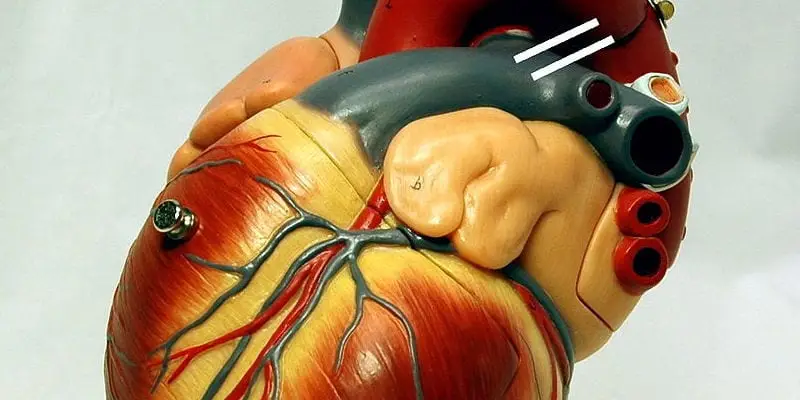
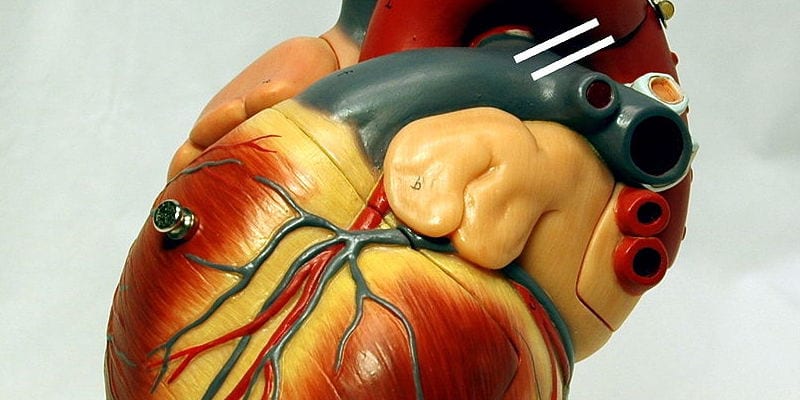
Image: PD
©2022 2 Minute Medicine, Inc. All rights reserved. No works may be reproduced without expressed written consent from 2 Minute Medicine, Inc. Inquire about licensing here. No article should be construed as medical advice and is not intended as such by the authors or by 2 Minute Medicine, Inc.
[ad_2]
Source link