











[ad_1]

In Latin America, 4 million unsafe abortions are practiced every year, and access to sexual and reproductive health resources in the region is virtually nonexistent, especially in rural areas.
This is especially true in countries like Venezuela and Nicaragua, where women are faced with limited resources, lack of health providers, and even prosecution of in-person companions for medical abortions. Both countries are among the top-five nations in Latin America that spend the least on public health, and in December the U.N. denounced Nicaraguan President Daniel Ortega’s outlawing of more than 3,000 nongovernmental organizations that provided assistance in the country, including 148 women’s organizations and 60 medical ones, with the bulk of the NGOs being shut down last year.
Within this landscape, organizations are using technology to fill the gaps left by governments and educational systems surrounding sexual and reproductive health, a taboo topic that is hardly discussed in the public sphere.
“Tech is playing a fundamental role in the way we learn about anything, because it helps standardize access to information,” says Melanie Agrinzones, an activist with Venezuelan feminist collective Uquira, which helps share information on sexual and reproductive health and rights.
Agrinzones notes that an emerging set of digital tools focused on educating women in Latin America is making it easier to inform people about sexual and reproductive health. “Digitalization has helped us find verified information on abortion, birth, breastfeeding. We’ve found guides on sexual education from colleagues in other countries, and the organizations working in challenging countries have used that to replace what states should be doing: break myths, oppose conservative systems, and educate people.”
Canadian obstetricians Drs. Roopan Gill and Genevieve Tam are among the people building such resources. In 2020, the pair—who met during their residencies in 2011—used their experience working with the World Health Organization and Doctors Without Borders and passion for international women’s health to launch Vitala Global. The organization works with local communities to identify their public health needs, and helps build solutions. Identifying a need in Venezuela, which has some of the world’s harshest abortion restrictions, Vitala Global rolled out Aya Contigo, an app for helping self-manage abortions, in March 2022.
Aya Contigo—which provides information, one-on-one virtual chat support, and guidance to users who want to self-manage their abortions—debuted amid increasing repression around abortion. Venezuelan authorities placed activist Vannessa Rosales under house arrest for six months in 2021 for helping a 13-year-old (who had become pregnant as the result of rape) access medical abortion resources.
Based on that case, and conversations with dozens of grassroots organizations that partnered with Vitala Global, Gill and Tam made privacy the cornerstone of Aya Contigo. The resource provides a safe chat for both companions and users as they navigate their abortion, without requiring them to disclose their identities.
“The main reason to create a digital tool was understanding the Venezuelan setting,” Gill says, contending that a digital healthcare provider, although not a replacement for the regular healthcare system, can facilitate attention and care, especially in troubling contexts. Aya Contigo also connects users with external reproductive health providers, local feminist organizations, and domestic violence help services while owning the information and encrypting both ends.
Since its March 2022 launch, Aya Contigo has assisted 2,500 users and engaged with more than 20 grassroots organizations, building a bridge between local efforts and international platforms like DWB and the WHO. The success bodes well for future efforts, Gill says, noting, “If we are able to do this in Venezuela, with the challenges of the complex humanitarian crisis, we can do this anywhere.”
Like Venezuela, Nicaragua has a lot of barriers to women’s healthcare. Anielka Medina has long been addressing the difficulties women face in her home country, starting with the Lily Project in 2016. Through mobile health clinics, the effort provided free healthcare for cervical cancer patients in rural parts of the country. The mission was also to educate people on sexual and reproductive health and rights.
But in 2018, with protests against the social security system amendments all over Nicaragua and Ortega’s government prosecuting nonprofit workers, the Lily Project wasn’t able to provide the services its communities so highly needed. By the time the pandemic started in 2020, the team knew they had to find a way to follow up with their 23,000 patients, so they decided to catch up with them via WhatsApp.
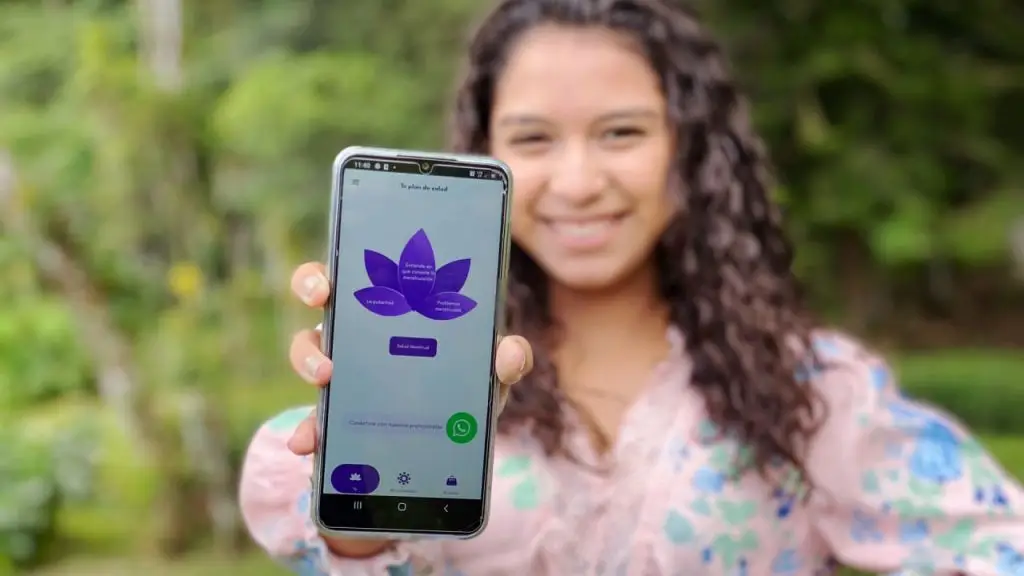
“We started by sharing information, recording videos not only about their reproductive health but about COVID, since these remote communities were not receiving any guidelines to stay safe,” Medina says. “We realized they had way more questions . . . and sometimes they just wanted someone to listen. This is when we started thinking about an app, a tool where they could fulfill all of these needs and more in one place.” In October 2022, Chava was born.
Chava is the first comprehensive app of its kind in Latin America providing a safe educational resource about sexual and reproductive health for women and girls through personalized information, tools, access to expert care via a team of nurses, and a supportive community they can talk to. Users can create their own health and education plan based on their interests, as well as access forums to share resources and create communities with fellow users. The app also links to the WhatsApp chat that Chava’s nurses use to run checkups on patients and answer all of their health questions.
Agrinzones says digital resources like Chava and Aya Contigo are a way to improve people’s literacy on sexual and reproductive health and rights in places where policies limit that information and criminalize abortion. “Until social decriminalization happens and we get access to comprehensive sexual education, women will still be blamed for things that happen to their bodies. Thanks to the internet, new generations are changing their perspectives on these topics.”
Although the pervasiveness of smartphones was one of the reasons Vitala Global decided to go the digital route in Venezuela, the fact is that a third of Latin Americans still lack internet access. Agrinzones emphasizes the importance of having community leaders accessing these tools to share them.
“The people with access to data have a responsibility to the communities that lack that privilege,” she says. “We need to understand the digital gap and the access inequality, so the ones with [access] can use the tools and information to [benefit] our communities.”
Both Chava and Aya Contigo are putting together the information they’re collecting in order to fight the disinformation around these subjects—including 10 abstracts in international academic publications—so other organizations and stakeholders can access it and use it to develop new solutions.
Though it’s still early days for Chava, Medina has big plans, not only to expand the app to more Central American countries but also to offer additional services. “We want to create a whole health ecosystem for women,” she says.
Gill has a similarly expansive vision for Aya Contigo. Vitala Global strives to expand to more rural spaces in Venezuela, as well as to work with younger groups to focus more on prevention. As the organization rolls out new features to Aya Contigo—including help with gender-based violence, mental health tools, a miscarriage component, and a real-time tracker of physical and emotional symptoms during self-managed abortions—it’s also raising money to offer Aya Contigo in the U.S. in the wake of the Supreme Court’s reversal of Roe v. Wade.
“The app has been turned into an advocacy tool,” Gill says. “It’s more than providing information. It has the potential to lead to systematic change. If people can’t have a dignified experience with their bodies, if they’re not free to express their reproductive autonomy, we still have work to do.”
The post These startups are changing how women in Latin America access abortion and sexual health resources appeared first on Fast Company.
[ad_2]
Source link