









[ad_1]

Misguided publicity around an unrepresentative 20-year-old medical study has resulted in an outrageous and pervasive retreat from effective treatment for a host of life-altering and sometimes debilitating symptoms that can impact nearly every woman alive — often for years at a time.
That’s the shocking gist of a recent cover story in The New York Times Magazine on menopause and US healthcare. While infuriating, I certainly wasn’t surprised by the author’s narrative. It closely mirrored my own journey — and that of thousands upon thousands of other women.
And a Mayo Clinic study published earlier this year estimates these symptoms account for “an annual loss of $1.8 billion in the United States.”
It doesn’t have to be this way. We can forge a better path.
Personal perspective
Nearly ten years ago, after months of discomfort, I booked an appointment with my doctor to discuss some disturbing symptoms and my care options.
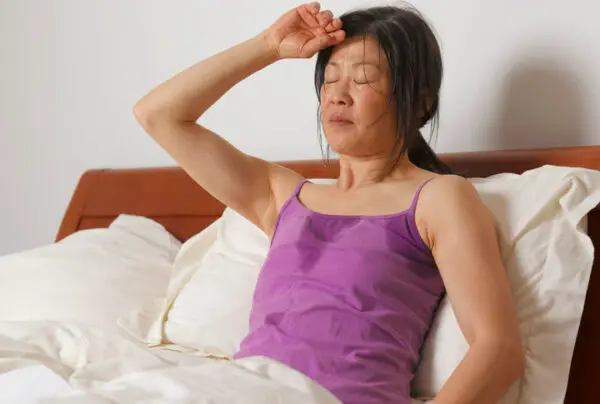
I’d been feeling super foggy. I couldn’t sleep, couldn’t think, couldn’t exercise. Nothing was right. It was becoming harder and harder just to get through the day. After six months of wondering why the hell I was struggling so much, it dawned on me that this could be the start of “the change.” So I scheduled a visit with my OB/GYN. I’d been his patient for 20 years. He had delivered my children. He agreed that it was probably perimenopause or early menopause. His guidance was simply “getting old sucks.” That’s literally what he said to me.
I had a flood of mixed emotions driven mostly by anger, that after 20 years as his patient, this was the best he had to offer. I took my file and left, into unknown territory but driven by my belief that there had to be a better way. It took me another six months of legwork and research on my own to finally find a hormone specialist. There wasn’t one in my area at the time, so I ended up having to use my airline miles to fly to Los Angeles for treatment. And I paid out of pocket. Bioidentical hormone therapy (BHRT) pellets improved my symptoms and restored the quality of my life immeasurably. Nowadays, there are even more clinically effective treatment options for the litany of menopause-related issues commonly experienced by women everywhere — vasomotor symptoms (hot flashes/night sweats), dyspareunia, sleep disturbance, poor concentration, irritability, listlessness, dry skin, weight gain, hair thinning,….
But this is not a success story. The same knee-jerk paucity in consultation and care that I faced nearly a decade ago is firmly entrenched across our health systems. Which is why family and friends — many of them practicing clinicians — reach out to me when they start experiencing menopause symptoms, often after they’ve already tried to talk with their primary care physicians. So many need help finding informed providers in their cities and many of them have had to travel because, depending on where they live in the US, there may not be any local doctor that specializes in perimenopause, menopause, or HRT. And while I’ve worked in the healthcare industry for over 25 years, I specialize in population bioinformatics, strategy, and innovation. I am not a medical doctor. It is ridiculous that anyone should have to turn to me for menopause advice. What gives?
Absurd inertia
Let’s be clear: Menopause timing and symptoms will be different for each woman, but there is no great mystery here. Every woman can expect to experience it and any women’s health provider should be well versed on the matter. There is a large body of clinical knowledge on menopause-related changes in body function that can result in impairment and suffering for months or years at a time. And there are also plenty of low-risk and effective treatments and protocols for managing and mitigating those issues, amongst them a host of FDA-approved hormone replacement therapies.
But that isn’t getting reflected in standard care. Menopause treatment, and HRT in particular, has become practically taboo. As detailed in The New York Times article, “Education on a stage of life that affects half the world’s population is still wildly overlooked at medical schools. A 2017 survey sent to residents across the country found that 20 percent of them had not heard a single lecture on the subject of menopause, and a third of the respondents said they would not prescribe hormone therapy to a symptomatic woman, even if she had no clear medical conditions that would elevate the risk of doing so.”
Endocrinologist JoAnn Manson of Brigham and Women’s Hospital in Boston and Harvard Medical School has aptly noted that the general lack of menopause education in the medical community precludes an array of beneficial treatment options for women: “There is a whole generation of women not getting answers.”
As was the case in my journey, too many women have to work too hard just to find a provider who will discuss symptoms and treatment thoughtfully. And then you have to find a physician who actually understands proper assessment. For example, a normal E2 blood panel will only look at your estradiol estrogen level. If you’re in perimenopause, it is going to look fine. But women have testosterone, too. And progesterone. And DHEA. There are six to eight different hormones that should be measured. If you’re not working with a specialist, you may not even get the right tests for determining what’s going on with your body. There has to be a better way.
Fixing it
The issue came to a head for me this year when I was discussing this “womens’ work” with two friends and colleagues who happen to be female executives at a fairly large healthcare system in the southeast.
We have all shared our journeys through this with each other personally, and we suddenly realized we are all in roles where we can actually make a difference. Why hadn’t we set up an alternative care model within their organization and worked through how to incorporate screenings and education and treatment options for perimenopause and menopause into, say, annual health exams — just like with Pap smears or mammograms? It was almost embarrassing when we thought about it.
So we’ve actually started developing that program:
- Identifying and recruiting physician leadership
- Determining the clinical protocols involved
- Investigating integration with existing women’s health services
- Modeling how to better help women identify perimenopause and menopause symptoms, and as well as our treatment options
- Preparing to approach payers with a plan and investment strategy
We need to create a care model that doesn’t treat menopause as some separate gray area of women’s health where doctors are unequipped and patients are left to their own devices to figure it out. The New York Times quoted an assistant clinical professor in urology stating that, in an ideal world, “Gynecologists, internists, and urologists would run through a list of hormonal symptoms with their middle-aged patients rather than waiting to see if those women have the knowledge and wherewithal to bring them up on their own.”
There is absolutely no reason why that ideal isn’t our reality, and I would love nothing more than to encourage other healthcare executives from every corner of the system to work together on closing this senseless gap and delivering better national standards.
[ad_2]
Source link