










[ad_1]
Dr. Cavazos, who was often called Larry by close acquaintances, had an inspiring personal story as the son of a Texas ranch foreman of Mexican American ancestry. A primary focus of Dr. Cavazos’s public life was improving educational opportunities for Hispanic students.
Story continues below advertisement
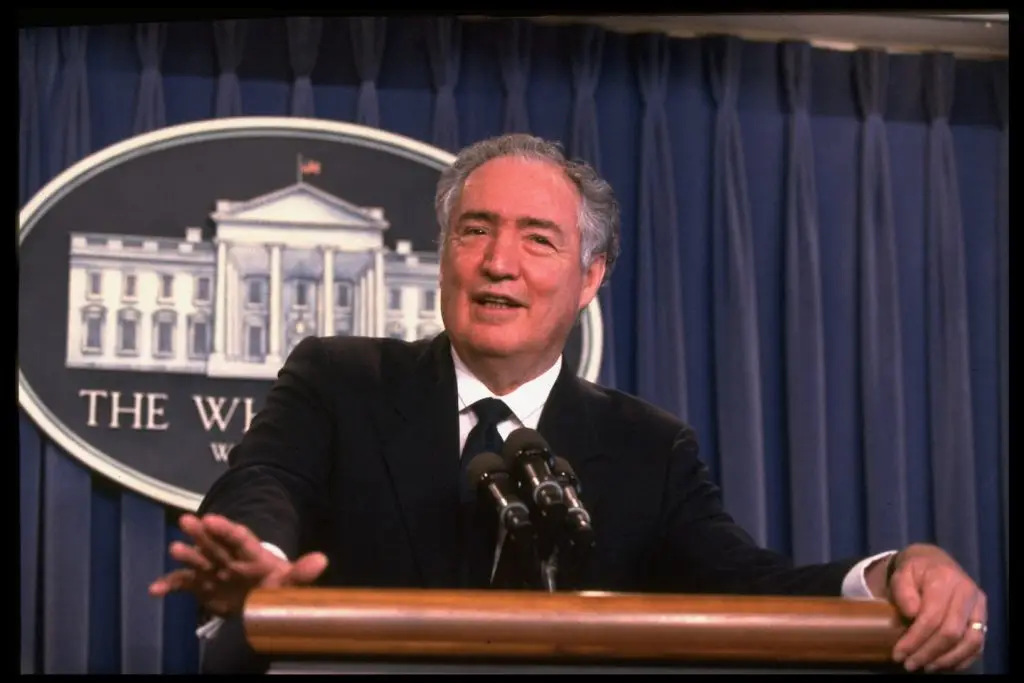
He was unanimously confirmed as education secretary by the Senate in September 1988, less than two months before that year’s presidential election between then-Vice President Bush and Democrat Michael S. Dukakis. On his first day as a Cabinet secretary, Dr. Cavazos conducted a news conference in both English and Spanish.
From the beginning, however, he faced several hurdles, including that he was a Democrat in a Republican administration. He took over a Cabinet department that Reagan had threatened to eliminate and whose budget had been cut in preceding years. He succeeded William F. Bennett, a headline-making conservative firebrand who reveled in provoking teachers’ unions, college professors and others in the educational establishment.
Although Dr. Cavazos was highly qualified to be education secretary, his selection was viewed by many in Washington as a ploy for Bush to win Hispanic votes in what was then a close campaign. The other two finalists for the job were also Hispanic. Dr. Cavazos’s first duties as education secretary included speeches and visits to schools in Texas, California and other states with large Hispanic populations.
Bush won the election in part by promising to be the “education president.” Dr. Cavazos aimed to improve dropout rates among minority students and to make bilingual education a federal priority. He often spoke of the need to persuade young people to stay in school.
Story continues below advertisement
“A couple years ago, I was at a school in Lubbock [Tex.] that was predominantly Hispanic and black,” he told the Los Angeles Times in 1988. “This young man raised his hand, a little Hispanic fellow, and he said, `Doctor, what do you tell your parents when they tell you it is now time to quit school and go to work?’
“It was a devastating question to me personally. I know it’s true.”
Dr. Cavazos, who had a quiet, conciliatory manner, had no political experience before being tapped as education secretary and was not considered an influential member of Bush’s Cabinet. He publicly supported the concept of “school choice,” a proposal long cherished by conservatives in which parents could send their children to better schools across district lines.
Story continues below advertisement
But he angered Hispanic leaders and onetime educational allies by saying in a 1990 speech in Texas, “If that child cannot speak English the first day of school, that child is not ready to learn.”
Few long-range initiatives were carried out during Dr. Cavazos’s 27-month tenure as education secretary, and some staff members complained that their policy memos went unread. Others noted that Dr. Cavazos left the office at 4:45 every day, didn’t work weekends and spent most of his time traveling and giving speeches. His wife, who was trained as a nurse and was not on the federal payroll, accompanied him to meetings and on his trips, reviewed official documents, edited his speeches and had an office next to his.
In December 1990, Dr. Cavazos was summoned to the White House, where Bush’s chief of staff, John Sununu, reportedly told him that Bush wanted him gone by the end of the month. Dr. Cavazos was among the few people in Washington surprised by the move. In his resignation letter, he did not include the customary note of thanks to the president for the opportunity to serve.
Story continues below advertisement
“He didn’t do much. In fact, he didn’t do anything,” Albert Shanker, president of the American Federation of Teachers, said of Dr. Cavazos at the time. Others said his hands were tied by an indifferent and sometimes hostile administration.
Lauro Fred Cavazos Jr. was born Jan. 4, 1927, on the King Ranch in South Texas. It is the country’s largest ranch, at more than 1,200 square miles. He was a sixth-generation Texan whose family had arrived long before Texas declared independence from Mexico in 1836. (It became a state in 1845.)
His father was a foreman in charge of the King Ranch’s renowned Santa Gertrudis cattle and, in earlier years, had taken part in gunfights with suspected bandits. His mother was a homemaker.
Story continues below advertisement
“On the ranch we all spoke Spanish,” Dr. Cavazos told the New York Times in 1988. “That was the language of the ranch. I grew up speaking Spanish to my mother, and English to my father.”
At first, he attended a school for Hispanic students on the ranch. His father later moved the family to the nearby town of Kingsville and enrolled his five children in a previously segregated school, where they were the first Mexican American students.
After high school, Dr. Cavazos served in the Army. Returning home, he told his father that he was planning to become a commercial fisherman. At that moment, they were driving past the campus of what was then Texas A&I College (now Texas A&M University-Kingsville).
Story continues below advertisement
“Dad kinda looked at me,” Dr. Cavazos told the Dallas Morning News in 1989, “looked up at the college, and said, ‘I think tomorrow morning you and I better come over here and talk to the registrar.’ That was the end of my brilliant career as a commercial fisherman.”
He started out as a journalism major before discovering that he loved science. He transferred to Texas Tech University in Lubbock, graduating in 1949 a bachelor’s degree in zoology. Two years later, he received a master’s degree from Texas Tech in cytology, the study of cells. In 1954, he received a doctorate in physiology from Iowa State University.
Dr. Cavazos taught physiology and anatomy at the Medical College of Virginia, now part of Virginia Commonwealth University, before taking a faculty position in 1964 at the Tufts University School of Medicine in Boston. He served as dean of the medical school for five years before being named president of Texas Tech in 1980.
Story continues below advertisement
At Texas Tech, Dr. Cavazos presided over a 24,000-student university that included a medical school and a veterinary school. He raised minority enrollment at the university but battled with professors over tenure policies, receiving a no-confidence vote from faculty in 1984.
After leaving the Bush administration, Dr. Cavazos was investigated by the Justice Department for allegedly obtaining free airline tickets for his wife through frequent-flier miles from his official trips as education secretary. The investigation was later closed without formal charges.
Survivors include his wife of 67 years, the former Peggy Murdock; 10 children; 16 grandchildren; and five great-grandchildren. A younger brother, Richard Cavazos, who died in 2017, was the Army’s first Hispanic four-star general.
Story continues below advertisement
After his time in Washington, Dr. Cavazos returned to teaching at Tufts and later wrote two volumes of memoirs. In a 1994 interview with the Dallas Morning News, Dr. Cavazos said any meaningful change in education policies would have to come from universities, not from federal programs.
“If it’s not politically expeditious, it is just not going to happen,” he said. “I can guarantee you, I had enough of Washington.”
[ad_2]
Source link
Trending Topics

Features
- Drive Toolkit
Download and distribute powerful vaccination QI resources for your community.
- Health Champions
Sign up now to support health equity and sustainable health outcomes in your community.
- Cancer Early Detection
MCED tests use a simple blood draw to screen for many kinds of cancer at once.
- PR
FYHN is a bridge connecting health information providers to BIPOC communities in a trusted environment.
- Medicare
Discover an honest look at our Medicare system.
- Alliance for Representative Clinical Trials
ARC was launched to create a network of community clinicians to diversify and bring clinical trials to communities of color and other communities that have been underrepresented.
- Reducing Patient Risk
The single most important purpose of our healthcare system is to reduce patient risk for an acute event.
- Jessica Wilson
- Subash Kafle