










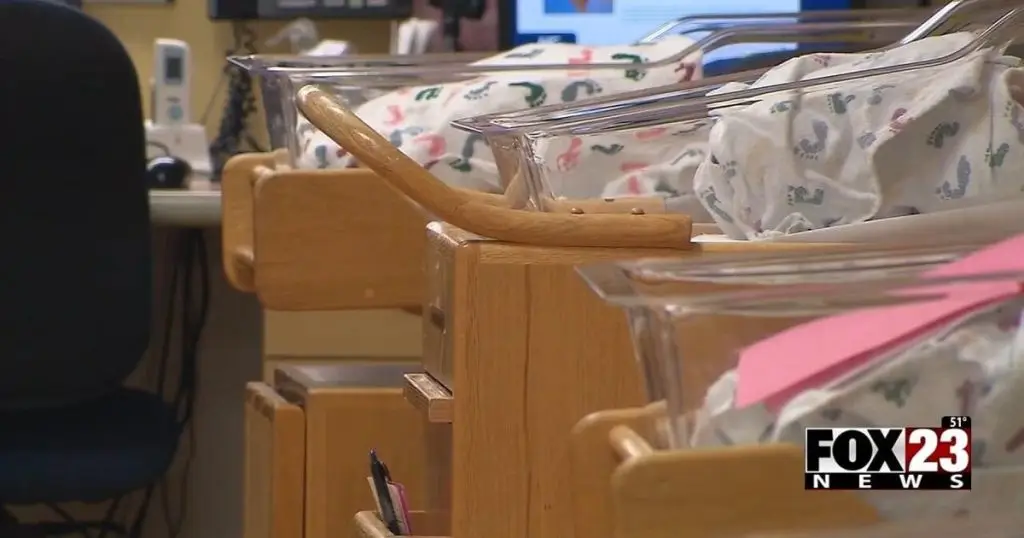
TULSA, Okla. — A new study by the March of Dimes revealed that Oklahoma gets a D- when it comes to maternal and infant health.
In Tulsa, that grade is also a D-.
The poor grade comes from this year’s March of Dimes Report Card, which measures the state of maternal and infant health each year.
The Report Card’s factors include rates and grades for preterm birth and data on infant mortality, maternal health, maternal mortality, leading causes of infant death and data describing selected risk factors for preterm birth.
Indicators by maternal race/ethnicity are included in the Report Card to call attention to systemic health disparities.
The US preterm birth rate remains high at 10.4%, maintaining a D+ grade for a second consecutive year.
Oklahoma’s rate was 11.3% in 2022, lower than the birth rate in 2021.
Some key findings from the report include:
- Preterm birth, one of the leading causes of infant death in the U.S., stands at 10.4%, barely higher from last year’s 10.5%.
- As compared to White mothers (9.4%), the preterm birth rate for Black mothers is 1.5X higher, American Indian/Alaskan Native mothers are 1.3X higher and Hispanic mothers are 1.1X higher.
- Rates of preterm birth are significantly higher among Black, Hispanic, American Indian/Alaskan Native families, than the overall rate.
For the full 2023 Report Card, click here.
For data specific to Oklahoma, click here.
FOX23 spoke with the March of Dimes and the Tulsa Health Department on Friday.
“We really look at the different health disparities that exist in our state,” Linsey Phillips, March of Dimes Oklahoma Donor Development Manager said.
Phillips said they look at things like reproductive, physical, and mental health along with substance abuse, socioeconomic status, and physical environment.
They also look at pregnancy related deaths and infant mortality.
“In Tulsa, there’s a lot of health care deserts out there,” Phillips said “There’s not a lot of access to care for a lot of moms. Not everyone has access to transportation to hospitals, and there’s also not a lot birthing hospitals available.”
The Tulsa County Health Department said it’s not all doom and gloom.
“There are some good things happening in Tulsa county,” Tulsa County Health Department Maternal and Child Health Epidemiologist Raven Helmich said.
“We have the Tulsa birth equity initiative and their Doula program, and they’ve also partnered with OU to do a preconception health program, which is GRETA, because we really want to make sure that our women are reaching their optimal health before pregnancy,” she said.
She said improving these numbers is important for everyone.
“Infant mortality is really that baseline of community health in the population, so how we take care of our infants and how we take care of our mothers really determines how much we care about our community,” Helmich said.
For more information about the March of Dimes or their maternal and infant health report card, click here.