









[ad_1]
By Gil Asakawa, AsAmNews Contributor
Asian Americans and Pacific Islanders (AAPIs) often feel invisible, ignored in the media, and treated like outsiders, always the “other.” But on Saturday, AAPIs knew they were seen and heard, and enjoyed the national spotlight of being in the middle of a big news story.
The City of Denver gave a formal apology letter for an anti-Chinese race riot that destroyed what had been a thriving Chinatown district in 1880. Most people today don’t even know there had been a Chinatown in Lower Downtown, or LoDo, which today is (in spite of lingering covid) a bustling nightlife haven anchored by Union Station, Coors Field where the Colorado Rockies baseball team plays, and Sakura Square, a hub for the city’s Japanese community.
On October 31, 1880, a fight broke out in a pool hall and spilled out into the streets, where thousands of Whites rampaged through Chinatown and lynched one Chinese man, Look Young, and hung him from a lamp post.
The Chinese were driven out but returned to rebuild their homes and businesses, although by the early 20th century they had dispersed and mostly moved away.

Now, Denver has become the fifth city in the U.S. to offer an official apology for past wrongs against Chinese and other Asian immigrants, with a heartfelt apology for the 1880 race riot and the anti-Asian racism throughout history even to today. The apology is especially significant because it’s the first one given by a city outside of California, where previous cities’ Asian populations can be more than 30 percent. Denver’s Asian population is less than four percent.
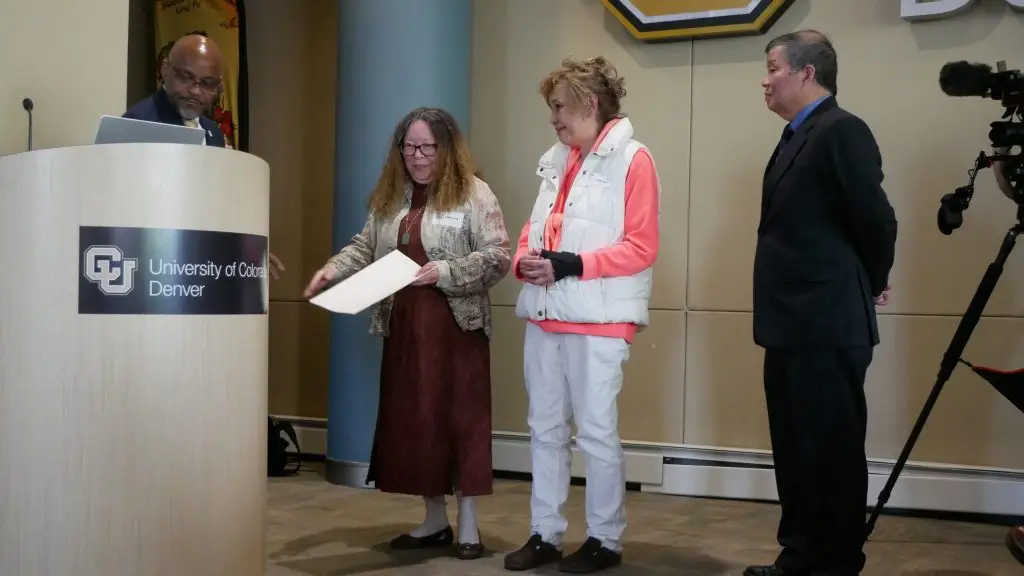
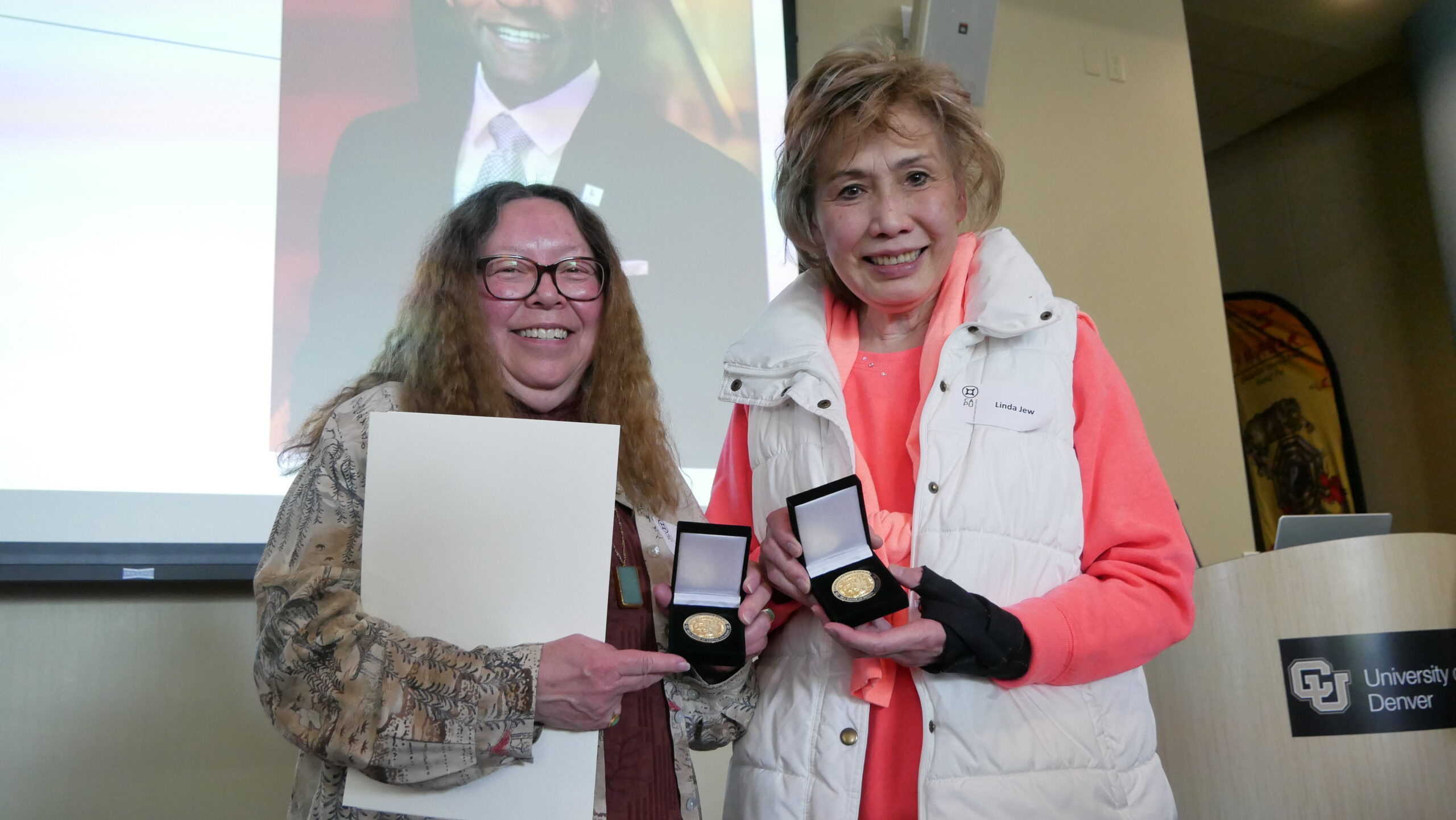
Mayor Michael B. Hancock gave prepared remarks and read the official apology letter to a full room at the University of Colorado Denver campus, and signed copies of the letter for two families who are descendants of Chinese who lived in Chinatown. He also gave them commemorative gold community coins – an honor he said can only be bestowed by the sitting mayor. He also gave a copy of the apology and a coin to Colorado Asian Pacific United (CAPU), the organization that had brought the history of Chinatown to light since it was formed last year, and has worked to re-envision the cultural richness of the Chinese presence in Denver.
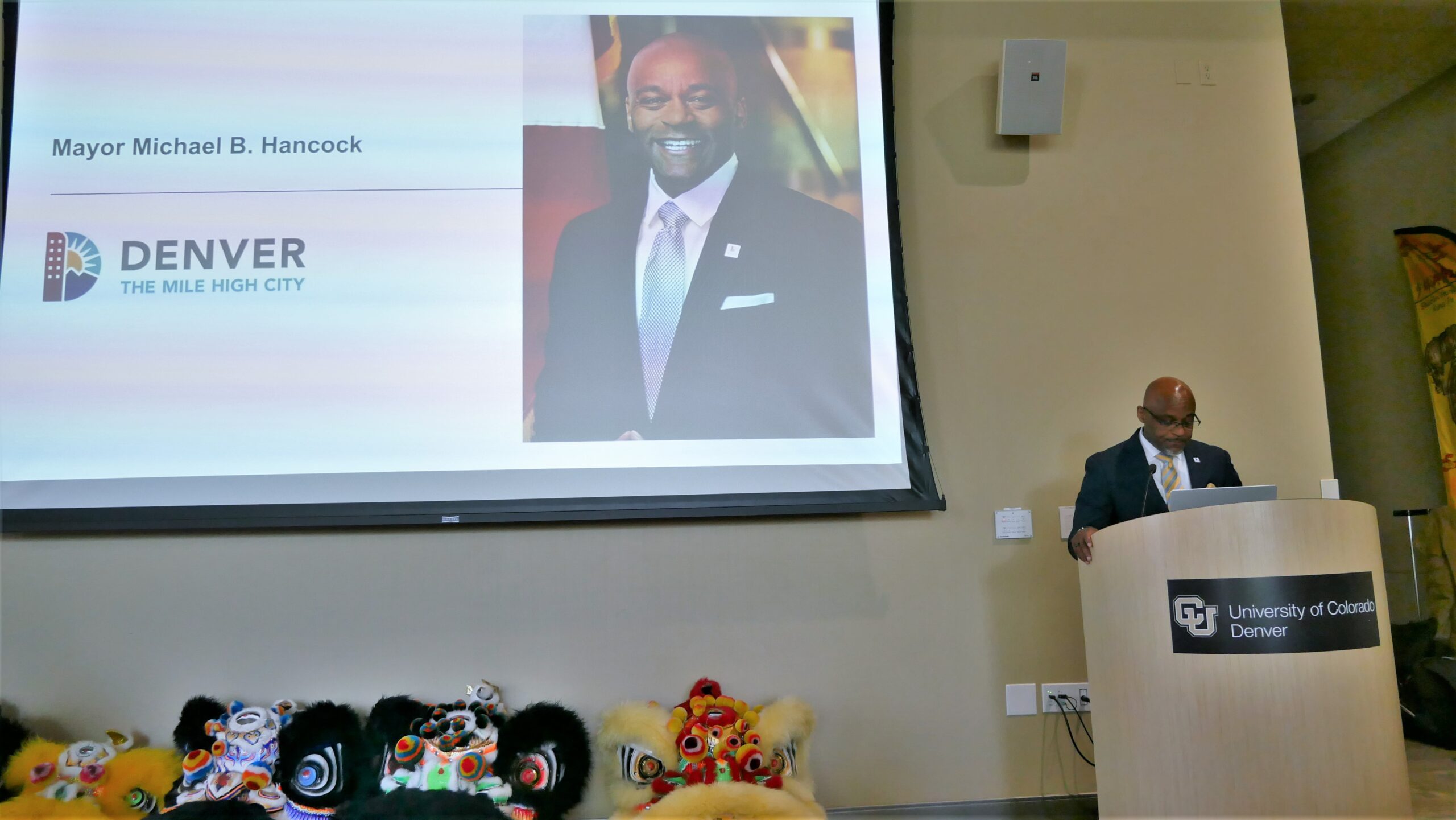
“Denver can deal with the continued consequences of past violence and discrimination such as the recent surge in anti-Asian hate crimes across the nation. As part of this process, the city is committed to supporting the establishment of an Asian Pacific Historic District, sponsoring the painting of public murals depicting the history and culture of Asian Pacific Coloradans, partnering on the development of a public education program about Asian Pacific Coloradans, and founding an Asian Pacific American community museum, which will be the first of its kind in the Rocky Mountain Region,” Hancock said.
The Mayor received applause throughout his remarks, but for the AAPI community leaders present, perhaps the most welcome news at the event was the announcement that the owner of a building near Coors Field that has sported the sole reminder of the once-thriving Chinatown: a racially insensitive “Lower Downtown Walking Tour” plaque, had agreed to allow the plaque to be removed. The members of CAPU, and the Denver AAPI Commission before them, had tried contacting the owner for permission to remove or replace the plaque, which has been on the building since 1992, for more than two years, but had never succeeded in getting any response. Denver’s new Chief Equity Officer, Aisha Rousseau, got the okay for the plaque to come down.
CAPU members are now planning a public event for the plaque’s removal, as well as how to move forward celebrating the history of Chinatown with new, more appropriate, and educational elements like kiosks and murals in the area.
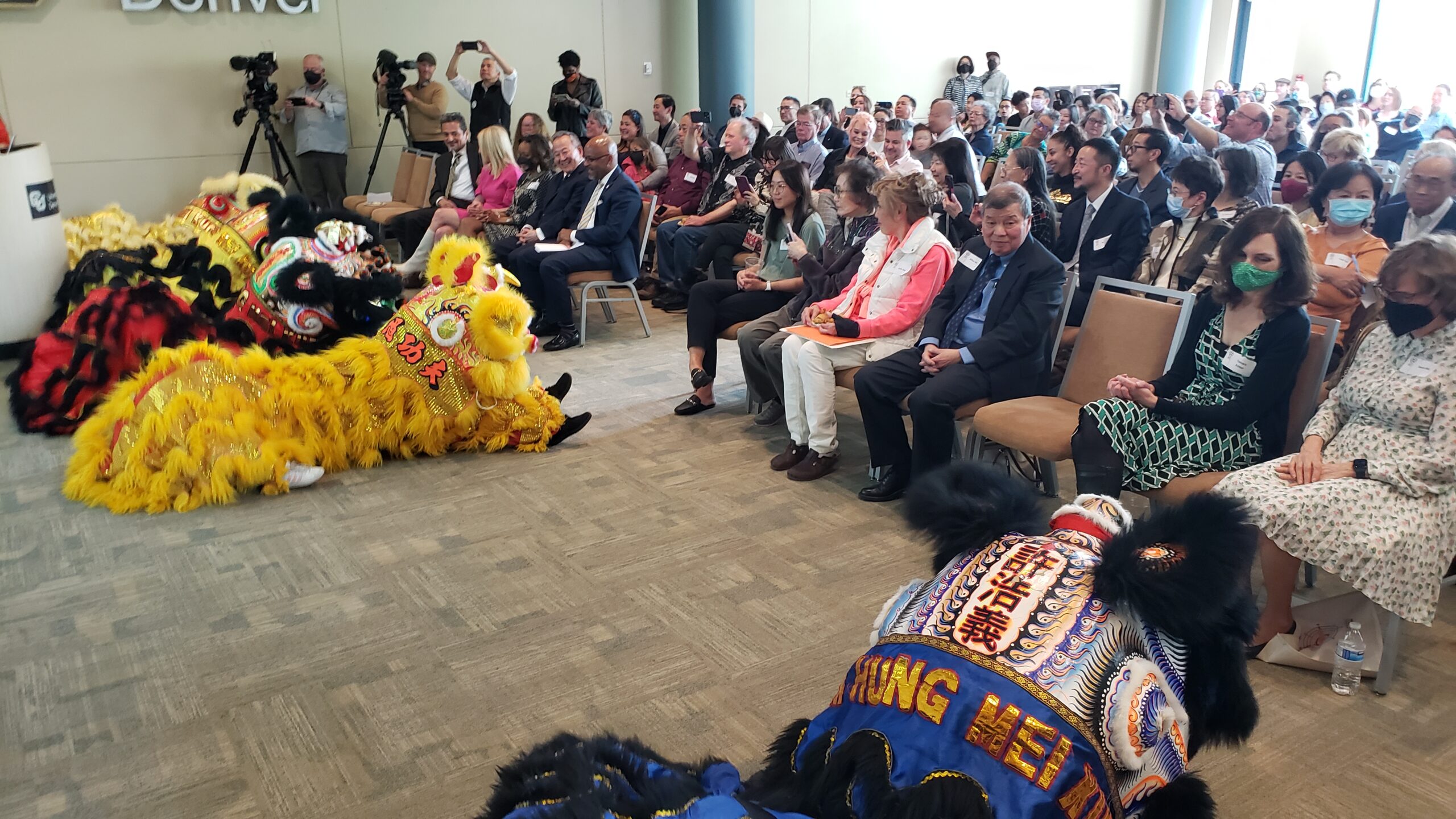
The event ended with a raucous Lion Dance performance by Shaolin Hung Mei Kung Fu Academy.

Here is the full text of Mayor Hancock’s remarks:
WHEREAS, the racial hostility and institutional inequities began with the arrival of the first Chinese immigrant workers in 1869 when they were forced to live and work in the segregated area of Chinatown, founded on Wazee Street between 15th and 17th streets. Chinatown was one of several geographical ghettoes that were created in the city to confine its “undesirable” residents. In later years, this discriminatory practice continued in the form of restrictive covenants in housing deeds along with “gentleman’s agreements” to prevent “Orientals” from living and working other areas in the city. Consequently, they were compelled to live in substandard housing and work in limited occupations.
Despite these discriminatory conditions, the early Chinese inhabitants of Denver’s Chinatown developed a thriving working-class community that served as a safe and secure place for Chinese immigrants working in the city and the state, as well as a commercial destination for other Denverites. Yet, irresponsible government reports at the time regularly condemned it as a den of inequity and its inhabitants as conveyors of social diseases. Tragically, the anti-Chinese riot of October 31, 1880, nearly destroyed Chinatown, killed Look Young, a young laundryman, and wounded hundreds of others. The city police force failed to protect its Chinese residents from the violent mob that was intent on expelling them from the area. The city courts failed to punish the murderers of Look Young even though there were credible eyewitnesses to his beating and lynching. The city government at the time failed to protect the Chinese community before, during and after the tragic riot.
In subsequent years, following the federal government’s mandated exclusion of Chinese workers from entering the United States in 1882, the city aggressively pursued a policy of harassing its Chinese residents in enforcing the immoral exclusion laws. Denver’s police raided Chinatown, rounded up hundreds of Chinese residents in search of immigrants deemed “illegal,” but found very few. Due to this, many Chinese were forced to move out of the city. As the number of Chinese residents declined, Chinatown was condemned as a blighted area and subjected to urban renewal.
As other Asian American and Pacific Islander communities moved into the area, they too were subjected to the same racial discrimination and social injustices faced by the Chinese immigrants. During World War II, for example, the city’s licensing authority refused to grant business licenses to Japanese Americans outside of certain areas. After the war, again the city failed to protect Japanese Americans from continuing racial bias when they experienced discrimination in certain occupational fields and were excluded from joining unions.
While the city cannot erase past injustices against Chinese immigrants and the Asian American and Pacific Island communities, the city owes them a long-overdue apology – an admission of the wrongs committed and its failure to correct them is a first step towards recognizing and honoring their contributions and can contribute to racial reconciliation. It will also serve to educate those who are ignorant of this shameful chapter in Colorado’s history and hopefully bring some closure to the families whose loved ones suffered racial violence and abuse.
In doing so, Denver can deal with the continued consequences of past violence and discrimination such as the recent surge in anti-Asian hate crimes across the nation. As part of this process, the city is committed to supporting the establishment of an Asian Pacific Historic District, sponsoring the painting of public murals depicting the history and culture of Asian Pacific Coloradans, partnering on the development of a public education program about Asian Pacific Coloradans, and founding an Asian Pacific American community museum, which will be the first of its kind in the Rocky Mountain Region. All these actions will assist our community in attaining its goal of being a diverse, inclusive and equitable city where all people can live and work in harmony.
NOW, THEREFORE, I, MICHAEL B. HANCOCK, MAYOR of the City and County of Denver, by virtue of the authority vested in me and on behalf of our city, do hereby sincerely apologize to the early Chinese immigrants and their descendants, and acknowledge Denver’s past role in nearly a century of violence and discrimination, including the dismantling and destruction of Denver’s historic Chinatown.
IN WITNESS WHEREOF, I have hereunto set my hand and caused the official seal of the City and County of Denver to be affixed this 16th of April, 2022
MICHAEL B. HANCOCK
MAYOR
AsAmNews has Asian America in its heart. We’re an all-volunteer effort of dedicated staff and interns. Check out our new Instagram account. Go to our Twitter feed and Facebook page for more content. Please consider interning, joining our staff, or submitting a story, or making a contribution.
[ad_2]
Source link