













Closing the Healthcare Gap Requires Embracing Innovation
Healthcare professional using artificial intelligence and digital health technology to improve patient outcomes and advance health equity in African American communities.
Editor Notes

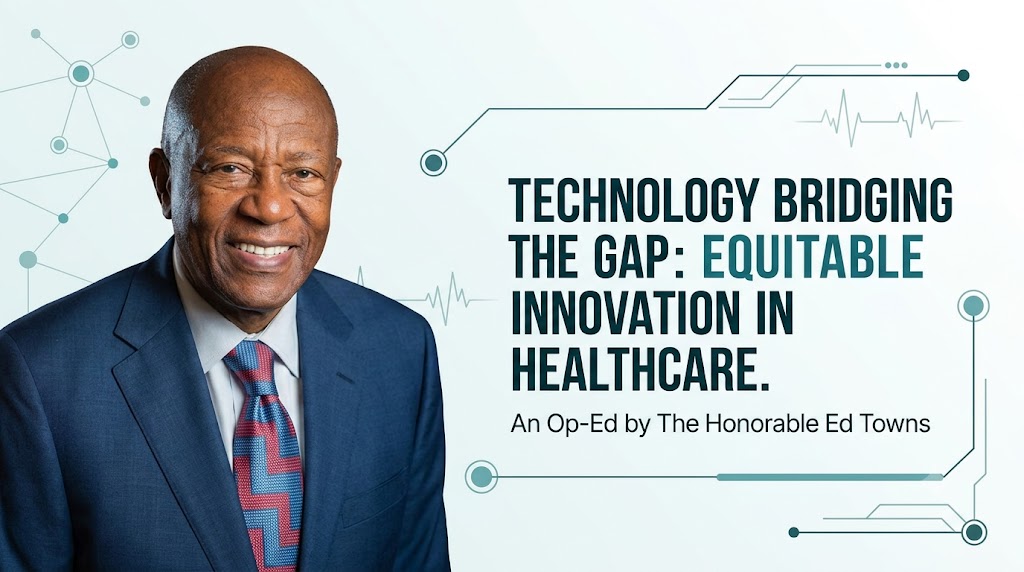
The following contribution from former U.S. Representative Ed Towns (D-NY) explores data-driven infrastructure and its potential to close long-standing racial gaps in healthcare. In alignment with FYHNโ€™s mission to foster transparent dialogue around minority health and clinical trial diversity, the authorโ€™s commentary is presented here to further the conversation on equitable technology in public health.

Ed Towns

Author: Ed Towns | Former United States Representative | New York

After decades in public service, I can say this with certainty: healthcare access remains one of the greatest moral failures in America. In African American communities, access to quality healthcare was often determined not by need, but by race, income, and geography.

African Americans continue to face disproportionately higher rates of chronic disease, lower life expectancy, higher maternal mortality rates, and reduced access to timely; quality care compared to many other populations. These disparities have been discussed for generations. The question now is whether we are finally prepared to embrace the tools and innovations capable of helping close those gaps.

Another example of technology helping improve healthcare outcomes in African American communities can be seen in the rise of telehealth and AI-powered maternal care platforms. African American women in America continue to face disproportionately high maternal mortality rates, often due to delayed diagnosis and unequal access to care.

Companies like Maven Clinic and health equity startups such as Irth are using digital tools to connect expectant mothers with culturally competent providers, improve communication between patients and hospitals, and identify risks earlier in pregnancy. In communities where access to specialists has historically been limited, these technologies are helping close dangerous gaps in maternal healthcare and giving more families access to lifesaving support.

That is why I believe technology companies helping modernize healthcare systems deserve serious attention โ€” including companies like Palantir.

Too often, the public conversation around artificial intelligence focuses only on fear. But for communities that have historically been underserved by the healthcare system, innovation can also mean opportunity. The real issue is not whether we use advanced technology in healthcare. It is whether we use it responsibly and equitably.

What excites me is the growing evidence that data-driven systems are helping hospitals save lives and deliver better care faster.

One of the worldโ€™s leading pharmaceutical companies, Novartis, is using Palantir software to accelerate drug discovery and improve clinical trial analysis. Researchers can now determine safe and effective medication dosages in hours instead of days or weeks. Faster discovery means faster treatments reaching patients who desperately need them.

For African Americans โ€” who have historically faced barriers to participation in clinical trials and delays in access to cutting-edge treatments โ€” this kind of innovation matters deeply.

Hospitals are also using these tools to improve patient care in real time. Healthcare systems using Palantir software have reportedly reduced emergency room bottlenecks and shortened patient transfer wait times, helping more people receive treatment faster.

At Tampa General Hospital, clinicians are using real-time monitoring systems powered by Palantir technology to identify warning signs before infections become life-threatening. As of late 2025, the hospital reported that the system had helped save more than 700 lives.

Think about what that means.

Stay Informed. Stay Empowered.

African American communities, in particular, stand to benefit enormously from earlier detection and faster treatment. Too often, our neighborhoods experience worse outcomes not because illnesses are untreatable, but because warning signs are missed, care is delayed, or hospitals are overwhelmed.

We also saw the importance of modern healthcare infrastructure during the recent measles outbreak, when the Centers for Disease Control and Prevention (CDC) used Palantir software to integrate outbreak data in real time and coordinate faster public health responses across state lines.

None of this means technology should operate without oversight. We need transparency, strong privacy protections, and clear safeguards to ensure patient rights are protected. African Americans know too well the history of medical abuse and exclusion in this country. Trust must be earned.

But rejecting innovation altogether would be a mistake.

For generations, our communities have demanded equal access to quality healthcare. We should welcome technologies that help doctors intervene earlier, help hospitals operate more efficiently, and help researchers develop treatments faster โ€” especially when those advances can help close longstanding racial disparities in care.

Healthcare access is not only about insurance coverage or funding levels. It is also about whether every community benefits from the best tools modern medicine has to offer.

The future of healthcare is being built right now. African Americans deserves to be fully included in it.

# # #

Edolphus โ€œEdโ€ Towns, a Democrat from New York, served 30 years in the House of Representatives, chairing the Committee on Oversight and Government Reform and nearly two decades on the Committee on Energy & Commerce, shaping healthcare, public health, and technology policy. When he retired in 2012, his seat passed to Hakeem Jeffries, now House Minority Leader.


Trending Topics

Features

Download and distribute powerful vaccination QI resources for your community.

Sign up now to support health equity and sustainable health outcomes in your community.

MCED tests use a simple blood draw to screen for many kinds of cancer at once.

FYHN is a bridge connecting health information providers to BIPOC communities in a trusted environment.

Discover an honest look at our Medicare system.

ARC was launched to create a network of community clinicians to diversify and bring clinical trials to communities of color and other communities that have been underrepresented.

The single most important purpose of our healthcare system is to reduce patient risk for an acute event.

Related Posts
5 Heat Safety Tips That Could Protect Your Health This Summer
Gen Z Women Are Seeing More GLP-1 Ads. Here’s What They Need to Know About the Risks and Side Effects.
Closing the Healthcare Gap Requires Embracing Innovation
Scroll to Top
Featured Articles
Extreme Heat Safety Tips 5 Ways to Protect Your Health This Summer fyh.news
5 Heat Safety Tips That Could Protect Your Health This Summer
Gen Z Women Are Seeing More GLP-1 Ads. Here's What They Need to Know About the Risks and Side Effects.
Gen Z Women Are Seeing More GLP-1 Ads. Here's What They Need to Know About th...
Healthcare professional using artificial intelligence and digital health technology to improve patient outcomes and advance health equity in African American communities.
Closing the Healthcare Gap Requires Embracing Innovation
Lupus Awareness Event in Baltimore Aims to Support Research and Shine a Light on Health Disparities
Lupus Awareness Event in Baltimore Aims to Support Research and Shine a Light...
Healthcare Gaps Continue to Put Black and Latino LGBTQ+ Communities at Risk
Alzheimerโ€™s Awareness Month Highlights Growing Crisis for Black Americans
Categories
AI
ATTR-CM
BIPOC News
Cancer
Clinical Trials
Covid19
Diseases of the Body
Environment
Health Data
Health Equity Events
Health Policy
Health Tips
Subscribe to our newsletter to receive our latest newsโ€‹
All Stories
Extreme Heat Safety Tips 5 Ways to Protect Your Health This Summer fyh.news
5 Heat Safety Tips That Could Protect Your Health This Summer
Gen Z Women Are Seeing More GLP-1 Ads. Here's What They Need to Know About the Risks and Side Effects.
Gen Z Women Are Seeing More GLP-1 Ads. Here's What They Need to Know About th...
Healthcare professional using artificial intelligence and digital health technology to improve patient outcomes and advance health equity in African American communities.
Closing the Healthcare Gap Requires Embracing Innovation
BIPOC News
Gen Z Women Are Seeing More GLP-1 Ads. Here's What They Need to Know About the Risks and Side Effects.
Gen Z Women Are Seeing More GLP-1 Ads. Here's What They Need to Know About th...
Healthcare professional using artificial intelligence and digital health technology to improve patient outcomes and advance health equity in African American communities.
Closing the Healthcare Gap Requires Embracing Innovation
Lupus Awareness Event in Baltimore Aims to Support Research and Shine a Light on Health Disparities
Lupus Awareness Event in Baltimore Aims to Support Research and Shine a Light...
Environment
Extreme Heat Safety Tips 5 Ways to Protect Your Health This Summer fyh.news
5 Heat Safety Tips That Could Protect Your Health This Summer
Lupus Awareness Event in Baltimore Aims to Support Research and Shine a Light on Health Disparities
Lupus Awareness Event in Baltimore Aims to Support Research and Shine a Light...
Healthcare Gaps Continue to Put Black and Latino LGBTQ+ Communities at Risk
Work Force
dreamstime_s_243253251
The Caregiver Journey: The Hidden Backbone of American Healthcare
Families gather at a Bronx community festival with live music, kidsโ€™ activities, and health booths sharing SOMOS social care resources and free screenings.
Celebrating Hispanic heritage while learning about health care

msn

Racial/Ethnic Minorities have Greater Declines in Sleep Duration with Higher Risk of Cardiometabolic Disease
Racial/Ethnic Minorities have Greater Declines in Sleep Duration with Higher ...

pubmed

Clinical Trials
dreamstime_s_174488289
PCOS to PMOS: Why the 2026 Name Change Matters for Womenโ€™s Health

Lupus Awareness Month Highlights Ongoing Gaps in Clinical Trials for Black and Brown Communities
Lupus Awareness Month Highlights Ongoing Gaps in Clinical Trials for Black an...
Black Family Wellness Expo 2026 Atlanta
Black Family Wellness Expo Brings Healing, Resources, and Community Together
Vaccines and Outbreaks
Michelle Lam, MBA, of NYC Health + Hospitals/Elmhurst & Amy Harris of NYC Health + Hospitals/Elmhurst
Healthcare Leaders Spotlight Vaccine Equity and Adult Immunization Strategies...
Measles Outbreaks Surge: Essential Facts and Prevention Strategies
U.S. measles cases 2026: Outbreaks Spread as MMR Coverage
2026 Measles Spike: U.S. Cases Rise Fast as Outbreaks Grow
Other Categories
AI
Read the latest AI News stories trending around the world
ATTR-CM
Cancer
Read the latest Cancer stories trending around the world
Covid19
Diseases of the Body
Read about the latest Diseases of the Body trending around the world
Friday Webinars
Every Friday, we bring you insightful webinars covering critical topics in healthcare, data equity, and policy reform.
Health Data
Read the latest Health Data stories trending around the world
Health Equity Events
Read the best Health Equity Events around the country.
Health Policy
Read the latest Health Policy stories trending around the world
Health Tips
Heart Health
Read the latest on Heart Health News, Stories and Tips.
kidney Health
Read more trending News about Kidney Health, Stories and Tips.

