













- By Jessica Wilson
Health outcomes in the United States are often shaped by more than medical care alone. Race, ethnicity, geography, access to specialists, representation in research, and trust in the healthcare system can all influence whether patients receive timely diagnoses, effective treatments and preventive services. These factors have contributed to persistent health disparities affecting many communities of color, including higher rates of certain chronic diseases, delayed diagnoses and differences in health outcomes.
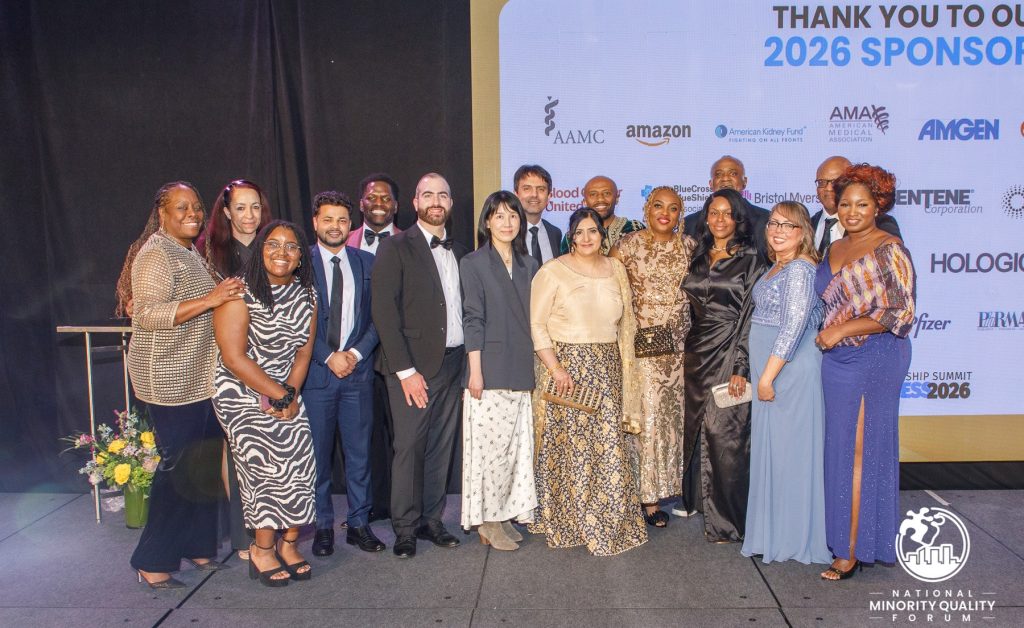
The National Minority Quality Forum (NMQF) was created to address these challenges by focusing on the populations most affected by gaps in healthcare quality. Since its founding in 1998, NMQF has worked as a research, education and advocacy organization dedicated to reducing patient risk and advancing health equity by assuring optimal care for all people. At the center of NMQF’s work is a specialized approach to minority health: using data, clinical research and community partnerships to better understand where disparities exist and develop solutions that improve care for underserved populations.
A specialty focused on understanding differences in health outcomes
Minority health is a field of healthcare research and practice that examines how health conditions, treatments and healthcare experiences affect racial and ethnic populations differently. It does not mean providing different standards of care based on race or ethnicity. Instead, it recognizes that communities may face different levels of risk, barriers to care and healthcare experiences that require targeted strategies. For decades, research has shown that many racial and ethnic minority groups experience unequal health outcomes across a range of conditions, including cancer, diabetes, cardiovascular disease, kidney disease and maternal health. These differences can be influenced by factors such as access to quality healthcare, environmental exposures, socioeconomic conditions, representation in clinical research and experiences of bias within healthcare systems.
NMQF’s approach is built around the idea that improving health outcomes requires understanding the specific needs of communities. The organization uses large-scale healthcare data to identify patterns in disease burden, healthcare access and outcomes among different populations. NMQF reports that it analyzes more than 5 billion patient records to help identify and address health inequities across the country. “Data is the foundation for understanding where disparities exist and where action is needed,” NMQF President and CEO Dr. Gary Puckrein has emphasized through the organization’s health equity initiatives. NMQF’s work focuses on turning that information into action by bringing together healthcare providers, researchers, policymakers and community leaders.
This data-driven model allows researchers and healthcare leaders to examine questions that may otherwise go unanswered. For example, are patients in certain communities being diagnosed later than others? Are treatments reaching all populations equally? Are clinical trials including the people most affected by a disease? Answering these questions can help healthcare systems design more effective interventions.
Why specialized minority health expertise helps communities
A major challenge in healthcare is that medical advances do not always reach every population equally. New treatments, screening tools and prevention programs are most effective when patients have access to them and when healthcare systems understand the communities they serve. NMQF works to close these gaps through several specialized centers focused on areas including cancer, chronic disease, clinical trial diversity, immunization, women’s health, mental health, obesity and other conditions affecting communities across the country.
One example is clinical research. Historically, many minority communities have been underrepresented in clinical trials, creating challenges in understanding how treatments work across diverse populations. Increasing diversity in research helps ensure that medical discoveries are evaluated among the people who will ultimately use them. Community engagement is another important part of NMQF’s approach. Through partnerships with healthcare organizations, faith leaders, pharmacists, community organizations and other trusted local voices, NMQF works to connect health information and resources with communities where people live and work.
This approach recognizes that healthcare decisions are influenced by trust and communication. Patients are more likely to participate in preventive care, screening programs and treatment plans when information is accessible, culturally relevant and delivered through trusted channels.
For communities of color, minority health expertise also helps ensure that health challenges are not viewed only through statistics. Behind every data point is a patient experience — a person who may have faced barriers to diagnosis, struggled to access specialists or felt unheard during a healthcare visit. Understanding those experiences helps create policies and programs that address the real-world challenges patients face. As the nation’s population becomes increasingly diverse, health experts say healthcare systems must continue adapting to meet the needs of every community. NMQF’s work demonstrates how combining data, research and community knowledge can help identify inequities and create pathways toward better care.
Advancing health access requires more than recognizing disparities; it requires understanding why they exist and developing solutions that improve outcomes. Through its focus on minority health research, education and advocacy, NMQF continues working toward a healthcare system where every patient has the opportunity to receive high-quality, effective care regardless of race, ethnicity or background.
Trending Topics
Features
- Drive Toolkit
Download and distribute powerful vaccination QI resources for your community.
- Health Champions
Sign up now to support health equity and sustainable health outcomes in your community.
- Cancer Early Detection
MCED tests use a simple blood draw to screen for many kinds of cancer at once.
- PR
FYHN is a bridge connecting health information providers to BIPOC communities in a trusted environment.
- Medicare
Discover an honest look at our Medicare system.
- Alliance for Representative Clinical Trials
ARC was launched to create a network of community clinicians to diversify and bring clinical trials to communities of color and other communities that have been underrepresented.
- Reducing Patient Risk
The single most important purpose of our healthcare system is to reduce patient risk for an acute event.
- Jessica Wilson
- Subash Kafle


