











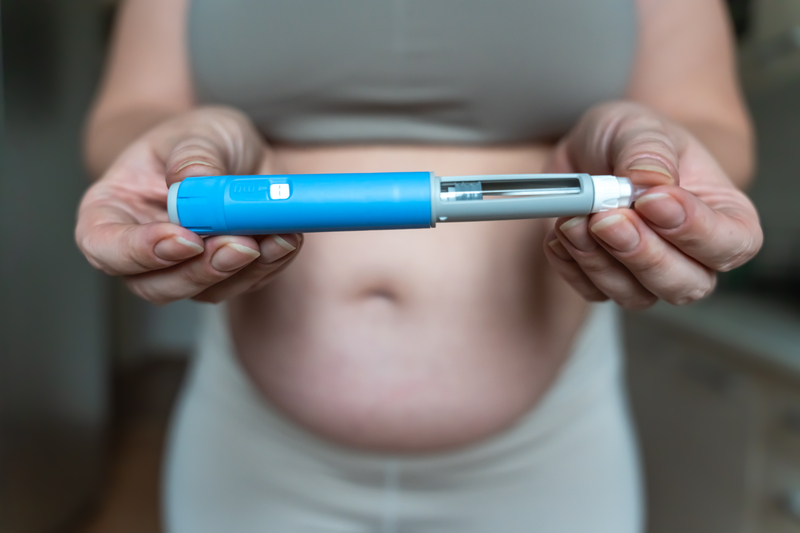
Employers are reducing or restricting GLP-1 coverage for weight management as prescription drug costs rise. Business Group on Health found that coverage among surveyed employers fell from 72% in 2025 to 60% in 2026. For patients, losing coverage can mean higher out-of-pocket costs, treatment interruptions and possible weight regain. Lower-income workers may face greater barriers because they have fewer options to pay for treatment without insurance.Quick Answer: Why are employers cutting GLP-1 coverage?
GLP-1 coverage is becoming less certain for some American workers as employers look for ways to control rising prescription drug costs. For patients taking medications such as Wegovy or Zepbound, a change in benefits could have major consequences. It could mean paying more out of pocket or, for some patients, losing access to a treatment that has been working.
New data from Business Group on Health show a clear shift among large employers. Coverage of GLP-1 drugs for weight management fell from 72% in 2025 to 60% in 2026 among employers surveyed. The survey included 127 employers covering 8.7 million people in the United States. The group also found that 14% had dropped or planned to drop coverage for weight management by 2027.
Cost is a major reason. Employers expect their health care costs to rise by a median of 9.2% in 2027 before making changes to their health plans. Prescription drugs now account for about one-quarter of employer health care spending, and GLP-1 use is one factor pushing those costs higher, according to Business Group on Health.
That leaves employers with a difficult calculation. Medicines such as Wegovy and Zepbound can help patients lose significant weight, and research has found additional health benefits for some patients. Yet providing these medications across a large workforce can be expensive. Employers must balance those costs against cancer care, hospital stays, mental health services and many other health needs.
For patients, however, that financial calculation can quickly become personal. Losing insurance coverage may mean deciding whether to spend hundreds of dollars each month or stop treatment. Some patients may also search for cheaper alternatives when the medicine they have been taking becomes unaffordable.
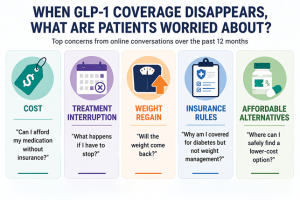
Social Listening data provided to FYH.News show how much attention the issue is receiving. More than 375,000 news stories, broadcasts, social posts and online discussions addressed employers and insurers restricting GLP-1 medications during the past year. Patients online have raised concerns about cost, insurance denials, prior authorization and regaining weight after treatment ends. Some also question why insurance may cover certain GLP-1 drugs for diabetes but not for weight management.
What happens when insurance stops paying?
Stopping a GLP-1 medication may not be like finishing a short course of medicine. Obesity is a chronic disease, according to the Centers for Disease Control and Prevention. For some patients receiving treatment for obesity, ongoing medical care may be needed to maintain weight loss and other health improvements.
Research provides clues about what can happen when medication stops. In an extension of the STEP 1 clinical trial, participants who stopped semaglutide regained about two-thirds of their previous weight loss within one year. Several improvements in heart and metabolic risk factors also moved back toward their starting levels.
Research involving tirzepatide has found a similar pattern. A 2026 analysis of the SURMOUNT-4 trial found significant weight regain among many participants after they stopped tirzepatide. Greater weight regain was also linked to reversals in some improvements in blood pressure, cholesterol and blood sugar.
That means an insurance decision can become a health decision. Consider a worker receiving treatment for obesity and high blood pressure. After a year of treatment, she loses weight and sees her blood pressure improve. Then her employer changes its health benefits. Her doctor may still recommend the medication, but her insurance may no longer pay for it for weight management. She now has to decide whether she can afford to continue.
KFF data help explain why employers face this dilemma. Among companies with at least 5,000 workers that covered GLP-1 drugs for weight loss in 2025, 59% said use was higher than expected. About two-thirds reported that the drugs had a significant effect on prescription drug spending.
Employers are responding in different ways. Some have stopped covering the drugs for weight management, while others are adding stricter requirements. Business Group on Health found employers using prior authorization and clinical eligibility rules. Some require workers to participate in weight-management programs, while others limit which providers can prescribe covered medications. These policies may help control spending, but they can also put more steps between patients and treatment.
Who could be hit hardest?
Changes to GLP-1 coverage may not affect every community equally. People with higher incomes may have more options when insurance stops paying. Some may be able to pay cash or use legitimate savings programs to continue treatment. Lower-income workers may have far fewer choices, which turns the coverage debate into an important health equity issue.
That concern matters because higher rates of obesity already affect some communities more than others. CDC data from 2022 through 2024 show major racial and geographic differences in adult obesity rates. Black adults had an obesity prevalence of at least 35% in 41 states and territories with enough data. Hispanic adults reached that level in 33, while Native American and Alaska Native adults reached that level in 36.
Education and economic conditions can also shape health outcomes. In 2024, 37.6% of adults without a high school diploma had obesity, compared with 27.3% of college graduates. These differences do not mean that race or education causes obesity. The CDC describes obesity as a complex chronic disease shaped by many factors, including genetics, stress, medications, sleep, food access, physical activity and access to health care.
That context matters as employers make decisions about GLP-1 coverage. A benefit reduction that appears equal across a workforce may not have an equal impact. A worker who can afford hundreds of dollars each month has options that another worker may not have.
The online conversation reflects that concern. Our social listening found that negative sentiment was especially noticeable on consumer-driven platforms. On Reddit, negative posts substantially outnumbered positive ones. Consumers repeatedly discussed affordability, insurance rules and what could happen if their coverage disappeared.
Employers still face a real financial challenge. They must decide how to divide limited health care dollars across their workforces while prescription drug costs continue to rise. Yet the GLP-1 debate raises a larger question about how the health system treats obesity. If the condition requires long-term medical care, temporary insurance coverage may conflict with how doctors manage it. Evidence of weight regain after treatment stops makes that question harder to ignore.
Patients taking a GLP-1 medication should pay close attention to notices about changes to their health benefits. They can ask their insurer about prior authorization, eligibility rules and requirements for continued coverage. Patients should also speak with their health care provider before stopping or changing a prescribed medication.
The next phase of the GLP-1 story may be less about whether these medicines work and more about who can continue getting them. Employers are searching for ways to control rising health care costs while doctors increasingly recognize obesity as a chronic disease that may require ongoing care. For workers who rely on these medications, the future of GLP-1 coverage could determine whether an effective treatment remains within reach.
Stay Informed. Stay Empowered.