











[ad_1]
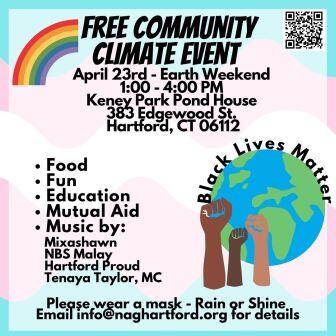
The climate crisis is now.
Although it is an issue that is largely framed as catastrophic events that will happen years in the future, we are currently dealing with the burdens of climate change from poor air quality, lack of safe and affordable housing, and rising energy costs for heating and electricity.
Living in a community overburdened with pollution, substandard housing, and other social and structural inequities has emphasized the need to focus on environmental movements in Hartford. People with ties to Hartford such as Patricia Kelly, Herb Virgo, Terry Starks, Kamora Herrington, and Sharon Lewis have been engaged in this work to facilitate programming that emphasizes the environment, nature, and living communities.
They are modeling what intersectionality looks like in our communities. Urban dwellers, Black and brown people, and low income communities in Connecticut breathe the most polluted air, suffer most from energy inequity, and endure the most frequent power shut-offs. But at the same time, these are the very communities who experience the least investment of clean energy and efficiency upgrades, the types of investments that can clean the air, improve public health, lower energy prices, and create good, local jobs.
Due to poor air quality in Hartford, I am affected by environmental injustice every day. It has caused me to look at environmental justice and equity from a global perspective to find sustainable solutions, including Indigenous practices like permaculture, irrigation, and renewable resources to create a healthier and more sustainable environment, food system, and community.
In the past year, I learned about the impacts of pollutants in our environment and their effects on both humans and wildlife. I saw firsthand the passionate efforts of environmental activists, and also witnessed the lack of intersectionality and absence of voices of those people who are most directly impacted by the issues of the environment. I want to bring together those who are most affected by climate change and those who have the power to make change to ensure that policies are well-rounded and effective for those they are meant to serve.
Community Climate Day is being hosted at the Keney Park Pond House on Saturday, April 23 from 1 to 4 p.m in Hartford for Earth Day weekend. This family friendly, free event will feature music, speakers, free food, and clothing give-aways by community groups. The focus is providing education to build community and advocacy for clean energy, health equity, and environmental justice. This will help people to reduce energy expenditures, breathe cleaner air, and have access to green jobs, improved energy security, lower electricity prices and a safer climate.
Community Climate Day is sponsored by the Nonprofit Accountability Group, Connecticut Climate Crisis Mobilization, Operation Fuel, Sierra Club Connecticut, NAACP Windham/Willimantic Branch EJ Committee, 350 CT and Sunrise Movement CT.
Tenaya Taylor is executive director at the Nonprofit Accountability Group in Hartford.
[ad_2]
Source link