









[ad_1]
SPRING HILL, Fla. – For John Powell, skin cancer is more than a diagnosis he was first given in 1995. Since then, it’s become a way of life for him.
“Doc took one (a malignant tumor) off my back and another melanoma she took off about three weeks ago off the back of my arm,” he said. He wears sunscreen like most people wear coats in the winter. It’s simply a matter of survival in the Florida sun.
“It is especially (to remember to apply sunscreen) if I’m in a rush or I get busy doing something,” Powell said. “You have to be ever vigilant.”
Part of that vigilance is getting his skin evaluated at least twice a year.
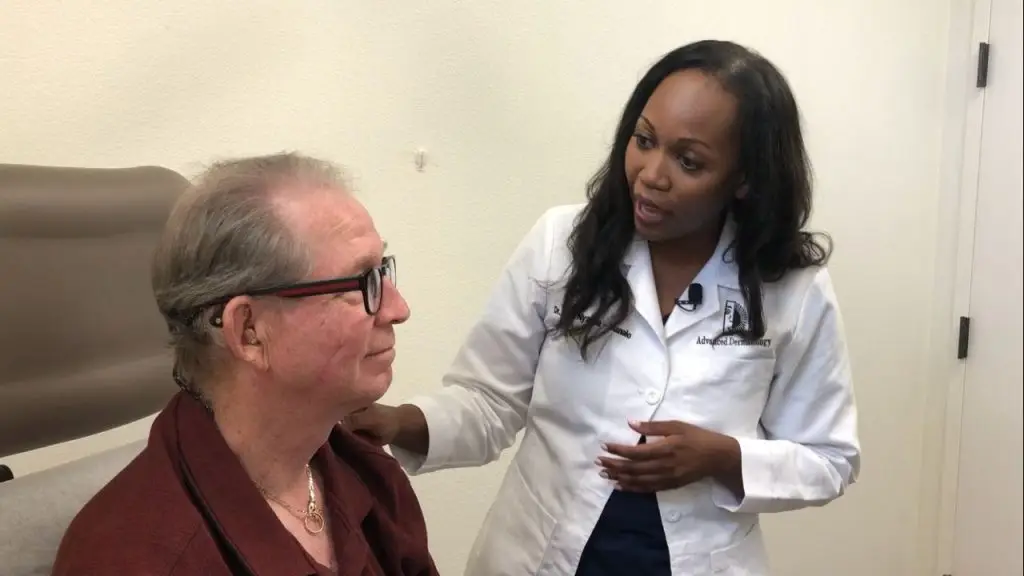
Bay News 9 reporter Trevor Pettiford took the time to get his skin checked to by dermatologist Dr. Lisa Nyanda at Advanced Dermatology in Spring Hill, and learn some important and disturbing information about African-Americans and skin cancer.
“The unfortunate thing is, patients with skin of color typically tend to go undiagnosed and they tend to be discovered later as far as advanced stages of skin cancer,” Dr. Nyanda said. “The danger in that can be life threatening. So we know that melanomas can occur in African Americans and when it does occur in darker skin tones, it tends to be more aggressive and definitely more deadly.”
Reggae music legend Bob Marley was only 32 when doctors discovered melanoma under one of his toenails. It spread, and he died from it four years later. According to the American Cancer Society, white people make up 65% to 75% of all skin cancer cases. But what’s not so often talked about are the 20% to 30% of cases among people of color. Dr. Nyanda has made it her life’s work to get under the skin of his many African-Americans as she can.
“We can tell them to use sunscreen, seek shade, wear hats, get their routine skin examinations, but they just don’t do it,” she said. “That’s why I’m here.”
[ad_2]
Source link
Trending Topics
Features
- Drive Toolkit
Download and distribute powerful vaccination QI resources for your community.
- Health Champions
Sign up now to support health equity and sustainable health outcomes in your community.
- Cancer Early Detection
MCED tests use a simple blood draw to screen for many kinds of cancer at once.
- PR
FYHN is a bridge connecting health information providers to BIPOC communities in a trusted environment.
- Medicare
Discover an honest look at our Medicare system.
- Alliance for Representative Clinical Trials
ARC was launched to create a network of community clinicians to diversify and bring clinical trials to communities of color and other communities that have been underrepresented.
- Reducing Patient Risk
The single most important purpose of our healthcare system is to reduce patient risk for an acute event.
- Victor Mejia
- Jessica Wilson
- Jessica Wilson