











This state is enrolling fewer Latino and Black college students in remedial courses. It's working.

[ad_1]

ANAHEIM, Calif. — The move away from placing predominantly Latino and Black community college students in remedial college classes and instead enrolling them in regular classes is seeing substantial results in California, with a boost in the course and graduation requirement completion.

Fullerton College, a school that is more than half Latino, has a 100 percent campuswide enrollment rate for regular, transfer-level English courses. They’ve seen a campuswide English success rate of 72.65 percent for all students and 69.29 percent for Latino students.

“This is our goal and eventually I hope that all the colleges see that this is possible — that we are not an outlier,” José Ramón Núñez, vice president of instruction at Fullerton College, said.

Fullerton College is one of the schools that is being recognized for supporting 100 percent Latino student enrollment in transfer-level English and math courses by The Campaign for College Opportunity, a statewide coalition that was created to boost college completion in California. Currently, fewer than half (49 percent) of students who enter the state’s community college system graduate in six years, according to the group.

California community colleges are required to comply with Assembly Bill 705, which was introduced after research indicated that a substantial amount of incoming students were being placed into remedial courses, potentially delaying and deterring college completion. Students of color made up the majority of those placed in remedial classes.

“All of the data shows that there’s not a single group of students that actually is more successful by taking a course before the college level rather than just being placed into a college-level course,” Carrie Starbird, dean of the mathematics divisions at Pasadena City College, said.

AB 705 takes a student’s high school coursework, grades and grade point average into consideration to assess that a student can enroll and complete a non-remedial college course in English and math.

Prior to the introduction of AB 705, California schools used assessment tests to place students into math and English. About 80 percent of incoming students were being placed into remedial courses, with students of color disproportionately affected.

“Students could start in freshman comp[osition], and they are going to be equally successful independently of what the standardized tests say,” Núñez said.

Students can still enroll in remedial courses if colleges can prove they are “highly unlikely to succeed at transfer-level.”

Making gains

Latino students have made significant gains related to math since the introduction of AB 705. Math completion rates for Latinos increased from 9 percent in fall 2015 to 39 percent in fall 2020, though they still have lower rates compared to their white and Asian counterparts.

In English, Núñez said students at his college are completing the composition requirement for graduation at a much faster pace than before. But he said the institution must continue building upon their successful foundation and hopefully reach a success rate of 85 to 90 percent, as well as strengthen efforts within their math department.

Pasadena City College, a school that is 48 percent Latino, was recognized for achieving 100 percent campuswide enrollment in nonremedial, transfer-level math and English courses.
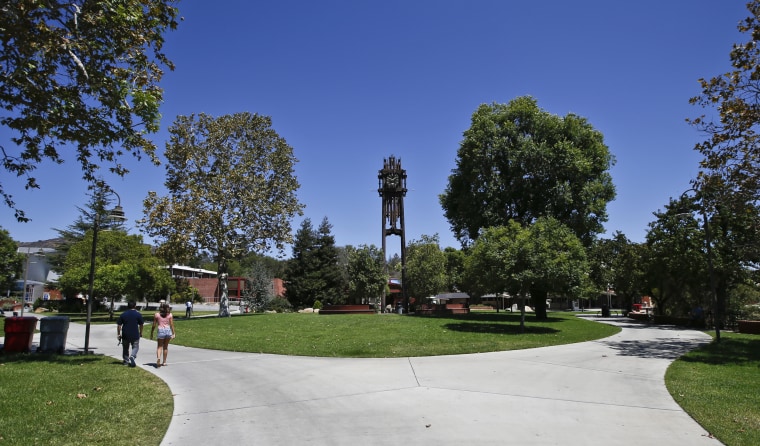
The campus of Palomar College in San Marcos, Calif., in 2014.
The campus of Palomar College in San Marcos, Calif., in 2014.Lenny Ignelzi / AP file

Working through teacher, student challenges

However, the shift and implementation of AB 705 initially came with a set of challenges for faculty and students at Pasadena City College.

“One of the big challenges was convincing faculty that students that are coming in, are capable, and are college-ready and are able to succeed in college-level courses — some believed and some still do believe that the students are more successful when they take a preparatory class,” Starbird said.

For students, the challenge was convincing them that they were ready for this type of challenge, especially for students who maybe had been out of school for a long time, Starbird said.

Pasadena City College offers additional support services and courses to go along with entry-level classes, including additional time with instructors and designated faculty members to support students through the school’s English and STEM success centers.

Starbird said although they’ve seen much success following AB 705, they want to continue building upon it and continue closing existing equity gaps.

The school will be taking a closer look at potential changes that need to be made in the classroom and examine effective practices from faculty that have closed any education gaps and have them share it with other faculty, she said.

Other schools recognized for their Latino transfer-level English enrollment include Moreno Valley College, Santa Ana College, Santiago Canyon College and Palomar College, among others

For Latino transfer-level math enrollment, those recognized along with Pasadena City College include Porterville College and Feather River College.

“We applaud the over 40 community colleges being recognized for their achievement…These colleges are changing the trajectories of thousands of students across California for the better,” Michele Siqueiros, president of the Campaign for College Opportunity, said in a statement.

Follow NBC Latino on FacebookTwitter and Instagram.


[ad_2]

Source link
Trending Topics

Features

Download and distribute powerful vaccination QI resources for your community.

Sign up now to support health equity and sustainable health outcomes in your community.

MCED tests use a simple blood draw to screen for many kinds of cancer at once.

FYHN is a bridge connecting health information providers to BIPOC communities in a trusted environment.

Discover an honest look at our Medicare system.

ARC was launched to create a network of community clinicians to diversify and bring clinical trials to communities of color and other communities that have been underrepresented.

The single most important purpose of our healthcare system is to reduce patient risk for an acute event.

Related Posts
Why Your “Ozempic” May Not Be Ozempic: FDA Warnings Highlight Growing Risks of Unregulated GLP-1 Drugs
The Communities Most Burdened by Disease Should Be the First to Benefit from Artificial Intelligence
Black and Asian Cancer Patients Wait Longer for Pain Relief in New Study
Scroll to Top
Featured Articles
Why Your “Ozempic” May Not Be Ozempic: FDA Warnings Highlight Growing Risks of Unregulated GLP-1 Drugs
Why Your “Ozempic” May Not Be Ozempic: FDA Warnings Highlight Growing Risks o...
The Communities Most Burdened by Disease Should Be the First to Benefit from Artificial Intelligence
The Communities Most Burdened by Disease Should Be the First to Benefit from ...
Cancer Pain Care Access Gap Hits Black, Asian Patients
Black and Asian Cancer Patients Wait Longer for Pain Relief in New Study
What Is Cyclosporiasis Symptoms, Food Safety, and Reasons
What Is Cyclosporiasis? The Foodborne Illness Showing Up in the News
Why Minority Mental Health Awareness Month Matters More Than Ever
From Childhood Cancer to Alzheimer’s and ALS Celebrity Health Stories Spark National Conversation on Disease, Caregiving, and Equity
From Childhood Cancer to Alzheimer’s and ALS Celebrity Health Stories Spark N...
Categories
AI
ATTR-CM
BIPOC News
Cancer
Clinical Trials
Covid19
Diseases of the Body
Environment
Health Data
Health Equity Events
Health Policy
Health Tips
Subscribe to our newsletter to receive our latest news​
All Stories
Why Your “Ozempic” May Not Be Ozempic: FDA Warnings Highlight Growing Risks of Unregulated GLP-1 Drugs
Why Your “Ozempic” May Not Be Ozempic: FDA Warnings Highlight Growing Risks o...
The Communities Most Burdened by Disease Should Be the First to Benefit from Artificial Intelligence
The Communities Most Burdened by Disease Should Be the First to Benefit from ...
Cancer Pain Care Access Gap Hits Black, Asian Patients
Black and Asian Cancer Patients Wait Longer for Pain Relief in New Study
BIPOC News
The Communities Most Burdened by Disease Should Be the First to Benefit from Artificial Intelligence
The Communities Most Burdened by Disease Should Be the First to Benefit from ...
Why Minority Mental Health Awareness Month Matters More Than Ever
From Childhood Cancer to Alzheimer’s and ALS Celebrity Health Stories Spark National Conversation on Disease, Caregiving, and Equity
From Childhood Cancer to Alzheimer’s and ALS Celebrity Health Stories Spark N...
Environment
UV Safety Awareness Month Raises Urgency on Skin Cancer Prevention and Sun Protection Equity
UV Safety Awareness Month Raises Urgency on Skin Cancer Prevention and Sun Pr...
Extreme Heat Safety Tips 5 Ways to Protect Your Health This Summer fyh.news
5 Heat Safety Tips That Could Protect Your Health This Summer
Lupus Awareness Event in Baltimore Aims to Support Research and Shine a Light on Health Disparities
Lupus Awareness Event in Baltimore Aims to Support Research and Shine a Light...
Work Force
A multigenerational Black and Hispanic family sitting together in a park, showing how Social Security helps support older adults, people with disabilities, and families across generations.
Millions of Older Americans Could Face Smaller Social Security Checks by 2032...
dreamstime_s_243253251
The Caregiver Journey: The Hidden Backbone of American Healthcare
Families gather at a Bronx community festival with live music, kids’ activities, and health booths sharing SOMOS social care resources and free screenings.
Celebrating Hispanic heritage while learning about health care

[xyz-ips snippet=”Output-Source-Name”]

Clinical Trials
Why Your “Ozempic” May Not Be Ozempic: FDA Warnings Highlight Growing Risks of Unregulated GLP-1 Drugs
Why Your “Ozempic” May Not Be Ozempic: FDA Warnings Highlight Growing Risks o...
Clinical Trial Diversity Remains a Critical Challenge in Alzheimer’s Research
Healthcare professional collecting a blood sample from a diverse patient as part of multicancer early detection screening.
Bridging the Gap: How Multicancer Early Detection Can Advance Health Equity i...
Vaccines and Outbreaks
A parent checking a child's temperature during summer, illustrating the changing RSV patterns and year-round respiratory virus risks.
Can You Get RSV During the Summer?
Michelle Lam, MBA, of NYC Health + Hospitals/Elmhurst & Amy Harris of NYC Health + Hospitals/Elmhurst
Healthcare Leaders Spotlight Vaccine Equity and Adult Immunization Strategies...
Measles Outbreaks Surge: Essential Facts and Prevention Strategies
Other Categories
AI
Read the latest AI News stories trending around the world
ATTR-CM
Cancer
Read the latest Cancer stories trending around the world
Covid19
Diseases of the Body
Read about the latest Diseases of the Body trending around the world
Friday Webinars
Every Friday, we bring you insightful webinars covering critical topics in healthcare, data equity, and policy reform.
Health Data
Read the latest Health Data stories trending around the world
Health Equity Events
Read the best Health Equity Events around the country.
Health Policy
Read the latest Health Policy stories trending around the world
Health Tips
Heart Health
Read the latest on Heart Health News, Stories and Tips.
kidney Health
Read more trending News about Kidney Health, Stories and Tips.