







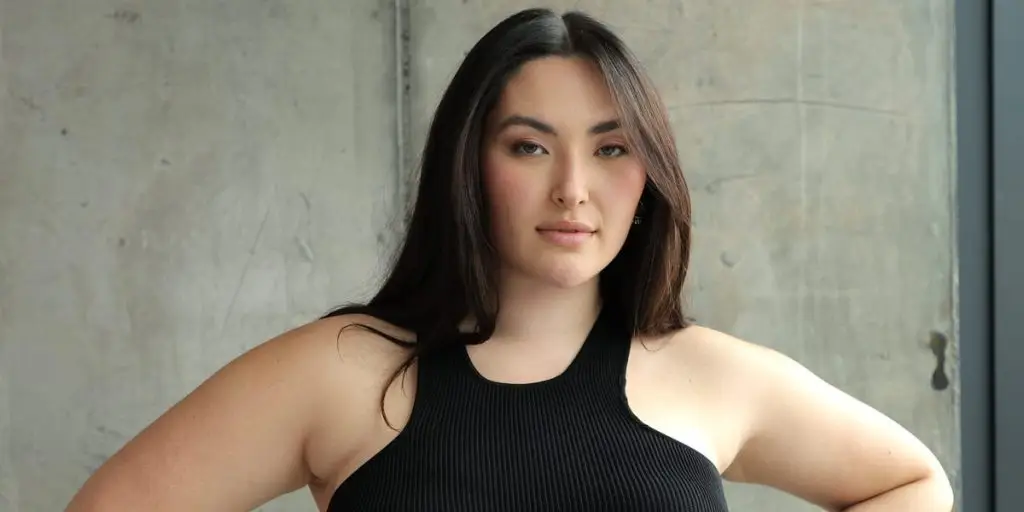
Sports Illustrated's First Asian American Plus Size Model on Diversity

[ad_1]

  • Yumi Nu made history by becoming the first plus-size Asian American model on “Sports Illustrated.”
  • The 25-year-old model grappled with self-doubt in an industry that traditionally favors thin, white models.
  • Nu shares how she changed that narrative, and how the fashion industry can become more inclusive.

This is an as-told-to essay based on a conversation with Yumi Nu, a 25-year-old model, artist, and singer-songwriter. It has been edited for length and clarity.

Modeling has always been a part of my life. My mom was a model and took me to shoots as a baby, and I returned to it in middle school.

I originally wanted to be a model because I just wanted to be cool as a kid, but I feel like my intentions have changed. The industry has changed so much and there’s so much history to be made, which I want to be a part of.

I didn’t actually know I’d be on the cover of “Sports Illustrated”—I just thought I’d be in one of the shoots for the magazine. I was just happy to be in the issue. I was doing a fake interview when MJ Day, the editor-in-chief of “Sports Illustrated,” and the team surprised me with the cover.

People ask me if I’ve dreamed of being on the cover of “Sports Illustrated,” but I didn’t know that I could. It’s only been in the past two or three years that brands, casting directors, and editors have made an effort to open up to diverse models—both when it comes to body diversity and racial diversity.

Yumi Nu surprised on set with the Sports Illustrated cover reveal.

Nu was surprised by “Sports Illustrated” editor-in-chief MJ Day in a fake interview they staged for her.

Mike Coppola/Getty


Searching for identity in childhood

When I was younger, I didn’t see anyone that looked like me in the media. That created a lot of insecurities and worthiness issues in me. 

I’m half-Japanese and half-white. Growing up, it wasn’t really cool to be anything other than white. I wish we weren’t so influenced by media, culture, and society, but we do, especially when we’re young. We look to it to tell us what’s important and what we should think, look, and be like.

So I just wanted to fit in with white people. I didn’t have—or wanted—any connections to my Asian side, because there was this shame that it made me different, and it was the thing that separated me from popular kids at school and what I thought I needed to be beautiful. It was the same thing with being plus size.

I didn’t have anyone normalizing or encouraging me to be happy in my skin the way that I am. I didn’t know how to give myself that validation, because I feel like I was in an environment where even the Asian people in my life had spent so long whitewashing themselves for survival in the areas they grew up in. We’re just healing now in the past few years from all of that.

Earlier in my modeling career, I varied on the size spectrum—sometimes I was the perfect size for plus size, sometimes I was too small. It’s a smaller window of what we could be to be a model.

Culturally, Asian people don’t want to glorify being bigger, and that leaked into the American perception of how they want to represent Asian people. I have never seen an Asian curve model until recently. People didn’t know what to do with me, because I didn’t fit that mold.

Changing the narrative for myself and the industry

In the end, I got tired of hating myself, of thinking I wasn’t good enough because I’m not a certain size or a certain race.

I was in Hawaii in 2016 and thought to myself, “Am I really not going to go into the water because I feel too big? Where did I even get that idea?” I realized I was going to be 80 years old looking back at the times I didn’t go into the water, or wear what I wanted, or live my fullest, biggest life because I was ashamed of who I am. I wanted that freedom.

It’s a journey. After the switch clicked on, I had to build a new mindset and rewire my brain.

Yumi Nu attends the Swimsuit on Location event hosted by Sports Illustrated Swimsuit at Hard Rock Seminole on May 21, 2022 in Hollywood, Florida

Nu says the fashion industry still has a ways to go when it comes to body and race diversity.

Alexander Tamargo/Getty Images


I’m seeing that narrative slowly begin to change in the modeling industry, too. Shooting with “Sports Illustrated” was an incredible experience: Everyone on set is present, kind, and makes sure you feel confident. They make sure all the swimwear fits right, that I’m feeling good and listening to the music that makes me feel like my best self on set. (I listen to Megan Thee Stallion because she’s a confidence queen.) 

But there’s still a huge gap in resources in fashion: Everyone wants to hire plus size models for their campaigns, but don’t have the actual sizes in stock. People might see me in a campaign and say, “I can wear that because Yumi’s wearing it!” But then they’ll click on the store and see it only goes up to size XL.

Even I can’t wear the brands sometimes. It can be a lot of tailoring, paneling, or sewing other garments into garments. Or there’ll be multiple outfits planned for me but I can only wear one that fits, while everyone else is switching looks. I’ve wanted to cry a lot of times because there are so few options.

A huge percentage of the fashion industry isn’t putting their money where their mouth is. I’ll still show up to those jobs because it’s important that we’re still seen. The industry is getting to a place where we are ready to follow those trends and finally see those changes.

[ad_2]

Source link

Trending Topics

Features

Download and distribute powerful vaccination QI resources for your community.

Sign up now to support health equity and sustainable health outcomes in your community.

MCED tests use a simple blood draw to screen for many kinds of cancer at once.

FYHN is a bridge connecting health information providers to BIPOC communities in a trusted environment.

Discover an honest look at our Medicare system.

ARC was launched to create a network of community clinicians to diversify and bring clinical trials to communities of color and other communities that have been underrepresented.

The single most important purpose of our healthcare system is to reduce patient risk for an acute event.

Related Posts
Early Cancer Detection Is Entering a New Era. Flint Is Helping Lead the Way.
Why Your “Ozempic” May Not Be Ozempic: FDA Warnings Highlight Growing Risks of Unregulated GLP-1 Drugs
The Communities Most Burdened by Disease Should Be the First to Benefit from Artificial Intelligence
Scroll to Top
Featured Articles
Early Cancer Detection Is Entering a New Era. Flint Is Helping Lead the Way.
Why Your “Ozempic” May Not Be Ozempic: FDA Warnings Highlight Growing Risks of Unregulated GLP-1 Drugs
Why Your “Ozempic” May Not Be Ozempic: FDA Warnings Highlight Growing Risks o...
The Communities Most Burdened by Disease Should Be the First to Benefit from Artificial Intelligence
The Communities Most Burdened by Disease Should Be the First to Benefit from ...
Cancer Pain Care Access Gap Hits Black, Asian Patients
Black and Asian Cancer Patients Wait Longer for Pain Relief in New Study
What Is Cyclosporiasis Symptoms, Food Safety, and Reasons
What Is Cyclosporiasis? The Foodborne Illness Showing Up in the News
Why Minority Mental Health Awareness Month Matters More Than Ever
Categories
AI
ATTR-CM
BIPOC News
Cancer
Clinical Trials
Covid19
Diseases of the Body
Environment
Health Data
Health Equity Events
Health Policy
Health Tips
Subscribe to our newsletter to receive our latest news​
All Stories
Early Cancer Detection Is Entering a New Era. Flint Is Helping Lead the Way.
Why Your “Ozempic” May Not Be Ozempic: FDA Warnings Highlight Growing Risks of Unregulated GLP-1 Drugs
Why Your “Ozempic” May Not Be Ozempic: FDA Warnings Highlight Growing Risks o...
The Communities Most Burdened by Disease Should Be the First to Benefit from Artificial Intelligence
The Communities Most Burdened by Disease Should Be the First to Benefit from ...
BIPOC News
Early Cancer Detection Is Entering a New Era. Flint Is Helping Lead the Way.
The Communities Most Burdened by Disease Should Be the First to Benefit from Artificial Intelligence
The Communities Most Burdened by Disease Should Be the First to Benefit from ...
Why Minority Mental Health Awareness Month Matters More Than Ever
Environment
UV Safety Awareness Month Raises Urgency on Skin Cancer Prevention and Sun Protection Equity
UV Safety Awareness Month Raises Urgency on Skin Cancer Prevention and Sun Pr...
Extreme Heat Safety Tips 5 Ways to Protect Your Health This Summer fyh.news
5 Heat Safety Tips That Could Protect Your Health This Summer
Lupus Awareness Event in Baltimore Aims to Support Research and Shine a Light on Health Disparities
Lupus Awareness Event in Baltimore Aims to Support Research and Shine a Light...
Work Force
A multigenerational Black and Hispanic family sitting together in a park, showing how Social Security helps support older adults, people with disabilities, and families across generations.
Millions of Older Americans Could Face Smaller Social Security Checks by 2032...
dreamstime_s_243253251
The Caregiver Journey: The Hidden Backbone of American Healthcare
Families gather at a Bronx community festival with live music, kids’ activities, and health booths sharing SOMOS social care resources and free screenings.
Celebrating Hispanic heritage while learning about health care

[xyz-ips snippet=”Output-Source-Name”]

Clinical Trials
Early Cancer Detection Is Entering a New Era. Flint Is Helping Lead the Way.
Why Your “Ozempic” May Not Be Ozempic: FDA Warnings Highlight Growing Risks of Unregulated GLP-1 Drugs
Why Your “Ozempic” May Not Be Ozempic: FDA Warnings Highlight Growing Risks o...
Clinical Trial Diversity Remains a Critical Challenge in Alzheimer’s Research
Vaccines and Outbreaks
A parent checking a child's temperature during summer, illustrating the changing RSV patterns and year-round respiratory virus risks.
Can You Get RSV During the Summer?
Michelle Lam, MBA, of NYC Health + Hospitals/Elmhurst & Amy Harris of NYC Health + Hospitals/Elmhurst
Healthcare Leaders Spotlight Vaccine Equity and Adult Immunization Strategies...
Measles Outbreaks Surge: Essential Facts and Prevention Strategies
Other Categories
AI
Read the latest AI News stories trending around the world
ATTR-CM
Cancer
Read the latest Cancer stories trending around the world
Covid19
Diseases of the Body
Read about the latest Diseases of the Body trending around the world
Friday Webinars
Every Friday, we bring you insightful webinars covering critical topics in healthcare, data equity, and policy reform.
Health Data
Read the latest Health Data stories trending around the world
Health Equity Events
Read the best Health Equity Events around the country.
Health Policy
Read the latest Health Policy stories trending around the world
Health Tips
Heart Health
Read the latest on Heart Health News, Stories and Tips.
kidney Health
Read more trending News about Kidney Health, Stories and Tips.