












- By FYH News Team
[ad_1]
GNo matter when an exhibition has been dedicated to the Afro-American photo artist Carrie Mae Weems in recent years, there has always been a gruesome occasion that confirms her work in a frightening way. This is also the case now, at her retrospective at the Württembergischer Kunstverein Stuttgart: through the killing spree of a white racist in Buffalo, New York State. He had meticulously planned the attack on black customers in a supermarket and then shot ten people. In a detailed manifesto about the massacre, the perpetrator calls himself a “white supremacist”, he professes the “rule of the white race” and anti-Semitism. A “racially motivated hate crime”, the American President also stated, and that this “contradicts the basic understanding of this nation.
Carrie Mae Weems, born in 1953 in Portland, Oregon, might not subscribe to that unreservedly. In any case, her oeuvre traces a historically deeply rooted, persistent racism that is passed on to individuals and institutions, but is also not resolutely enough rejected by society as a whole.
Carrie Mae Weems has consistently negotiated questions of discrimination, identity and gender that have been unresolved for decades, making her an important figure for younger artists such as Deana Lawson, LaToya Ruby Frazier and Ayana V. Jackson. Her work is expressed in carefully arranged, mostly serial contexts in which the artist exhausts the bandwidth from documentation to theatrical staging. This also applies to the design of your exhibition in Stuttgart.
signs of disintegration
The show surrounds its visitors in an elaborate system of partition walls, which stagger the hall, create a rhythmic view and provide an impressive stage for the large-format works. For all its sensuality, Carrie Mae Weems is always concerned with presenting racist symbols, codes and clichés in order to invalidate them, or even developing signs of disintegration in iconic form. What may seem opulent at first glance quickly reveals itself as conceptual and is completely unsuitable for voluptuous consumption.
Kunstverein Stuttgart
:
Carrie Mae Weems: The Evidence of Things Not Seen
This even applies to the most touching series of works in the exhibition: “Repeating the Obvious”. The reiteration of the obvious consists in a cluster of thirty-nine reproductions of the same photograph in different formats, showing a black man in a hoodie, a possible, if not prime, target of racial profiling and police violence in the United States. The youth stands alone and motionless in the dark, the hood pulled over his head, his hands in his trouser pockets. His contours become blurred (as in Gerhard Richter’s paintings), his figure is bathed in blue-grey like an X-ray, which makes him appear distant, no matter how close it may be to the camera. Carrie Mae Weems gives it an appropriate dose of sentiment, empathy and pathos without being too thick. That’s what her art consists of in general.
Carrie Mae Weems searches for racist attributions in historical image archives, delves into the annals of schools in which white supremacy is traditionally passed down, and in tableaux vivants reconstructs key moments of violence, not exclusively against blacks, in the United States. In numerous works we see the artist appear herself, for example as a housewife at home with all the associated needs; in a black robe she poses as a romantically inspired figure from behind in front of the gates of such museums as the Dresden Zwinger, the Philadelphia Museum of Art, the British Museum, the Louvre, always discreetly moved out of the central perspective, which is regarded as a hierarchical sign of identification. In 2014, Carrie Mae Weems was the first African American artist to have a solo exhibition at New York’s Guggenheim Museum.
The pitches change consistently with the work ensembles. Well-composed shots of historic prison buildings in Ghana and Senegal, which were built close to the water as transshipment points for slavery, are juxtaposed with an arsenal of everyday objects that, with ironic comments, are said to be indispensable for a revolution – including a typewriter, mallet, rolling pin. In Sea Islands, Carrie Mae Weems combines image and prose about locations in Georgia, South Carolina, and Florida where slaves were taken from Sierra Leone in the eighteenth and nineteenth centuries and developed their own customs, such as wearing hubcaps in front of ghosts and Protecting bed springs or putting a bowl of water in the room to pour into the river when bad karma spread in the room. Carrie Mae Weems also portrays herself as a slave, whose owner’s portrait hangs menacingly on the wall.
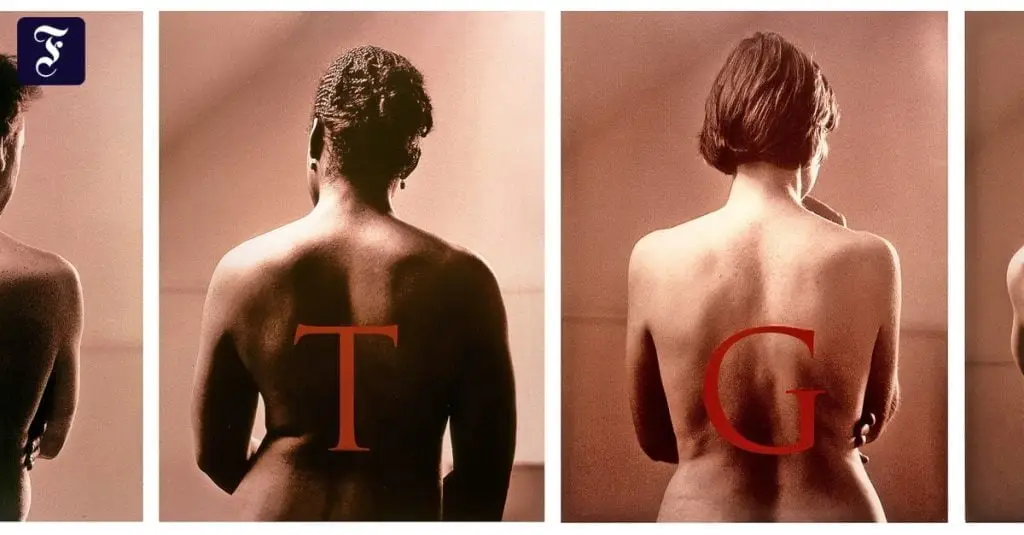
Her early works include the 1999 Jefferson Suite, a series of back nudes of people of color captioned with the letters A, T, G, C to refer to DNA bases. The work was created in response to the then provided proof of the paternity of the American President Jefferson of children of an enslaved woman. In her latest project, Carrie Mae Weems presents an encyclopedia of violence against African Americans, which has grown by an alarming number of volumes since last year. The fact that the envelopes of this “History of Violence” actually contain the Encyclopaedia Britannica has its inner logic: the Enlightenment cannot be separated from colonialism.
Carrie Mae Weems: The Evidence of Things Not Seen. At the Württembergischer Kunstverein Stuttgart, until July 12. No catalogue, but an informative booklet with texts by Iris Dressler.
[ad_2]
Source link
Trending Topics

Features
- Drive Toolkit
Download and distribute powerful vaccination QI resources for your community.
- Health Champions
Sign up now to support health equity and sustainable health outcomes in your community.
- Cancer Early Detection
MCED tests use a simple blood draw to screen for many kinds of cancer at once.
- PR
FYHN is a bridge connecting health information providers to BIPOC communities in a trusted environment.
- Medicare
Discover an honest look at our Medicare system.
- Alliance for Representative Clinical Trials
ARC was launched to create a network of community clinicians to diversify and bring clinical trials to communities of color and other communities that have been underrepresented.
- Reducing Patient Risk
The single most important purpose of our healthcare system is to reduce patient risk for an acute event.
- Jessica Wilson
- Subash Kafle


