











A new fund is asking for donations to help Alaska Native communities facing environmental disasters

[ad_1]

A new fund is calling for private donations to help Alaska Native communities facing climate change-related disasters. That source of funding will almost certainly not be enough money to fully respond to the environmental disasters that Alaska communities face, but it has at least one advantage over traditional grants.

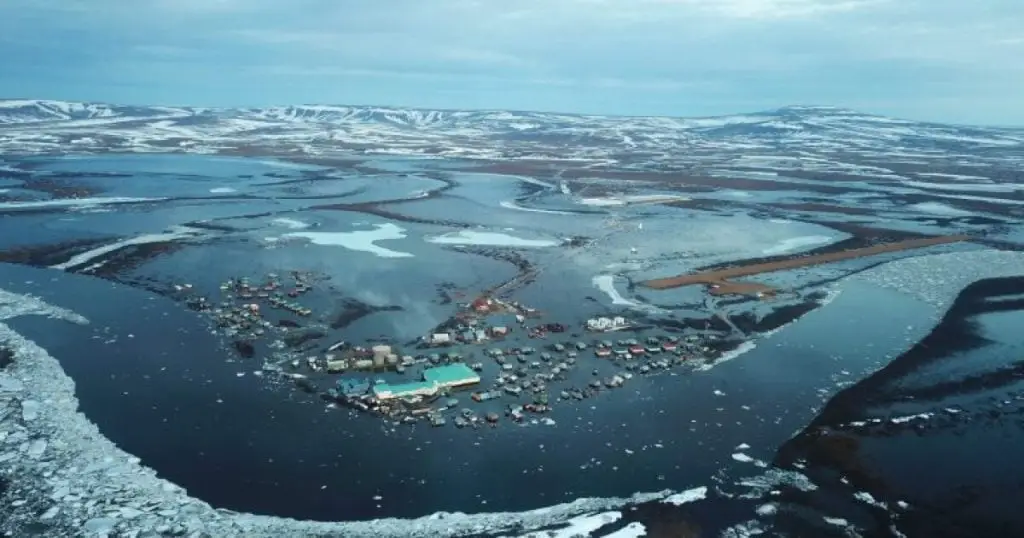
In spring 2021, a major flood swept through the Northwest Alaska village of Buckland, washing out roads and destabilizing homes. The community needed money fast. Luckily, a new fund had just been created for this exact purpose: the Climate Impact Response Fund, created by the Alaska Native Tribal Health Consortium (ANTHC)’s Healthy Alaska Natives Foundation. Within weeks of the disaster, the fund sent a $10,000 check to the community to buy emergency gravel to shore up roads and home foundations.

When you’re responding to an environmental disaster, $10,000 is not a lot of money. However, ANTHC Senior Director of Development Jen Harrington, who helps manage the fund, said that there is a need for small amounts of money that can be sent quickly.

“If we had, as an example, chosen to pursue federal funding or state funding, the timeline would have been much longer and we wouldn’t have had the ability to to be as nimble and as fast acting as we were,” Harrington said.

Another example of where this fund would have come in handy is in Kotlik several years ago. In May 2019, spring storms and floods suddenly eroded much of the riverbank. Tribal Administrator Pauline Okitkun said that left one home nearly in the Kotlik River.

“Part of the home was hanging off the riverbank. A quarter of it,” Okitkun said.

The tribe had to move the house immediately and needed money to do so. The grant process often takes months, and Okitkun didn’t have that kind of time.

“At the time, we did have bingo funds available for emergency basis to hire local people to move the home,” Okitkun said.

Scraping together a few thousand dollars from the tribe’s bingo funds, the tribe was able to move the home back 50 feet from the river’s edge, removing it from immediate danger.

The Climate Impact Response Fund had not been created yet back when this happened, but Okitkun said that Kotlik may need to rely on it this year. If storms this spring suddenly lop off large chunks of shoreline, the tribe may again need emergency funding to quickly move homes that are near the riverbank.

“If we’re able to grab that opportunity for this coming year? Yes, I would take that. That would definitely help,” Okitkun said.

A longer-term solution would require a lot more money than what the fund could offer. Okitkun said that Kotlik is talking about a larger relocation like Newtok or Napakiak. Those communities are looking at total costs of well over $100 million for their moves. Statewide, the Alaska Federation of Natives estimates that it will cost $4.5 billion over the next 50 years to protect infrastructure in 144 Alaska native communities from erosion, flooding, or melting permafrost. Existing state and federal funding only scratches the surface of what’s needed.

The Climate Impact Response Fund officially launched in November 2021, a few months after it awarded a grant to Buckland. Since then, the fund has raised just $22,000. ANTHC’s Harrington said that it clearly isn’t the cure-all for Alaska Native communities facing climate change.

“It was definitely not created with the expectation that it would fill the billions of dollars of gaps in funding that’s needed in Alaska from federal and state entities,” Harrington said. “Our goal here was to try and create something that allowed people to get support very quickly.”

If you would like to donate to the Climate Impact Response Fund, you can head to ANTHC’s foundation’s website at healthyalaskanatives.org.

[ad_2]

Source link
Trending Topics

Features

Download and distribute powerful vaccination QI resources for your community.

Sign up now to support health equity and sustainable health outcomes in your community.

MCED tests use a simple blood draw to screen for many kinds of cancer at once.

FYHN is a bridge connecting health information providers to BIPOC communities in a trusted environment.

Discover an honest look at our Medicare system.

ARC was launched to create a network of community clinicians to diversify and bring clinical trials to communities of color and other communities that have been underrepresented.

The single most important purpose of our healthcare system is to reduce patient risk for an acute event.

Related Posts
Early Cancer Detection Is Entering a New Era. Flint Is Helping Lead the Way.
Why Your “Ozempic” May Not Be Ozempic: FDA Warnings Highlight Growing Risks of Unregulated GLP-1 Drugs
The Communities Most Burdened by Disease Should Be the First to Benefit from Artificial Intelligence
Scroll to Top
Featured Articles
Early Cancer Detection Is Entering a New Era. Flint Is Helping Lead the Way.
Why Your “Ozempic” May Not Be Ozempic: FDA Warnings Highlight Growing Risks of Unregulated GLP-1 Drugs
Why Your “Ozempic” May Not Be Ozempic: FDA Warnings Highlight Growing Risks o...
The Communities Most Burdened by Disease Should Be the First to Benefit from Artificial Intelligence
The Communities Most Burdened by Disease Should Be the First to Benefit from ...
Cancer Pain Care Access Gap Hits Black, Asian Patients
Black and Asian Cancer Patients Wait Longer for Pain Relief in New Study
What Is Cyclosporiasis Symptoms, Food Safety, and Reasons
What Is Cyclosporiasis? The Foodborne Illness Showing Up in the News
Why Minority Mental Health Awareness Month Matters More Than Ever
Categories
AI
ATTR-CM
BIPOC News
Cancer
Clinical Trials
Covid19
Diseases of the Body
Environment
Health Data
Health Equity Events
Health Policy
Health Tips
Subscribe to our newsletter to receive our latest news​
All Stories
Early Cancer Detection Is Entering a New Era. Flint Is Helping Lead the Way.
Why Your “Ozempic” May Not Be Ozempic: FDA Warnings Highlight Growing Risks of Unregulated GLP-1 Drugs
Why Your “Ozempic” May Not Be Ozempic: FDA Warnings Highlight Growing Risks o...
The Communities Most Burdened by Disease Should Be the First to Benefit from Artificial Intelligence
The Communities Most Burdened by Disease Should Be the First to Benefit from ...
BIPOC News
Early Cancer Detection Is Entering a New Era. Flint Is Helping Lead the Way.
The Communities Most Burdened by Disease Should Be the First to Benefit from Artificial Intelligence
The Communities Most Burdened by Disease Should Be the First to Benefit from ...
Why Minority Mental Health Awareness Month Matters More Than Ever
Environment
UV Safety Awareness Month Raises Urgency on Skin Cancer Prevention and Sun Protection Equity
UV Safety Awareness Month Raises Urgency on Skin Cancer Prevention and Sun Pr...
Extreme Heat Safety Tips 5 Ways to Protect Your Health This Summer fyh.news
5 Heat Safety Tips That Could Protect Your Health This Summer
Lupus Awareness Event in Baltimore Aims to Support Research and Shine a Light on Health Disparities
Lupus Awareness Event in Baltimore Aims to Support Research and Shine a Light...
Work Force
A multigenerational Black and Hispanic family sitting together in a park, showing how Social Security helps support older adults, people with disabilities, and families across generations.
Millions of Older Americans Could Face Smaller Social Security Checks by 2032...
dreamstime_s_243253251
The Caregiver Journey: The Hidden Backbone of American Healthcare
Families gather at a Bronx community festival with live music, kids’ activities, and health booths sharing SOMOS social care resources and free screenings.
Celebrating Hispanic heritage while learning about health care

[xyz-ips snippet=”Output-Source-Name”]

Clinical Trials
Early Cancer Detection Is Entering a New Era. Flint Is Helping Lead the Way.
Why Your “Ozempic” May Not Be Ozempic: FDA Warnings Highlight Growing Risks of Unregulated GLP-1 Drugs
Why Your “Ozempic” May Not Be Ozempic: FDA Warnings Highlight Growing Risks o...
Clinical Trial Diversity Remains a Critical Challenge in Alzheimer’s Research
Vaccines and Outbreaks
A parent checking a child's temperature during summer, illustrating the changing RSV patterns and year-round respiratory virus risks.
Can You Get RSV During the Summer?
Michelle Lam, MBA, of NYC Health + Hospitals/Elmhurst & Amy Harris of NYC Health + Hospitals/Elmhurst
Healthcare Leaders Spotlight Vaccine Equity and Adult Immunization Strategies...
Measles Outbreaks Surge: Essential Facts and Prevention Strategies
Other Categories
AI
Read the latest AI News stories trending around the world
ATTR-CM
Cancer
Read the latest Cancer stories trending around the world
Covid19
Diseases of the Body
Read about the latest Diseases of the Body trending around the world
Friday Webinars
Every Friday, we bring you insightful webinars covering critical topics in healthcare, data equity, and policy reform.
Health Data
Read the latest Health Data stories trending around the world
Health Equity Events
Read the best Health Equity Events around the country.
Health Policy
Read the latest Health Policy stories trending around the world
Health Tips
Heart Health
Read the latest on Heart Health News, Stories and Tips.
kidney Health
Read more trending News about Kidney Health, Stories and Tips.