














[ad_1]
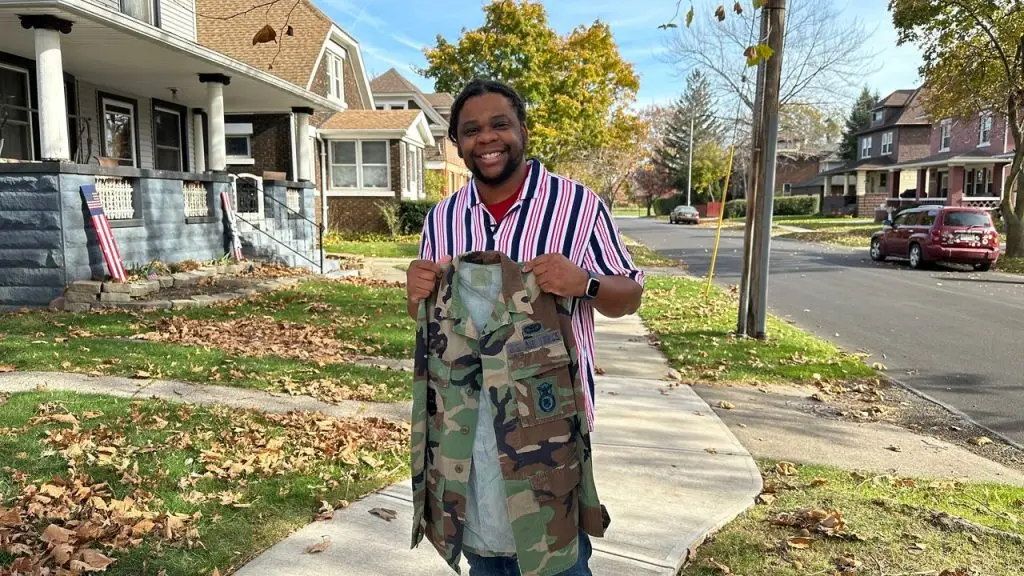
Tucked away in a closet is Giovonni Santiago’s military uniform. He last put it on in 2010.
“There is a sense of pride in that, and there is a sense of, bravery that you have, and, you know, you feel invincible,” said Santiago, an Airman First Class in the United States Air Force.
Santiago described his time in the military as complicated.
“Mixed emotions about it, for sure,” Santiago said. “There’s a lot of thoughts of like the confinement of what this uniform meant.”
Santiago served from 2006 to 2010 when the U.S. had its “Don’t Ask, Don’t Tell” policy in place, which prohibited LGBTQ military members from disclosing their sexual orientation.
At the time, Santiago identified as a lesbian, but really inside he knew he was transgender.
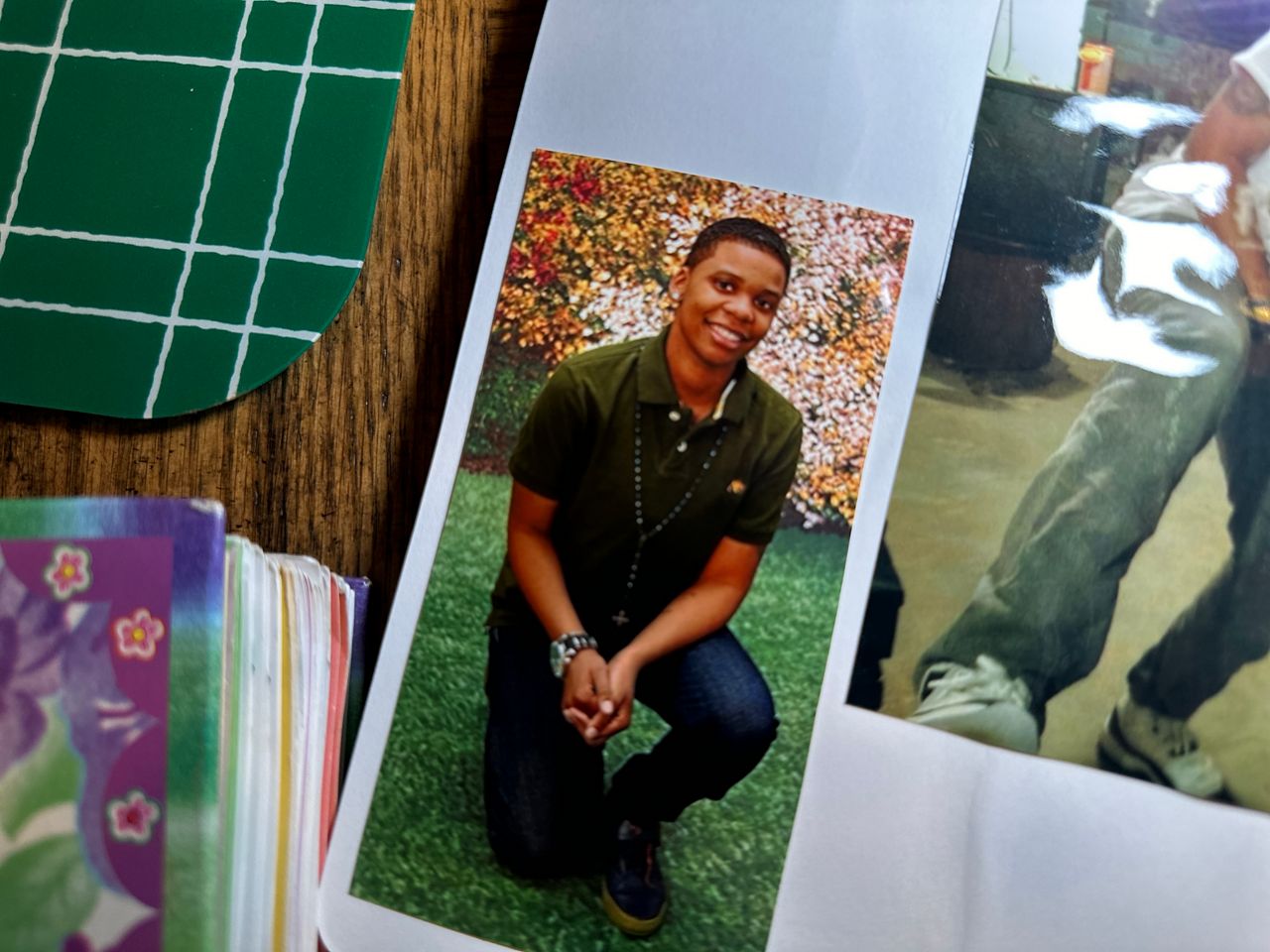
Santiago before he came out as transgender. (Spectrum News 1/Taylor Bruck)
“So under the ‘Don’t Ask, Don’t Tell’ era, a lot of us were essentially living a double life. We were in our uniform as one person, and when we were in our civilian clothes, we were another person,” Santiago said. “It was rough. It was rough to have to wear that mask.”
An injury in 2010 left him medically discharged. In 2011 “Don’t Ask, Don’t Tell” ended, but that’s when Santiago’s journey to being his true self began.
He sought care from the Louis Stokes Veterans Affairs Medical Center in northeast Ohio. Santiago was his doctor’s first transgender patient.
“I’m proud of that,” Santiago said. “That is one of the things that makes me most proud of my military service, that I persevered and never stopped advocating for myself.
Advocating for himself has led to helping hundreds of others. In 2015 he and his doctors opened the Gender Identity Veterans Experience or G.I.V.E Clinic. It was one of the first of its kind in the country, and the first in Ohio.
“And so being able to have these services and have them accessible and have them be from people who are like passionate and caring and amazing, that is unmatched and so it is truly lifesaving,” Santiago said. “And I think people don’t understand, people aren’t transitioning for a fad or for something to do, like, this is who we are. This is who we’ve always been, and we deserve to be able to live that, to live our authentic selves in a healthy way.”
In 2016 the Obama Administration began allowing transgender people to serve openly in the military. The Trump Administration then rolled back the policy in 2017, but the Biden Administration overturned it again in 2021.
“‘Don’t Ask, Don’t Tell’ ended in 2011, and so you figure it was almost five years of that, that freedom of being able to be your authentic self in the military and then it just all changed again,” Santiago said.

In 2015 he and his doctors opened the Gender Identity Veterans Experience or G.I.V.E Clinic. (Submitted Photo)
Despite the waffling policies, the G.I.V.E Clinic has stayed steady. Dr. Megan McNamara leads the care.
“It seems unfair that people should be stigmatized and that that results in poor health care,” said McNamara, the lead physician of the G.I.V.E clinic at the Louis Stokes Cleveland Veterans Affairs Medical Center. “We’ve worked hard to really embrace the positive aspects of the VA for all LGBTQ veterans. We really tried to make it a very comfortable place to receive care and to feel welcome.”
While Santiago said he may have never had to fight an actual war, he feels that trans people have been fighting a culture war for decades.
“As a person who is both Black and trans, I’m like, I gave my life for a country that sometimes doesn’t show me that same love, doesn’t show me that same respect,” Santiago said. “And I think those who call themselves American patriots, who have never served in the military, have so much to say about trans people and trans people in the military and it’s disheartening to hear. I feel like if you’re not going to make that ultimate sacrifice, don’t speak on that ultimate sacrifice. If you have never been in the shoes or in the boots of the person who is the American patriot themself, don’t tell us how to feel about anything that goes on in this country.”
Today, Santiago continues to advance society forward. He’s appeared in national campaigns like “Here We Are” and launched a nonprofit called META Center Inc. for trans youth and adults. He connects them to resources and helps them build community.

Santiago launched his nonprofit META Center, Inc in 2016 (Submitted Photo)
“I just want us all to be able to get to the top,” Santiago said. “When we’re able to reach our full potential, the things that we’re able to do as people is amazing. I want trans people to know that they are divine, that they are amazing, that they are loved, that they are valued, that they are needed.”
Santiago said he never had to worry about being homeless or hungry when he came out to his family because they have always been accepting. He knows that is not the reality for many trans people. His life’s work now revolves around being visible for those who can’t in hopes of changing the hearts and minds of America.
“You would never assume that I was trans, you would never assume that I was a veteran and so I want people to be able to hear about trans people from a trans person,” Santiago said. “I want to tell my story. I don’t want you to tell it for me. And I think that that’s important. And I think people can connect with things that you say, because maybe you don’t resonate with me being trans, but you resonate with being the oldest child or being in the military or being a parent. And I want to be able to, like, put all of that out there because I think commonalities is what brings us together.”
Santiago said he’s proud to have fought to protect his country. Now he just hopes his country fights to protect people like him.
“You signed your name on that dotted line to put your life literally on the line for the country full stop and your gender identity, your ethnicity, your, race, your sexual orientation, none of those things matter when you sign that dotted line,” Santiago said. “Showing respect for any person who has served or is serving is all that people should be doing.”
Based on 2018 Pentagon data, there are an estimated 15,000 transgender people currently serving in the military. Nearly 9,000 are on active duty and about 5,700 are in the reserves.
McNamara said The G.I.V.E Clinic has helped about 150 patients so far this year, but hundreds more since its inception. The Department of Veterans Affairs covers transition-related care such as Hormone therapy, mental health counseling and voice coaching, but does not cover gender-affirming surgeries. The G.I.V.E Clinic has been so successful at The Louis Stokes Cleveland VA Medical Center they now have a G.I.V.E clinic at the Parma VA hospital as well.
For more information visit here.
[ad_2]
Source link



