














[ad_1]

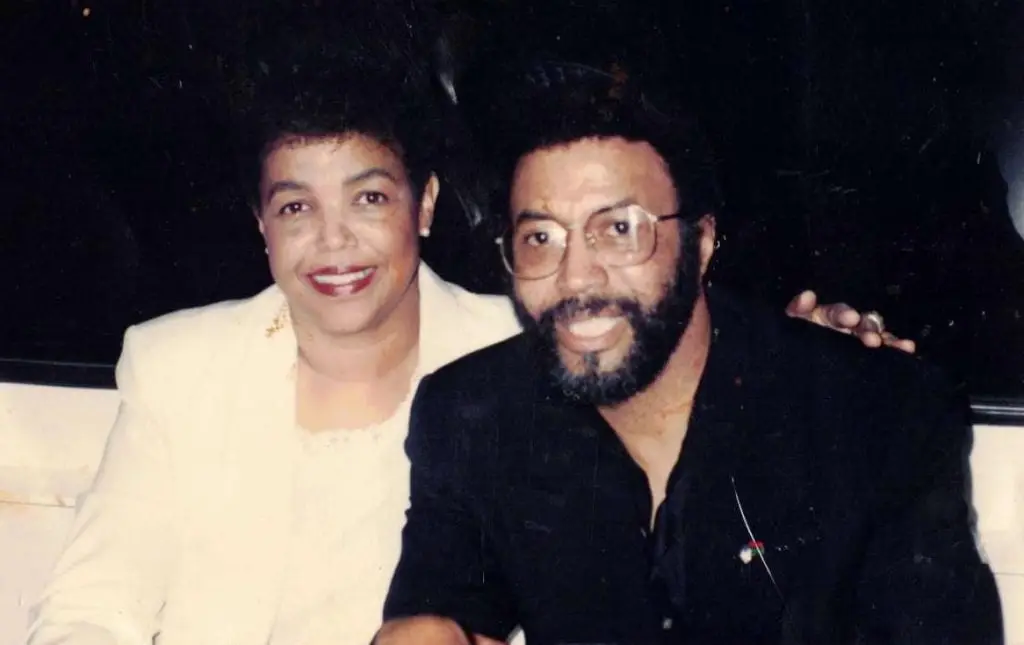
Sharon and Terry Jones first met during pickup basketball games at the Berkeley High School gymnasium in 1968.
“Somehow we got to talking and we’ve been together ever since,” said Terry, a retired college professor, looking onto the San Francisco Bay from the couple’s El Cerrito home.
Terry was by Sharon’s side when she became MLB’s first Black female administrator in 1980, joining the Oakland A’s as director of outreach activities. And when Sharon revealed to The New York Times that she heard Cincinnati Reds owner Marge Schott use racial slurs during an MLB executive meeting. And when the hate mail started pouring in.
On a recent morning, when Sharon was asked about the meeting that changed her relationship with baseball, Terry joined his Alzheimer’s-stricken wife on their living room couch to help piece together memories.
“That took a lot of guts on her part,” said Terry, 79, helping his 77-year-old wife recall decades-old events. “Instead of just being quiet, she put it out to the public. It caused her a lot of stress and grief.”
Sharon was holding the phone for A’s president Roy Eisenhardt in 1987 when she heard Schott say, “I would never hire another n—. I would rather have a trained monkey working for me than a n—.” Five years later, Jones went public with Schott’s remarks. Others came forward about Schott’s racism in hiring. In 1993 the Reds owner was suspended for the season and fined $25,000 for “disrepute and embarrassment” to the game.
Jones didn’t come into baseball intending to become a whistlerblower. The San Francisco native and Mills College alumna joined the A’s in a community outreach role, helping new owner Walter A. Haas Jr. build relationships in the East Bay. She used her access to help turn the predominantly Black little league down 66th Avenue from the Oakland Coliseum into a national powerhouse.
“Whenever we needed something from the A’s we would go to Sharon,” said Shirley Everett-Dicko, the Oakland Babe Ruth little league’s booster club president in the 1980s. “We would go there and Sharon would set up appointments or just lead us to (executive) Andy Dolich’s office and advocate on behalf of Babe Ruth. Sharon was instrumental in Babe Ruth Day at the A’s games. The whole league got free tickets.”
When Oakland Babe Ruth began winning national championships, Jones helped in fundraising efforts to send the boys to a Washington D.C. celebration along with that season’s World Series champions. In 1989, Oakland Babe Ruth joined the A’s in the Rose Garden. The boys met Oakland natives Rickey Henderson and Dave Stewart.
Before going public with Schott’s remarks in November of 1992, Jones left the A’s to become an administrator at Mills College. Everett-Dicko kept in touch with her friend, joining Jones for weekly breakfast on the Mills campus.
“I knew the sacrifice she made,” said Everett-Dicko, co-founder of Everett & Jones BBQ, an Oakland staple. “She is a strong person. She has strong opinions. I don’t remember a conversation where she regretted her decision.
“She went on with her life.”
Jones is not the first or last Bay Area figure at the forefront of baseball activism since Jackie Robinson broke the color barrier in 1947. In 1957, Willie Mays and wife Margherite fought housing discrimination upon moving to San Francisco. In 1969, Oakland native Curt Flood led the fight for player free agency, saying “there’s no other profession except slavery where one man is tied to one owner for the rest of his life.” Oakland’s Frank Robinson became MLB’s first Black manager in 1975. In 2017, A’s catcher Bruce Maxwell became the first MLB player to kneel during the national anthem to protest police killings across the country.
“If (MLB) doesn’t agree …they’re basically going to put you out and paint a picture that you’re the negative component in this equation – even though (Sharon Jones) was speaking up for women and Black people and equality,” said Maxwell, preparing for a season with Acereros de Monclova of the Mexican Baseball League. “It tends to cost you your career, your image. I’m out here playing in Mexico and it’s the only job I have.”
Jones’ wasn’t finished with baseball after calling out Schott. She joined Rev. Jesse Jackson at a January 1993 Washington D.C. summit on race and sports, prompted by the Schott allegations. Jackson threatened an MLB boycott if the league didn’t improve its minority hiring. Jones did not mince her words.
“Talk is cheap,” Jones told The Washington Post. “(Owners) had plenty of time to take care of these issues. … But they’ve also got to know people are watching them and are holding them accountable.”
At Schott’s attorney’s request, MLB blocked Jones from speaking at a January 1993 meeting leading up to Schott’s suspension. After the one-season suspension was levied, Jones was invited to speak at a February owners meeting only to be told “this is a private meeting” at the door.
“It made me wonder how important this issue was to baseball,” Jones told The San Francisco Chronicle at the time. Haas, her former boss, intervened and Jones spoke for 20 minutes to owners on racism and sexism in baseball, scolding them for their silence after Schott’s remarks in 1987.
The price of outspokenness was felt at home, not least from a wave of hate mail.
“It put a lot of pressure on her because people didn’t want to believe her, thinking she was a troublemaker out for publicity,” said Terry, who taught social welfare and sociology at Cal State East Bay. “But she stood her ground. Ultimately it meant she had to leave the A’s.”
Schott subsequently made additional racist remarks, was suspended again and sold her controlling interest in the team in 1999. She died in 2004.
Since Jones came forward, the percentage of African-American baseball players has dropped from around 18% to 8%, according to data from the Society of American Baseball Research and MLB. There are currently just two Black managers, no Black GMs and no Black majority owners.
“I don’t see any betterment coming from the game of baseball,” said Maxwell, 31, who hasn’t played an MLB game since 2018. “My message for them is, ‘F— do better.’ Actually care about your players. Treat your players with respect. Treat your cities with respect.”
Jones attributed growing up the youngest of 10 siblings, including with seven brothers who played baseball, with helping build her resolve and knowledge of the sports landscape.
“She was familiar with athletics, and with male culture and how it operates,” said Terry, turning to his wife for affirming nods. “They weren’t dealing with a novice. They were dealing with someone who had a high level of sophistication about sports.”
Nick Lozito is a freelance writer.
[ad_2]
Source link



