










- By Subash Kafle
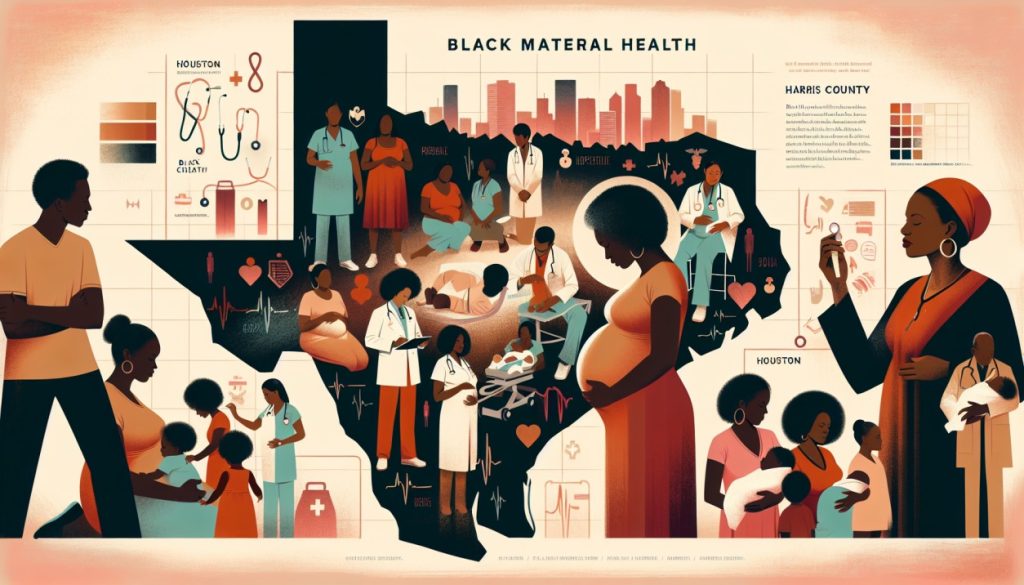
Addressing Black Maternal Mortality Crisis in Houston and Harris County
The issue of Black maternal mortality in Houston and Harris County has reached a critical turning point as local agencies and health officials join forces to address the staggering statistics. Black maternal mortality remains a pressing health equity issue, with Black women experiencing pregnancy-related deaths at disproportionate rates compared to other racial groups. This crisis has widespread health implications and demands immediate action.
In recent years, public health advocates and community leaders have increasingly spotlighted the alarming maternal mortality rates. According to the CDC, Black women are three to four times more likely than white women to die from pregnancy-related causes. This disparity is attributed to a multitude of factors, including systemic racism, disparities in healthcare access, and socio-economic inequities.
Community Initiatives and Policy Changes
Organizations within Houston and Harris County are ramping up their efforts. The Houston Health Department has initiated a comprehensive program aimed at reducing maternal deaths among Black women through better education, access to healthcare, and support services. In collaboration with local hospitals and health clinics, they are implementing strategies such as culturally competent care and postnatal support services, aiming to bridge the gap in maternal healthcare.
Moreover, state legislators are pushing for policy changes that seek to address systemic inequities in healthcare provision. New legislation focuses on extending postpartum Medicaid coverage and providing grants to community clinics that serve majority Black populations.
Experts highlight the importance of these initiatives as essential steps toward tackling the systemic issues fueling the crisis. Dr. Andrea Jackson, a renowned obstetrician and advocate for maternal health, stated, \”Addressing Black maternal mortality requires a multi-faceted approach—one that includes social, medical, and legislative reforms. We need to ensure that Black women receive the quality care they deserve throughout the entire span of their pregnancy and beyond.\”
Another promising development is the formation of maternal health task forces involving stakeholders from various sectors including healthcare providers, lawmakers, and community leadership. These task forces aim to create actionable plans for improving maternal care and reducing mortality rates.
As well, local universities and research institutions are conducting studies to better understand the underlying causes of these health disparities. Recent research indicates that factors like chronic stress caused by discrimination and implicit bias among healthcare providers contribute significantly to the higher mortality rates in Black women.
The CDC provides further resources on understanding and addressing disparities in maternal health outcomes.
While significant progress is being made, the road ahead is long and requires continued commitment from all sectors of society. Community engagement and awareness are key, and empowering affected communities remains at the heart of the movement to eradicate maternal health inequities.
In conclusion, the coordinated efforts in Houston and Harris County signal a pivotal shift in addressing Black maternal mortality. As these initiatives unfold, there is hope that they will serve as a model for other regions grappling with similar issues, ultimately leading to systemic changes that ensure equitable healthcare for all.
Trending Topics

Features
- Drive Toolkit
Download and distribute powerful vaccination QI resources for your community.
- Health Champions
Sign up now to support health equity and sustainable health outcomes in your community.
- Cancer Early Detection
MCED tests use a simple blood draw to screen for many kinds of cancer at once.
- PR
FYHN is a bridge connecting health information providers to BIPOC communities in a trusted environment.
- Medicare
Discover an honest look at our Medicare system.
- Alliance for Representative Clinical Trials
ARC was launched to create a network of community clinicians to diversify and bring clinical trials to communities of color and other communities that have been underrepresented.
- Reducing Patient Risk
The single most important purpose of our healthcare system is to reduce patient risk for an acute event.
- Jessica Wilson
- Subash Kafle