











- By Victor Mejia
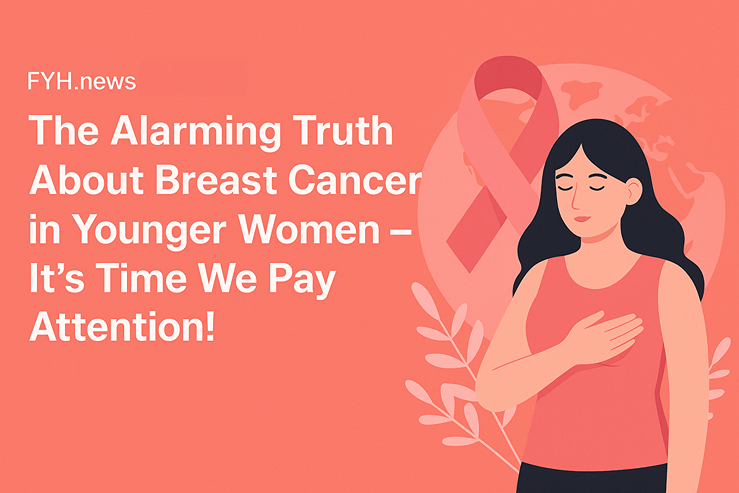
It’s easy to think of breast cancer as primarily an issue for older women, but the latest data from U.S. Cancer Statistics delivers a stark, important message that demands our attention: breast cancer incidence rates are slowly but surely increasing among women younger than 45 years across all racial and ethnic groups. While the overall number of cases is indeed higher in older women, this concerning trend among younger individuals—coupled with persistent disparities—means we cannot afford to look away. On a more hopeful note, it’s crucial to acknowledge that breast cancer deaths have generally decreased among women in most racial and ethnic groups during this same period.
Rising Breast Cancer Rates Among Younger Women
When we dive into the numbers, the picture becomes even clearer. In 2022 alone, 27,136 new cases of breast cancer were reported in women younger than 45 years in the United States. This isn’t a fluke; we’ve seen an average increase of 0.7% per year from 2001 to 2022, with that increase accelerating to 1.1% annually between 2012 and 2022. This upward trajectory is consistent across all racial and ethnic groups, but some groups are unfortunately experiencing steeper rises. Non-Hispanic American Indian or Alaska Native women, for example, saw the largest increase at 2.1% per year, followed by Non-Hispanic Asian and Pacific Islander women at 1.3%. Despite a slower rate of increase, it’s vital to recognize that Non-Hispanic Black women have had the highest incidence rates of breast cancer compared to all other racial and ethnic groups for most of this period.
Breast Cancer Death Rates: The Silver Lining and the Gaps
While incidence is rising, there’s a silver lining in the death rates. In 2023, 2,209 women younger than 45 years died from breast cancer in the U.S. Encouragingly, from 2001 to 2023, breast cancer death rates decreased across several groups: Non-Hispanic Black women saw a 1.9% average annual decrease, while Non-Hispanic Asian and Pacific Islander, Non-Hispanic White, and Hispanic women all experienced a 1.5% to 1.6% average annual decrease. This progress is significant. However, it’s imperative that we also confront a persistent, heartbreaking disparity: Non-Hispanic Black women consistently had the highest breast cancer death rate compared to all other racial and ethnic groups throughout this entire period.
Why Stage at Diagnosis Matters
This disparity in death rates leads us to a crucial factor: the stage at which breast cancer is diagnosed. Cancer stage describes how far the disease has spread—from localized (confined to the primary site) to regional (spread beyond the primary site or to regional lymph nodes) to distant (spread to other organs or remote lymph nodes), with distant-stage cancer having the lowest survival rate. The U.S. Cancer Statistics data reveals a concerning trend from 2018 to 2022: fewer Non-Hispanic Black women were diagnosed with localized-stage breast cancer (45.1%), and a higher proportion were diagnosed with distant-stage breast cancer (9.9%). This is a direct reflection of inequities in access to screening, timely diagnosis, or quality care.
Survival Rates Show Stark Inequities
The impact of these diagnostic disparities is starkly visible in survival rates. The 5-year relative survival rate compares the survival of those with and without the disease. The data show that Non-Hispanic Black women younger than 45 years, regardless of the stage at which their breast cancer was diagnosed, were less likely to be alive five years after their diagnosis compared to other women. This isn’t just a statistic; it represents lives cut short and highlights an urgent need for targeted interventions to address these systemic inequalities in health outcomes.
What Younger Women Can Do to Protect Themselves
Given these critical insights, what can we, as individuals, do? While all women face some risk, understanding your personal risk factors is key. Talk to your doctor about your family history and any other factors that might increase your risk. If you have a higher risk due to a family history of certain cancers or a known genetic mutation, considering genetic counseling and testing can be a proactive step. Beyond understanding risk, vigilance is paramount: learn the symptoms of breast cancer and seek medical advice if you notice any changes to your breasts. For women aged 40 to 74 at average risk, the U.S. Preventive Services Task Force recommends getting a mammogram every two years.
A Call to Action for Awareness and Equity
This information, drawn from official federal cancer statistics, isn’t just data; it’s a call to action. It urges us to be informed, to advocate for ourselves and our loved ones, and to work toward a future where early detection and equitable care can save more lives—especially for younger women and those most disproportionately affected.
Also read https://fyh.news/national-immunization-awareness-month/
Trending Topics
Features
- Drive Toolkit
Download and distribute powerful vaccination QI resources for your community.
- Health Champions
Sign up now to support health equity and sustainable health outcomes in your community.
- Cancer Early Detection
MCED tests use a simple blood draw to screen for many kinds of cancer at once.
- PR
FYHN is a bridge connecting health information providers to BIPOC communities in a trusted environment.
- Medicare
Discover an honest look at our Medicare system.
- Alliance for Representative Clinical Trials
ARC was launched to create a network of community clinicians to diversify and bring clinical trials to communities of color and other communities that have been underrepresented.
- Reducing Patient Risk
The single most important purpose of our healthcare system is to reduce patient risk for an acute event.
- Subash Kafle
- Jessica Wilson