











- By Victor Mejia
Stay Informed. Stay Empowered.
Thousands of bottles of the blood pressure medication chlorthalidone have been recalled across the United States after routine quality testing found that certain tablets may not dissolve properly, potentially making the medication less effective for patients who rely on it to control high blood pressure. While the recall affects only specific lots of the medication, public health experts say it is particularly important for Black and other historically underserved communities to be aware of the issue because they already face some of the nation’s highest rates of hypertension and cardiovascular disease.
The recall involves approximately 11,460 bottles of Chlorthalidone Tablets USP, 25 mg, manufactured by Inventia Healthcare Limited and distributed nationwide by Rising Pharma Holdings. According to the U.S. Food and Drug Administration (FDA), the tablets failed dissolution specifications, meaning they may not dissolve in the body as intended. When a tablet does not dissolve properly, patients may receive less of the medication than prescribed, reducing its ability to effectively lower blood pressure. The FDA has classified the recall as a Class II recall, indicating that use of the affected product could cause temporary or medically reversible adverse health effects, while the likelihood of serious harm is considered low.
Although the recall is not specific to any racial or ethnic group, its potential impact may be greater among communities that already carry a disproportionate burden of hypertension. According to the Centers for Disease Control and Prevention, Black adults are more likely than other racial and ethnic groups to develop high blood pressure earlier in life and are more likely to experience complications including stroke, heart failure, and chronic kidney disease. Maintaining consistent blood pressure control is a critical part of reducing those risks.
For many patients, chlorthalidone is a first-line treatment recommended by healthcare providers because it has been shown to effectively lower blood pressure and reduce the risk of cardiovascular events. A medication that does not deliver its intended dose could leave patients unknowingly under-treated, allowing blood pressure to remain elevated without obvious symptoms.
Health experts emphasize that patients should not stop taking their medication simply because they hear about the recall. Abruptly discontinuing blood pressure medication can cause blood pressure to rise, increasing the risk of serious complications. Instead, patients should first determine whether their prescription is one of the recalled products.
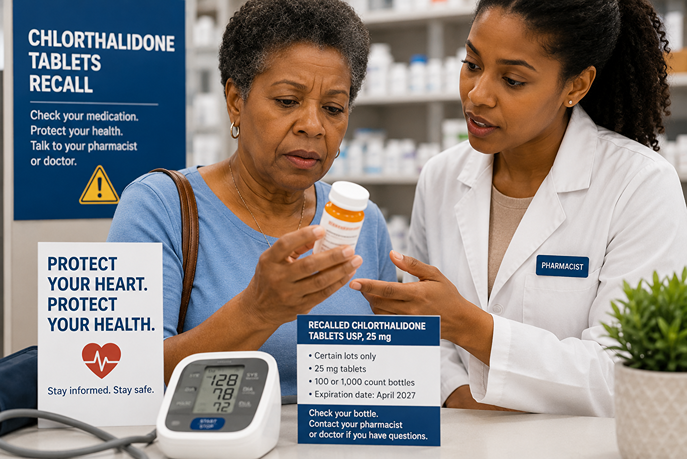
Patients who take chlorthalidone should check the prescription bottle for several key details. The recall applies only to 25-milligram tablets packaged in bottles of 100 or 1,000 tablets with specific lot numbers and an expiration date of April 2027. If the bottle matches the recalled information, patients should contact their pharmacist or healthcare provider to arrange a replacement or discuss alternative treatment options.
Healthcare providers also encourage patients to continue monitoring their blood pressure during this period. Individuals who notice unusually high readings, worsening swelling, headaches, chest pain, shortness of breath, or other concerning symptoms should seek medical attention promptly.
The recall also highlights broader issues of medication quality and healthcare equity. Communities of color often face additional barriers to managing chronic diseases, including limited access to pharmacies, transportation challenges, higher medication costs, and lower rates of continuous primary care. A manufacturing issue affecting an essential medication can therefore create additional obstacles for patients who are already navigating healthcare disparities.
Public health advocates say this is an opportunity for healthcare providers, pharmacists, community organizations, and faith-based groups to educate patients about checking recalled medications while reinforcing the importance of remaining engaged in treatment. Simple actions such as verifying a prescription bottle, contacting a pharmacy, and scheduling follow-up care can help prevent unnecessary interruptions in blood pressure management.
Patients who believe they may have one of the recalled bottles should contact their pharmacy or prescribing clinician before making any changes to their medication regimen. Additional recall information is available through the FDA’s drug recall database and healthcare professionals can assist patients in determining whether their prescription is affected.
Stay Informed. Stay Empowered.
Trending Topics

Features
- Drive Toolkit
Download and distribute powerful vaccination QI resources for your community.
- Health Champions
Sign up now to support health equity and sustainable health outcomes in your community.
- Cancer Early Detection
MCED tests use a simple blood draw to screen for many kinds of cancer at once.
- PR
FYHN is a bridge connecting health information providers to BIPOC communities in a trusted environment.
- Medicare
Discover an honest look at our Medicare system.
- Alliance for Representative Clinical Trials
ARC was launched to create a network of community clinicians to diversify and bring clinical trials to communities of color and other communities that have been underrepresented.
- Reducing Patient Risk
The single most important purpose of our healthcare system is to reduce patient risk for an acute event.
- Jessica Wilson
- Subash Kafle


