













June is Men’s Health Month, a national observance that comes at a critical time for men and boys across the United States, as public health data continue to show persistent gaps in preventive care, chronic disease outcomes and life expectancy.
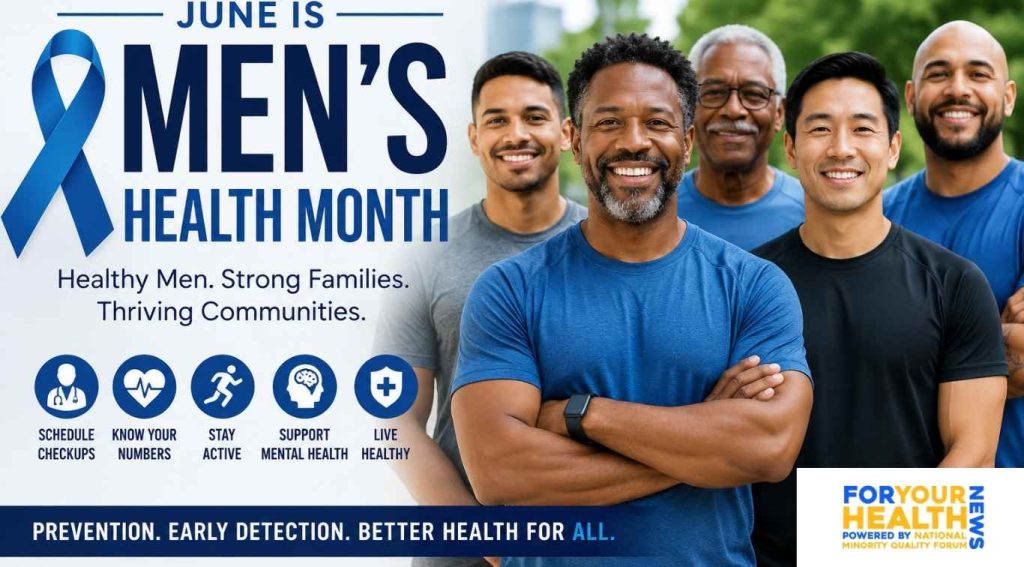
The observance, marked every June, is intended to encourage men, families, health providers, employers and communities to make prevention a routine part of health care rather than a reaction to illness. In 2026, Men’s Health Week is being observed from June 14 to 21, according to Men’s Health Network, which promotes the month as a time for education, early detection and community engagement.
The urgency is clear in federal health data. The Centers for Disease Control and Prevention reports that heart disease, cancer and unintentional injuries remain the leading causes of death among men in the United States. CDC data also show that 50.8% of adult men have hypertension, 39.2% of men age 20 and older have obesity, and only 28.3% of adult men meet federal guidelines for both aerobic and muscle-strengthening physical activity. Among men younger than 65, 10.9% were uninsured, a barrier that can delay routine checkups, screenings and treatment.
Those numbers reflect a broader challenge: many common threats to men’s health are preventable, treatable or easier to manage when caught early. High blood pressure, diabetes, smoking, obesity and lack of physical activity all increase the risk of heart disease and stroke. Cancer screenings, blood pressure checks, cholesterol testing, diabetes screening, vaccinations and conversations about mental health can help detect problems before they become emergencies.
Yet prevention is not reaching all men equally. Communities of color continue to face barriers shaped by insurance coverage, access to primary care, transportation, medical mistrust, underrepresentation in clinical research and unequal treatment within the health system. The U.S. Department of Health and Human Services Office of Minority Health says its mission is to improve the health of racial and ethnic minority populations and eliminate health disparities, a goal that remains central to any discussion of men’s health.
For Black men, prostate cancer remains one of the clearest examples of inequity. The CDC describes prostate cancer as the most common cancer among men in the United States, aside from non-melanoma skin cancer, and one of the leading causes of cancer death among men of all races and Hispanic origin populations. The National Cancer Institute’s SEER program reports that prostate cancer death rates are higher among non-Hispanic Black men. The American Cancer Society Cancer Action Network has also noted that Black men have the highest prostate cancer death rate of any racial or ethnic group and are more than twice as likely to die from the disease as White men.
Screening decisions can be complex. The U.S. Preventive Services Task Force recommends that men ages 55 to 69 make an individual decision about prostate-specific antigen, or PSA, screening after discussing the potential benefits and harms with a clinician. For men with higher risk, including Black men and those with a family history of prostate cancer, that conversation may need to happen earlier and with greater urgency.
Prevention Must Reach Men Where They Are
Public health experts and community organizations increasingly emphasize that improving men’s health requires more than telling men to schedule a doctor’s appointment. It also requires meeting men in trusted spaces, including barbershops, churches, workplaces, schools, fraternities, sports leagues and community events.
That approach is especially important in communities where health care access has been inconsistent or where men may have had negative experiences with the medical system. Community-based outreach can make health information more accessible, normalize conversations about screenings and mental health, and connect men to local clinics or insurance resources.
Mental health is also a central part of Men’s Health Month. CDC suicide data show that suicide remains a major public health concern, with disparities by sex, race, ethnicity, geography and other factors. The CDC has identified groups experiencing suicide disparities, including veterans, rural residents, middle-aged adults, people of color and tribal populations. Advocates say conversations about men’s health should include depression, stress, grief, substance use and social isolation, not only physical exams and cancer screenings.
The message for families is also important. Men’s health affects partners, children, caregivers, workplaces and entire communities. When men delay care, chronic conditions may worsen, medical costs may rise and families may be left managing preventable crises. When men have access to preventive care and culturally responsive health information, the benefits extend beyond the individual.
Men’s Health Month also comes as public health officials continue to stress the importance of regular primary care. A yearly checkup can help establish baseline numbers for blood pressure, cholesterol, blood sugar and weight. It can also give patients a chance to discuss sleep, sexual health, urinary symptoms, family history, alcohol use, tobacco use, mental health and recommended vaccines.
For men who have not seen a clinician in years, health experts say the first visit does not have to address everything at once. Establishing care, reviewing family history and completing basic screenings can be a meaningful first step. For men who already have conditions such as hypertension, diabetes or heart disease, the month is a reminder to review medications, follow-up appointments and treatment goals.
The health equity challenge is to ensure those steps are available to all men, not only those with stable insurance, transportation, paid time off and nearby providers. Men’s Health Month offers an opportunity for health systems, policymakers and community organizations to examine whether their outreach is reaching Black, Latino, American Indian and Alaska Native, Asian American, Native Hawaiian and Pacific Islander men, as well as men in rural areas and low-income communities.
As June continues, the central message is straightforward: men’s health should not be treated as an afterthought. Prevention, early detection and trusted care can save lives, but only if men can access those services and feel supported in using them. Men’s Health Month is a reminder that healthier men can mean healthier families and stronger communities year-round.
Also Read: Bridging the Gap: How Multicancer Early Detection Can Advance Health Equity in the USA




