














[ad_1]

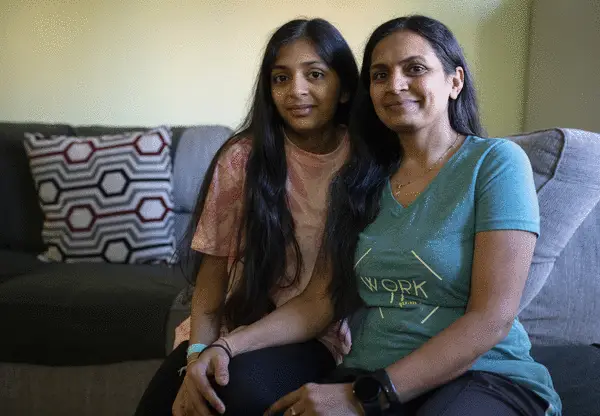
CHICAGO — Like many moms, Asmita Patel has struggled to find time to exercise in recent years.
Between working, taking care of her children, caring for relatives and shuttling her kids to activities, she didn’t work out much. That changed, however, last month when the Niles woman and her 13-year-old daughter joined a Northwestern University Feinberg School of Medicine clinical trial focused on getting South Asian women — who have high rates of diabetes and other ailments — to exercise more.
Now Patel and her daughter participate in weekly Zoom workout classes and discussions about culture, exercise and health with other Chicago-area South Asian mothers and daughters.
“I wanted to make sure that I’m healthy so it helps me throughout my whole life, and I can also teach my kids, as they are growing up, to understand,” said Patel, who moved to the U.S. from India about 15 years ago.
Patel and her daughter are among 60 mother and daughter pairs who are part of the ongoing, community-based clinical trial, which Dr. Namratha Kandula started about three years ago. She and other researchers embarked on the project in hopes of finding a way to address high rates of diabetes, gestational diabetes and cardiovascular issues among South Asian women in the U.S.
About 23.3% of South Asian people in a nationally representative survey of U.S. adults had diabetes between 2011 and 2016, according to a study published in the Journal of the American Medical Association. By comparison, 12.1% of white people, 20.4% of Black people and 22.1% of Hispanic people surveyed had diabetes during that same time.
Researchers don’t fully understand why South Asian people get diabetes at such high rates, but say a number of factors may be to blame.
South Asian people carry weight differently than other groups, more often around their abdomens rather than in their legs or hips, said Kandula, who is a professor of medicine and preventive medicine at Feinberg. It may also be because of the foods popular among South Asian cultures. They also may not exercise much.
The reasons for not exercising vary, especially by South Asian culture, Kandula said. South Asian people are a diverse group who hail from countries including Bangledesh, India, Nepal, Pakistan, Sri Lanka and Bhutan.
“Women and girls of South Asian backgrounds face some really distinct barriers to being able to exercise and be physically active,” Kandula said.
…continued
swipe to next page
©2022 Chicago Tribune. Visit at chicagotribune.com. Distributed by Tribune Content Agency, LLC.[ad_2]
Source link



