










Stopping Violence Against Indigenous Women

[ad_1]

By CS Staff

Violence in any form is a terrible experience and, even after many years, will have an impact on a woman’s health and well being. It can lead to irreversible consequences, illness, disability, and mental health problems and can lead to depression, anxiety disorders, and even suicide. 

Countries that were former colonies have a 50 times higher prevalence of intimate partner violence against women. It is colonialism, coupled with widespread poverty, racial discrimination, and gender inequality, that has created the conditions for increased violence against Indigenous women.  

Over the past decades, the Indigenous Peoples’ movement in many countries has sounded the alarm about the enormous amount of violence, disappearance, and murder of Indigenous women. The disproportionate level of violence suffered by Indigenous Peoples is horrifying, but even this data is inaccurate and incomplete.

Statistics on such cases are not kept in all countries; in many countries, they are silenced, reduced, or withheld because of the risk of confidentiality and possible potential harm to victims.

But the statistics that are available are scary:

  • More than 4 in 5 American Indian and Alaska Native women (84.3 percent) have experienced violence in their lifetime, 
  • Indigenous women in Australia accounted for 16% of all female homicide victims despite making up only 2-3% of the adult female population.
  • Indigenous women are 33 times more likely to be hospitalized for domestic violence than other women in Australia, and they are 8 times more likely to die as a result of a violent assault than other women.
  • In the U.S., the female homicide rate is ten times the national average for women living on reservations, and homicide is the third leading cause of death for Indigenous women, according to data from the Urban Indian Health Institute.
  • This violence also disproportionately affects trans people, Two-Spirit people, and people of other marginalized genders. In a recent study of Two-Spirit women, 78% of the women had been physically assaulted, and 85% were sexually assaulted. This is 4 times higher than the estimate of lifetime assault among women in the general population.


img


img

Graphs source: The Guardian. 

img

Graphic source: MMIWG Report. No agency has comprehensive data on the true number of missing and murdered Indigenous women and girls, and further research is needed.
 

The reports, figures, and graphs are shocking, but even though these data are not complete or new, they are often old data that has not been updated. 

One must realize that all these figures are, first and foremost, the lives of children, mothers, sisters, daughters, and the shattered lives of families, tragedies that are experienced daily. 

Indigenous women who have been subjected to violence do not always report to law enforcement agencies because they fear for their lives or because they are desperate for help and support. These cases remain unreported and invisible to statistics. In 2024, Djirra, a specialized organization controlled by the Aboriginal community, reported that “more than 90% of domestic and sexual violence cases remain unreported.

The targeting, abuse, and disappearance of Indigenous women are simply not taken seriously nor investigated as necessary. “Our women regularly report instances of Police minimizing the violence, not believing them and refusing to take statements,” – is reported by the Djirra organization. Often, Indigenous women or their families find that their claims to the police are not accepted, which is why Indigenous Women and girls are not only more likely to go missing but also less likely to be found.

Violence against women, mothers, and keepers of the home is not a new problem. Still, unfortunately, we are witnessing an increasing and frightening number of violence and murders of Indigenous Women in the world.

Only an official recognition of the existing problem can be the step that will help to change the situation for the better. First of all, there must be a change in society’s attitude towards Indigenous women. Their voices and stories must be heard and shown the truth. 

Economic and social inequalities in the treatment of indigenous peoples must be addressed, ensuring that they have equal access to education, health services, and work and equal rights to be protected.

Systemic change is needed, as well as behavior changes and approaches to investigating such cases, treating Indigenous victims and their families as full members of society who are entitled to fair and comprehensive justice and support. Support services need to be adapted to meet the needs of Indigenous women, including the issues of accessibility and the possibility of alternative ways to report violence to them.

The problem must be recognized at the national level in all countries, including the development of a comprehensive plan with overall coordination of necessary measures between governmental bodies and Indigenous Peoples, their tribes, and organizations at all levels.

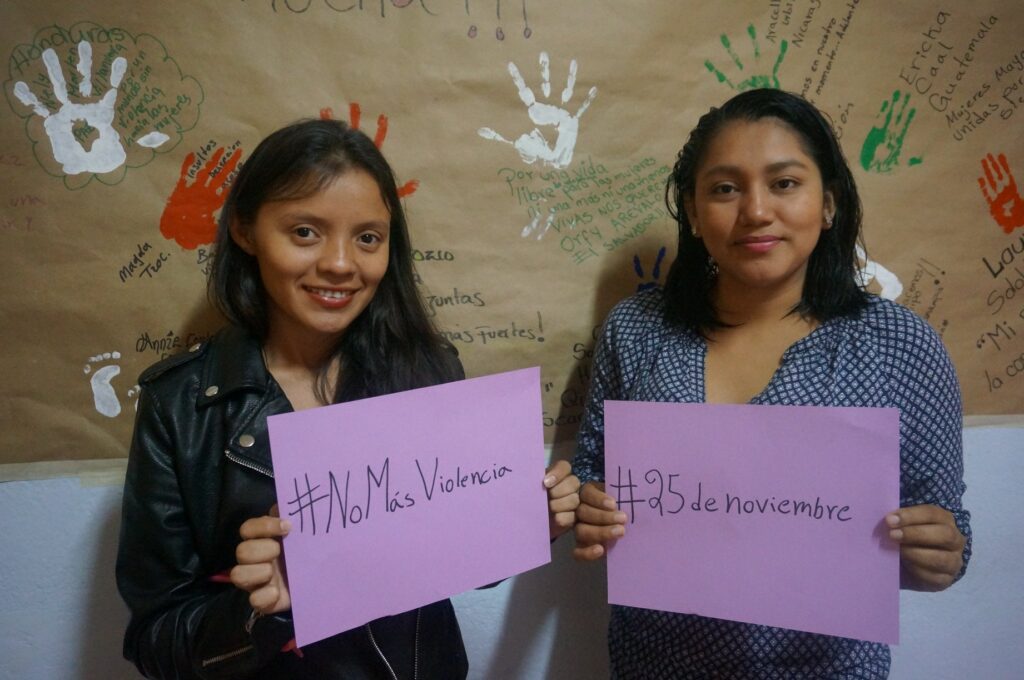
November 25 is the International Day for the Elimination of Violence Against Women. We express our support for our Indigenous Sisters and their families, all those who have been and continue to be violated, and those who have been murdered or missing. We express our gratitude to all those who fight for the truth and continue to recover the names of the victims, who do not stop the search for the missing. We thank those who stand up for justice and seek a fair trial and punishment for perpetrators of violence against Indigenous women.


Top photo: Photograph taken by Rosy Gonzalez, Indigenous Rights Radio Program Manager at a media training for Indigenous communicators of Central America organized by Cultural Survival.

[ad_2]

Source link

Trending Topics

Features

Download and distribute powerful vaccination QI resources for your community.

Sign up now to support health equity and sustainable health outcomes in your community.

MCED tests use a simple blood draw to screen for many kinds of cancer at once.

FYHN is a bridge connecting health information providers to BIPOC communities in a trusted environment.

Discover an honest look at our Medicare system.

ARC was launched to create a network of community clinicians to diversify and bring clinical trials to communities of color and other communities that have been underrepresented.

The single most important purpose of our healthcare system is to reduce patient risk for an acute event.

Related Posts
Why Your “Ozempic” May Not Be Ozempic: FDA Warnings Highlight Growing Risks of Unregulated GLP-1 Drugs
The Communities Most Burdened by Disease Should Be the First to Benefit from Artificial Intelligence
Black and Asian Cancer Patients Wait Longer for Pain Relief in New Study
Scroll to Top
Featured Articles
Why Your “Ozempic” May Not Be Ozempic: FDA Warnings Highlight Growing Risks of Unregulated GLP-1 Drugs
Why Your “Ozempic” May Not Be Ozempic: FDA Warnings Highlight Growing Risks o...
The Communities Most Burdened by Disease Should Be the First to Benefit from Artificial Intelligence
The Communities Most Burdened by Disease Should Be the First to Benefit from ...
Cancer Pain Care Access Gap Hits Black, Asian Patients
Black and Asian Cancer Patients Wait Longer for Pain Relief in New Study
What Is Cyclosporiasis Symptoms, Food Safety, and Reasons
What Is Cyclosporiasis? The Foodborne Illness Showing Up in the News
Why Minority Mental Health Awareness Month Matters More Than Ever
From Childhood Cancer to Alzheimer’s and ALS Celebrity Health Stories Spark National Conversation on Disease, Caregiving, and Equity
From Childhood Cancer to Alzheimer’s and ALS Celebrity Health Stories Spark N...
Categories
AI
ATTR-CM
BIPOC News
Cancer
Clinical Trials
Covid19
Diseases of the Body
Environment
Health Data
Health Equity Events
Health Policy
Health Tips
Subscribe to our newsletter to receive our latest news​
All Stories
Why Your “Ozempic” May Not Be Ozempic: FDA Warnings Highlight Growing Risks of Unregulated GLP-1 Drugs
Why Your “Ozempic” May Not Be Ozempic: FDA Warnings Highlight Growing Risks o...
The Communities Most Burdened by Disease Should Be the First to Benefit from Artificial Intelligence
The Communities Most Burdened by Disease Should Be the First to Benefit from ...
Cancer Pain Care Access Gap Hits Black, Asian Patients
Black and Asian Cancer Patients Wait Longer for Pain Relief in New Study
BIPOC News
The Communities Most Burdened by Disease Should Be the First to Benefit from Artificial Intelligence
The Communities Most Burdened by Disease Should Be the First to Benefit from ...
Why Minority Mental Health Awareness Month Matters More Than Ever
From Childhood Cancer to Alzheimer’s and ALS Celebrity Health Stories Spark National Conversation on Disease, Caregiving, and Equity
From Childhood Cancer to Alzheimer’s and ALS Celebrity Health Stories Spark N...
Environment
UV Safety Awareness Month Raises Urgency on Skin Cancer Prevention and Sun Protection Equity
UV Safety Awareness Month Raises Urgency on Skin Cancer Prevention and Sun Pr...
Extreme Heat Safety Tips 5 Ways to Protect Your Health This Summer fyh.news
5 Heat Safety Tips That Could Protect Your Health This Summer
Lupus Awareness Event in Baltimore Aims to Support Research and Shine a Light on Health Disparities
Lupus Awareness Event in Baltimore Aims to Support Research and Shine a Light...
Work Force
A multigenerational Black and Hispanic family sitting together in a park, showing how Social Security helps support older adults, people with disabilities, and families across generations.
Millions of Older Americans Could Face Smaller Social Security Checks by 2032...
dreamstime_s_243253251
The Caregiver Journey: The Hidden Backbone of American Healthcare
Families gather at a Bronx community festival with live music, kids’ activities, and health booths sharing SOMOS social care resources and free screenings.
Celebrating Hispanic heritage while learning about health care

[xyz-ips snippet=”Output-Source-Name”]

Clinical Trials
Why Your “Ozempic” May Not Be Ozempic: FDA Warnings Highlight Growing Risks of Unregulated GLP-1 Drugs
Why Your “Ozempic” May Not Be Ozempic: FDA Warnings Highlight Growing Risks o...
Clinical Trial Diversity Remains a Critical Challenge in Alzheimer’s Research
Healthcare professional collecting a blood sample from a diverse patient as part of multicancer early detection screening.
Bridging the Gap: How Multicancer Early Detection Can Advance Health Equity i...
Vaccines and Outbreaks
A parent checking a child's temperature during summer, illustrating the changing RSV patterns and year-round respiratory virus risks.
Can You Get RSV During the Summer?
Michelle Lam, MBA, of NYC Health + Hospitals/Elmhurst & Amy Harris of NYC Health + Hospitals/Elmhurst
Healthcare Leaders Spotlight Vaccine Equity and Adult Immunization Strategies...
Measles Outbreaks Surge: Essential Facts and Prevention Strategies
Other Categories
AI
Read the latest AI News stories trending around the world
ATTR-CM
Cancer
Read the latest Cancer stories trending around the world
Covid19
Diseases of the Body
Read about the latest Diseases of the Body trending around the world
Friday Webinars
Every Friday, we bring you insightful webinars covering critical topics in healthcare, data equity, and policy reform.
Health Data
Read the latest Health Data stories trending around the world
Health Equity Events
Read the best Health Equity Events around the country.
Health Policy
Read the latest Health Policy stories trending around the world
Health Tips
Heart Health
Read the latest on Heart Health News, Stories and Tips.
kidney Health
Read more trending News about Kidney Health, Stories and Tips.


