














- By Adjoa Kyerematen
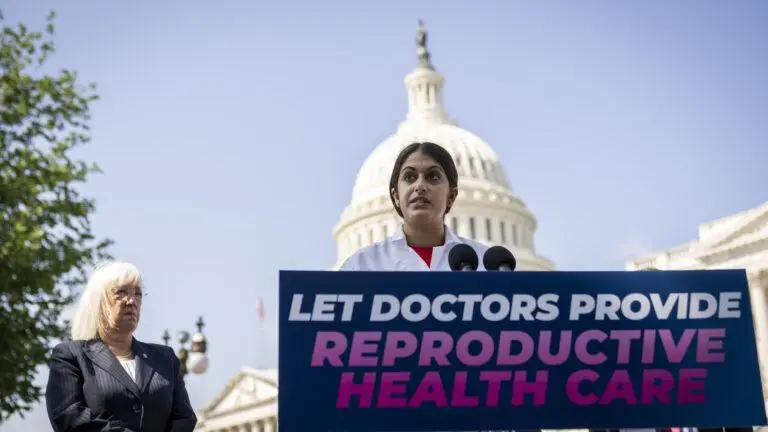
Abortion raises many ethical questions. Determining whether an abortion is needed to save a pregnant person’s life or health is not among them. That’s a factual question requiring medical — not ethical — judgment.
Yet in the struggle to provide medically necessary care in a post-Dobbs world, some clinicians and institutions have mistakenly turned to ethics consultants and committees to decide whether a patient’s pregnancy may be terminated.
Take the case of Julie Rhee, an obstetrician-gynecologist in St. Louis who recently spent half a day working to comply with her institution’s new requirement for an ethics committee to sign off on abortions. It was half a day before she could take her patient with an ectopic pregnancy for urgent surgery, half a day in which the patient could have died.
Involving ethics committees in these cases may be well-intended, especially given the threat of criminal prosecution, but it’s misguided and dangerous. Ethics committees should refuse to take part in deciding whether a recommended abortion is legally permissible.
In the era before Roe v. Wade recognized a right to abortion protected by the federal constitution, some hospitals relied on “abortion selection committees” to decide who should have access to “therapeutic” abortion. These committees were presented with requests on the basis of a patient’s suicidality or other psychiatric conditions, as well as other maternal health risks and fetal problems. Committees sometimes decided that patients were “undeserving” of abortion. Their decision-making was rife with opportunities for inconsistency, bias, and discrimination. Hospitals just a few miles from each other could have different standards for approving the procedure, evoking grave misgivings among both physicians and patients.
Trending Topics

Features
- Drive Toolkit
Download and distribute powerful vaccination QI resources for your community.
- Health Champions
Sign up now to support health equity and sustainable health outcomes in your community.
- Cancer Early Detection
MCED tests use a simple blood draw to screen for many kinds of cancer at once.
- PR
FYHN is a bridge connecting health information providers to BIPOC communities in a trusted environment.
- Medicare
Discover an honest look at our Medicare system.
- Alliance for Representative Clinical Trials
ARC was launched to create a network of community clinicians to diversify and bring clinical trials to communities of color and other communities that have been underrepresented.
- Reducing Patient Risk
The single most important purpose of our healthcare system is to reduce patient risk for an acute event.
- Jessica Wilson
- Subash Kafle


