
Virtual mental health is increasingly important for younger and Hispanic populations, data shows

[ad_1]

The Covid-19 pandemic has caused a huge shift towards virtual health and the need for convenient and affordable care, with 62% of consumers saying they are very or somewhat likely to use a virtual visit if they don’t need a doctor’s exam, according to according to a new CVS Health’s 2022 Health Care Insights Study.

The survey included a total of 2,600 consumers. This included 1,000 participants ages 18 and older across the US. In addition, it surveyed 200 consumers in six regional areas: Atlanta, Houston, Chicago, Columbus, Philadelphia and Phoenix. It also featured 200 black consumers and 200 Hispanic consumers. Finally, it surveyed 400 healthcare providers.

While 92% of consumers said virtual care adds convenience to choosing a primary care provider, those who had access to virtual mental health care had different responses to how convenient/private it was based on age and race, according to additional CFS surveys. data obtained by MedCity News.

Difference in race

A majority of all races considered virtual visits for mental health to be more convenient. This represents 73% of Hispanic respondents, 68% of Black respondents, 73% of White respondents and 69% of respondents of other races. Respondents self-identified their race and many selected multiple options.

But when it comes to the privacy of virtual mental health visits, 70% of Hispanic respondents considered virtual visits more private than in-person, highlighting the mental health stigma that exists in the Hispanic population, according to the survey. This compares with 63% of black respondents, 57% of white respondents and 61% of respondents from other races.

“Virtual mental health services allow patients to confidentially access care from their homes without having to sit in a waiting room or ask family or friends for help traveling to a visit,” said Creagh Milford, vice president. president and clinical leader for virtual care for CFS health enterprises. “Telehealth allows the patient to control when and where to access services.”

The survey found the same when it came to confidentiality: 67% of Hispanic respondents found virtual mental health visits to be more confidential than in person, compared to 64% of Black respondents, 58% of White respondents and 59% of respondents from other countries. races. In addition, 61% of Hispanic respondents said virtual visits would make them more likely to seek mental health care, and 66% said virtual visits to mental health would help avoid stigma, higher than other respondents.

“While we’ve made progress to normalize conversations about mental health, the stigma remains, especially among historically underrepresented groups,” Milford said. “Virtual care offers more accessibility, yes, but it can also be a welcome option for people who are hesitant to get mental health care in person.”

Age difference

The use of virtual visits, such as Zoom, for care with a physician or health care provider varies widely by age: 55% of 18- to 34-year-olds use virtual visits, compared to 40% of 35- to 50-year-olds, 30% of the age groups 51 to 64 and 17% of the over-65s.

When it comes to the virtual search for mental health care, there was a similar variation in answers by age: 64% percent of 18- to 34-year-olds have a very or somewhat likely access to mental health care, compared to 53% of 35 – up to 50-year-olds, 37% of 51 to 64-year-olds and 19% of over-65s.

“In general, virtual visits offer a number of benefits to the patient, reducing the time required and offering greater convenience, accessibility and affordability,” Milford said. “We especially see the enthusiasm for virtual visits among younger patients, who communicate virtually very easily.”

Younger age groups are also more concerned about physical health (52%), their mental health (58%), the mental health of family and loved ones (50%), and safety and neighborhood security (43%), CVS found. For the over-65s, these are 31%, 14%, 16% and 13% respectively.

“Young people have felt and still feel more stress and anxiety since the start of the pandemic. External stressors such as school, work, climate change and more, combined with the hyperconnection that characterizes younger generations, can evoke feelings of hopelessness, anxiety and isolation in some young people,” said Cara McNulty, president of behavioral health and mental wellbeing at CFS Health.
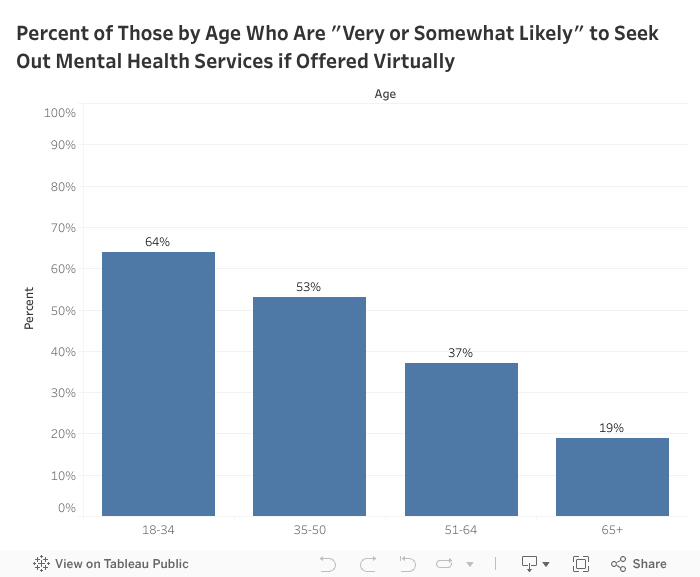
Dashboard 1

How providers shift

To meet the proliferation of virtual care, healthcare providers are making changes to their services, the data shows: 54% percent of providers added virtual office visit capabilities, 42% added an online portal, 43% added mobile added capabilities and only 9% said they don’t offer virtual care. The question presented to the respondents did not specify a time frame.

The most popular providers of digital aids are electronic health records and patient portals. A whopping 71% of providers say they use the electronic health records and 67% say they offer patient portals for consumers.

The shift to offering virtual care and digital tools is impacting patient volumes, 53% of providers said adding virtual services increased patient visits. Of these providers, 93% said virtual visits made patients more likely to make appointments. The data did not indicate whether this led to an increase in virtual appointments or in-person appointments.

“[The data] revealed that individuals have a more holistic perspective on what healthcare should look like,” Milford said. “Online tools such as electronic health records and patient portals make communication between different healthcare providers easier, helping patients and their healthcare team meet their health goals. vote and reach.”

Photo: CVS Health

[ad_2]

Source link

Trending Topics

Features

Download and distribute powerful vaccination QI resources for your community.

Sign up now to support health equity and sustainable health outcomes in your community.

MCED tests use a simple blood draw to screen for many kinds of cancer at once.

FYHN is a bridge connecting health information providers to BIPOC communities in a trusted environment.

Discover an honest look at our Medicare system.

ARC was launched to create a network of community clinicians to diversify and bring clinical trials to communities of color and other communities that have been underrepresented.

The single most important purpose of our healthcare system is to reduce patient risk for an acute event.

Related Posts
Early Cancer Detection Is Entering a New Era. Flint Is Helping Lead the Way.
Why Your “Ozempic” May Not Be Ozempic: FDA Warnings Highlight Growing Risks of Unregulated GLP-1 Drugs
The Communities Most Burdened by Disease Should Be the First to Benefit from Artificial Intelligence
Scroll to Top
Featured Articles
Early Cancer Detection Is Entering a New Era. Flint Is Helping Lead the Way.
Why Your “Ozempic” May Not Be Ozempic: FDA Warnings Highlight Growing Risks of Unregulated GLP-1 Drugs
Why Your “Ozempic” May Not Be Ozempic: FDA Warnings Highlight Growing Risks o...
The Communities Most Burdened by Disease Should Be the First to Benefit from Artificial Intelligence
The Communities Most Burdened by Disease Should Be the First to Benefit from ...
Cancer Pain Care Access Gap Hits Black, Asian Patients
Black and Asian Cancer Patients Wait Longer for Pain Relief in New Study
What Is Cyclosporiasis Symptoms, Food Safety, and Reasons
What Is Cyclosporiasis? The Foodborne Illness Showing Up in the News
Why Minority Mental Health Awareness Month Matters More Than Ever
Categories
AI
ATTR-CM
BIPOC News
Cancer
Clinical Trials
Covid19
Diseases of the Body
Environment
Health Data
Health Equity Events
Health Policy
Health Tips
Subscribe to our newsletter to receive our latest news​
All Stories
Early Cancer Detection Is Entering a New Era. Flint Is Helping Lead the Way.
Why Your “Ozempic” May Not Be Ozempic: FDA Warnings Highlight Growing Risks of Unregulated GLP-1 Drugs
Why Your “Ozempic” May Not Be Ozempic: FDA Warnings Highlight Growing Risks o...
The Communities Most Burdened by Disease Should Be the First to Benefit from Artificial Intelligence
The Communities Most Burdened by Disease Should Be the First to Benefit from ...
BIPOC News
Early Cancer Detection Is Entering a New Era. Flint Is Helping Lead the Way.
The Communities Most Burdened by Disease Should Be the First to Benefit from Artificial Intelligence
The Communities Most Burdened by Disease Should Be the First to Benefit from ...
Why Minority Mental Health Awareness Month Matters More Than Ever
Environment
UV Safety Awareness Month Raises Urgency on Skin Cancer Prevention and Sun Protection Equity
UV Safety Awareness Month Raises Urgency on Skin Cancer Prevention and Sun Pr...
Extreme Heat Safety Tips 5 Ways to Protect Your Health This Summer fyh.news
5 Heat Safety Tips That Could Protect Your Health This Summer
Lupus Awareness Event in Baltimore Aims to Support Research and Shine a Light on Health Disparities
Lupus Awareness Event in Baltimore Aims to Support Research and Shine a Light...
Work Force
A multigenerational Black and Hispanic family sitting together in a park, showing how Social Security helps support older adults, people with disabilities, and families across generations.
Millions of Older Americans Could Face Smaller Social Security Checks by 2032...
dreamstime_s_243253251
The Caregiver Journey: The Hidden Backbone of American Healthcare
Families gather at a Bronx community festival with live music, kids’ activities, and health booths sharing SOMOS social care resources and free screenings.
Celebrating Hispanic heritage while learning about health care

[xyz-ips snippet=”Output-Source-Name”]

Clinical Trials
Early Cancer Detection Is Entering a New Era. Flint Is Helping Lead the Way.
Why Your “Ozempic” May Not Be Ozempic: FDA Warnings Highlight Growing Risks of Unregulated GLP-1 Drugs
Why Your “Ozempic” May Not Be Ozempic: FDA Warnings Highlight Growing Risks o...
Clinical Trial Diversity Remains a Critical Challenge in Alzheimer’s Research
Vaccines and Outbreaks
A parent checking a child's temperature during summer, illustrating the changing RSV patterns and year-round respiratory virus risks.
Can You Get RSV During the Summer?
Michelle Lam, MBA, of NYC Health + Hospitals/Elmhurst & Amy Harris of NYC Health + Hospitals/Elmhurst
Healthcare Leaders Spotlight Vaccine Equity and Adult Immunization Strategies...
Measles Outbreaks Surge: Essential Facts and Prevention Strategies
Other Categories
AI
Read the latest AI News stories trending around the world
ATTR-CM
Cancer
Read the latest Cancer stories trending around the world
Covid19
Diseases of the Body
Read about the latest Diseases of the Body trending around the world
Friday Webinars
Every Friday, we bring you insightful webinars covering critical topics in healthcare, data equity, and policy reform.
Health Data
Read the latest Health Data stories trending around the world
Health Equity Events
Read the best Health Equity Events around the country.
Health Policy
Read the latest Health Policy stories trending around the world
Health Tips
Heart Health
Read the latest on Heart Health News, Stories and Tips.
kidney Health
Read more trending News about Kidney Health, Stories and Tips.