











[ad_1]

Historically, white people have shown a willingness to oppose things simply because those things benefit Black people — even if white people would benefit from them, too.
That’s been the story of labor unions, social welfare policies, interracial neighborhoods, paying college athletes and, yes, public health measures.
A new study on white U.S. residents’ attitude toward Covid-19 shows yet another way racism has hindered the country’s response to the pandemic.
Lawmakers need to understand the potentially racist motivations behind the demands to move past Covid.
The study, published Tuesday in the academic journal Social Science & Medicine, found that white people who were aware of the virus’s disparate impact on nonwhite people were less likely to support policies meant to curb its spread.
“U.S. media has extensively covered racial disparities in COVID-19 infections and deaths, which may ironically reduce public concern about COVID-19,” the authors wrote.
Here’s how they explained it more thoroughly:
“Reading about the persistent inequalities that produced COVID-19 racial disparities reduced fear of COVID-19, empathy for those vulnerable to COVID-19, and support for safety precautions. These findings suggest that publicizing racial health disparities has the potential to create a vicious cycle wherein raising awareness reduces support for the very policies that could protect public health and reduce disparities.”
The study notes U.S. media began reporting on Covid’s racial disparities — rooted in “structural inequalities, persistent racial health disparities, and overrepresentation of people of color among essential workers” — in April 2020.
That was around the time then-Surgeon General Jerome Adams invoked racial stereotypes during a news conference to refer to Covid’s unequal impact.
Adams spoke about “social ills” contributing to Covid. He urged African Americans and Latinos to protect themselves and their family members — like “big momma” and “abuela” — by avoiding “alcohol, drugs and tobacco.” He was widely criticized for those remarks, but as I wrote in April 2020, news of Covid’s impact on nonwhite people appeared to give some officials permission to loosen up pandemic safety measures.
The obvious implication was that nonwhite lives weren’t worthy of protection. And claims like Adams’ played to racist beliefs that the suffering endured by people of color was self-inflicted.
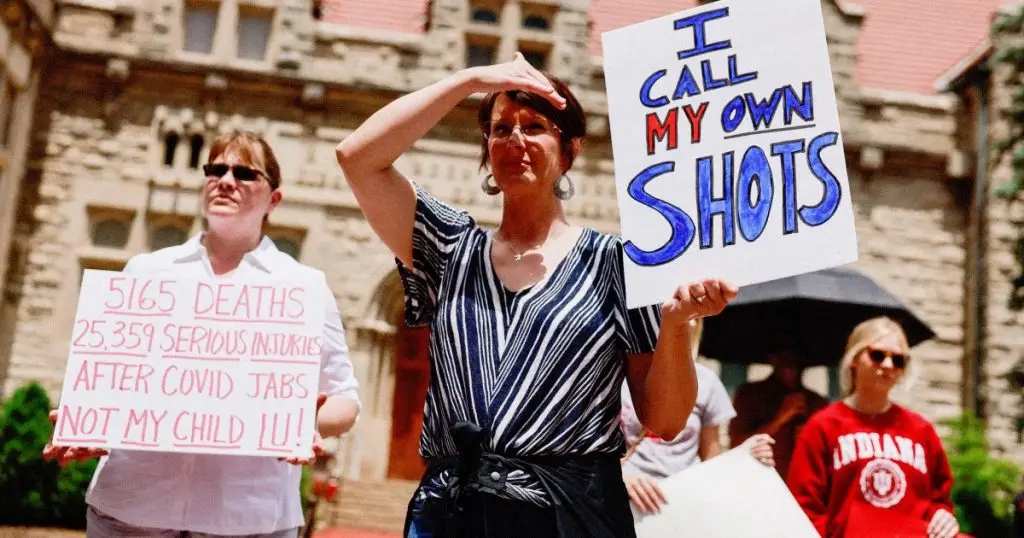
The findings of this study are obviously relevant today, as officials and lawmakers are increasingly bowing to pressure to lift Covid safety measures like mask mandates, social distancing and vaccine requirements. Here, we see possible evidence of racist underpinnings in the movement to end those safety protocols.
The pandemic isn’t over. New variants are on the rise, and we know there are many Americans — particularly, Black Americans — who are suffering the effects of long Covid.
Lawmakers need to understand the potentially racist motivations behind the demands to move past Covid.
Related:
[ad_2]
Source link