














[ad_1]
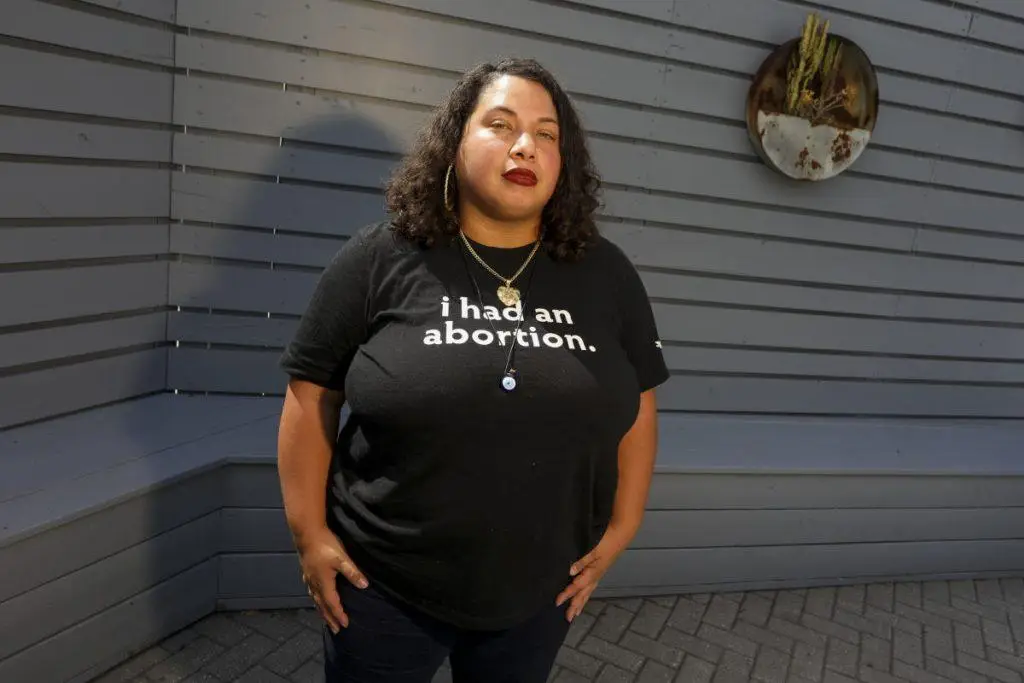
At the center of abortion debates playing out in legislatures across the country are the personal stories of pregnant women.
Often the stories illuminate the extremes: the woman who had an abortion after surviving a sexual assault. The mother who needed an abortion to save her life. The teen who carried her pregnancy to term and now has a beautiful family.
For some, they represent reality.
But for many of the nearly 20% of U.S. women who have an abortion by age 30, the stories told over and over on statehouse floors, in news media and through television plotlines don’t reflect their experiences.
Research backs that up.
A 2020 study by scholars at the University of San Francisco California and Columbia University found that from a sample of nearly 1,000 women who had abortions, more than 95% said they felt they made the right decision five years out. The prominent emotion reported by the women was relief.
The Tampa Bay Times spoke with six Florida women about their decision to have an abortion. Although their personal circumstances differ, each woman decided to tell her story to add a more diverse set of narratives to the current discourse.
Elle Tinnirella
Elle Tinnirella didn’t grow up in an anti-abortion household and she didn’t have moral qualms about terminating a pregnancy.
Still, when she got pregnant while living in San Francisco and chose to have an abortion at 20, she said she was hit with a wave of something she hadn’t anticipated.
“I felt guilty for not feeling guilty,” Tinnirella said of her abortion. She’s now 33. “I felt there was something very deeply wrong with me for not feeling bad about reclaiming my life.”
But Tinnirella said the procedure saved her. She moved to New York City and got her dream job. She met her partner.
In 2018, they moved to Tampa. She became pregnant with twins soon after.
She was excited to grow her family, but during a prenatal appointment, a doctor delivered troubling news.
Tinnirella was diagnosed with a rare disorder called twin-to-twin transfusion syndrome (TTTS). It’s a condition in which the fetuses share one placenta, affecting blood and oxygen flow to the babies.
She had to have surgery to separate the two. She lost one of the babies.
Although Tinnirella’s case did not require an abortion, there are instances where aborting one fetus is necessary to guarantee the viability of the other child, according to the foundation that studies the syndrome. Without it — both fetuses would be lost.
Tinnirella said looking at her healthy 3-year-old daughter makes her worry for other women who might need an abortion due to pregnancy complications but would be unable to have one.
“If I made a decision that would have made (my daughter’s) life even a tiny bit less joyful, I wouldn’t be able to live with myself,” Tinnirella said.
Two years later, she gave birth to another girl.
She said becoming a mother helped reframe the way she thinks about the abortion she had at 20.
“I spent many years feeling ashamed and embarrassed of my decision. I never want my daughters to feel that way,” Tinnirella said. “I’m sharing my story so I can be (a voice) for somebody who needs to hear that it’s OK.”
Stephanie Nichols
Stephanie Nichols knew she wasn’t prepared to have a baby, emotionally, physically or financially. So when she and her boyfriend got together in Miami in 2016, they agreed that if a pregnancy were to occur, she’d have an abortion.
Three years later, it happened.
“The second I realized I was pregnant, I already knew what the game plan was,” said Nichols, 28. “I had already done the thinking. I had already looked at all of the factors of my life and decided we are not in a place to have a kid.”
It was 2019, and Nichols and her partner were living in Orlando. She had relied on an IUD as her birth control, but had it removed when it caused her problems.
When she became pregnant, she had an abortion at a nearby clinic.
“I filled out some paperwork, was pulled into a room,” Nichols said. “I opted for the pill instead of the procedure, so I took some pills and we went on our way.”
Nichols said the medical process was relatively painless aside from cramping — she went to work as an aesthetician after. She said the hardest part was facing the protestors outside the clinic as she was walking in.
Nichols said it frustrates her when abortion is framed as being only acceptable in tragic circumstances.
“It’s not an easy topic for some people, but it’s a necessary part of women’s health care,” Nichols said. “I never wavered in my decision.”
Krystina Perham
Krystina Perham, 35, lives with chronic pain, and being pregnant exacerbates her disability. She said flare-ups make her feel like her nerves and veins have been soaked in napalm and set on fire.
Abortion isn’t simply about not wanting to be a parent, Perham said, it’s about not wanting — or being unable — to carry a pregnancy to term.
“Even a healthy pregnancy carries serious risk,” Perham said. “But it’s a disability rights issue, too.”
Perham was 25 when she had an abortion.
She was living in central Florida and had recently left a relationship when she found out she was pregnant.
“I felt like I had this claw gripping my chest,” Perham said. “I made the decision to have an abortion and I felt nothing but relief. I treated myself to sushi after.”
She said if she had been forced to carry a baby at the time, it would have ruined her both physically and financially.
But two years later, Perham became pregnant again. This time, it was on her own terms, and with a partner with whom she felt safe.
She said even though she welcomed the pregnancy, on some days she was in so much discomfort, she felt she didn’t want to live.
She gave birth to a son, now 8, whom she loves more than anything. But she said she knows she wouldn’t be able to go through another pregnancy.
“Circumstances change, and that’s why individual choice is so important,” Perham said.
Trenece Robertson
Trenece Robertson was raised by a teen mom and learned the challenges of young motherhood second-hand.
Having grown up in Louisiana with abstinence-only education, she didn’t know much about safe sex.
What she did know was that she didn’t want to have a baby.
“I was the good girl in my family,” Robertson said.
Then, in 2019, Robertson missed her period. She was 20 and in a committed relationship. The pregnancy test came back positive.
She said her decision to have an abortion came easily. She found a clinic in Florida’s panhandle.
Although she felt sure of her decision, Robertson said the days leading up to it were emotional. She remembered the abortion stories she’d seen on TV, where dramatic music played as women who had abortions were haunted by their choices.
She was scared she was going to be “damaged.”
“I thought this was going to be a big trauma,” Robertson said of her abortion. “That was the only representation of abortion I had seen.”
But then … it wasn’t.
The procedure was quick and relatively painless. Staff members were friendly. When she woke up, she thanked the nurses. Lauryn Hill was playing in the background.
“I was fine,” said Robertson. “It’s not the procedure, it’s the unhealthy environment that makes abortion taboo.”
Stephanie Loraine Piñeiro
Stephanie Loraine Piñeiro’s abortion story began when she became pregnant at 16 as the result of a sexual assault. She grew up in a Puerto Rican household, in which “machismo” prevailed. When her father found out she was pregnant, he drove her to an abortion clinic and told her to close her legs.
A year later, at 17, she became pregnant again — this time the result of sex with a partner. She had to go before a judge to get permission to terminate the pregnancy.
Now, as the director of the Florida Access Network, a nonprofit that helps people pay for and access abortions across the south, the 30-year-old said she has seen the weight that women carry when they face barriers to terminating unwanted pregnancies — or are grappling with associated shame.
She said her own experience ultimately led her to fight for reproductive rights and connecting people to health care.
Krystina Alfano
Krystina Alfano grew up in a Catholic family where conversations about sex didn’t happen, so when she became pregnant during her freshman year of college at the University of Miami, she immediately feared judgment. And her mother’s response.
“I went back to my dorm and I cried,” said Alfano, who is now 36.
She knew she didn’t want to have a kid.
She called her parents, and to her surprise, her mom told her to have an abortion.
A friend drove Alfano to a clinic.
“I went to sleep, came out cramping, and that was kind of it,” Alfano said.
After that, she didn’t think about it much. But in moments when abortion came up, she stayed quiet.
“I got the feeling it was a shameful thing that should be kept a secret,” she said.
In 2016, that changed.
Alfano was with a group of girlfriends and they started talking about autonomy over their bodies.
“I told them I had an abortion and I’ve always been kind of ashamed of it,” she said, “but I can’t imagine being in a situation and not having had the option.”
She was with five other women at the time. That night, Aflano found out that four of the five had had an abortion, too.
The Foundation for a Healthy St. Petersburg provides partial funding for Times stories on equity. It does not select story topics and is not involved in the reporting or editing. You can reach Lauren Peace at lpeace@tampabay.com.
[ad_2]
Source link
Trending Topics
Features
- Drive Toolkit
Download and distribute powerful vaccination QI resources for your community.
- Health Champions
Sign up now to support health equity and sustainable health outcomes in your community.
- Cancer Early Detection
MCED tests use a simple blood draw to screen for many kinds of cancer at once.
- PR
FYHN is a bridge connecting health information providers to BIPOC communities in a trusted environment.
- Medicare
Discover an honest look at our Medicare system.
- Alliance for Representative Clinical Trials
ARC was launched to create a network of community clinicians to diversify and bring clinical trials to communities of color and other communities that have been underrepresented.
- Reducing Patient Risk
The single most important purpose of our healthcare system is to reduce patient risk for an acute event.
- Jessica Wilson
- Subash Kafle


