











- By FYH News Team
[ad_1]
Some leading Republicans in the U.S. Senate are asking state governors to ignore the Biden administration’s guidance to use infrastructure funding to lessen their state’s climate change impacts.
The Indiana Governor’s Office told the Indiana Environmental Reporter it’s too early to tell whether the guidance will affect the state’s ongoing efforts to finalize the transportation planning and construction agenda for the next five years.
U.S. Senate minority leader Mitch McConnell, of Kentucky, and the top Republican on the Senate Committee on Environment and Public Works, Sen. Shelley Moore Capito, of West Virginia, sent a letter to state governors, asking them to disregard the guidance in a Federal Highway Administration memorandum that suggests the types of projects states should pursue in order to improve roadway safety while reducing greenhouse gas emissions and protecting infrastructure from climate change effects.
The memorandum, released in December, asks states to treat the $110 billion in new road construction funding approved in the Infrastructure Investment and Jobs Act as a “unique opportunity” to improve the condition and safety of road and bridges while making them more resistant to the effects of climate change, like increased heat and flooding.
It asks states to prioritize projects with those goals, as well as other projects that would address environmental impacts, like stormwater runoff and greenhouse gas emissions, and accommodate emerging technologies like electric vehicles and broadband deployment in rural communities.
The Republican senators urged governors to essentially ignore the memorandum and, instead, focus on projects they say were the purpose of the $1.2 trillion infrastructure bill, like increasing highway capacity and other projects that focus on motorized transport.
“Unfortunately, the FHWA memorandum attempts to implement a wish list of policies not reflected in the IIJA. These policies, such as discouraging projects that increase highway capacity and prioritizing projects that advance non-motorized transportation options, differ from the provisions negotiated and agreed to in the law,” the senators wrote.
“Nothing in the IIJA provides FHWA with the authority to dictate how states should use their federal formula funding, nor prioritizes public transit or bike paths over new roads and bridges. The FHWA memorandum is an internal document, has no effect of law, and states should treat it as such.”
It’s unclear whether the senators’ letter will influence Gov. Eric Holcomb’s plans for infrastructure in the state, but the letter could influence governors to make decisions that would negatively impact the U.S.’ ability to fight climate change and blunt the impact of its worst effects.
The transportation sector emits 29% of the total greenhouse gas emissions in the U.S., the most of any sector tracked by the U.S. Environmental Protection Agency. The emissions come from the burning of fossil fuels, like gasoline and diesel, which emit greenhouse gases.
Greenhouse gases trap heat in the atmosphere, warming the planet. The heat changes the way the earth’s climate works.
Climate change happens naturally, but the use of fossil fuels over the last century has turbocharged the amount of heat trapped in the atmosphere. The planet has warmed up more in the past century than at any point in the last 11,000 years.
In Indiana, the changing climate has resulted in the average annual temperature rising 1.2 degrees Fahrenheit in the last 125 years. By 2100, temperatures would most likely increase between 5 to 10 degrees, depending on greenhouse gas emissions allowed.
The number of days where temperatures exceed 95 degrees is also expected to rise from seven a year to at least 38.
Climate change is also affecting how precipitation falls in the state. Indiana experiences 5.6 inches more rainfall a year than it did in 1895. Much of that precipitation is falling in heavier downpours in shorter periods of time, increasing the risk of flooding.
Those and other climate change effects will stress Indiana’s aging infrastructure, costing communities many millions of dollars to protect against them.
The state already has about 5,478 miles of highway rated as “poor,” and 1,111 structurally deficient bridges. Climate change could cause roadways to deteriorate even quicker.
Higher temperatures have made roads more susceptible to rutting, cracking and buckling and have added stress to joints and materials in bridges.
Increased flooding events make some roadways inaccessible during and after rainfall and chip away at the soil that supports roads and bridges.
More Hoosiers will feel climate change impacts through bumps and bangs on their daily commutes.
The Indiana Department of Transportation is currently in the process of finalizing its 2022-2026 State Transportation Improvement Program, a list of all the projects expected to be funded using federal funds and state-funded projects deemed “regionally significant.”
According to the current draft of the STIP, the state expects to spend $1.5 billion on roadway preservation and expansion projects, $1.2 billion on special projects and about $580 million for the INDOT operating budget in 2022.
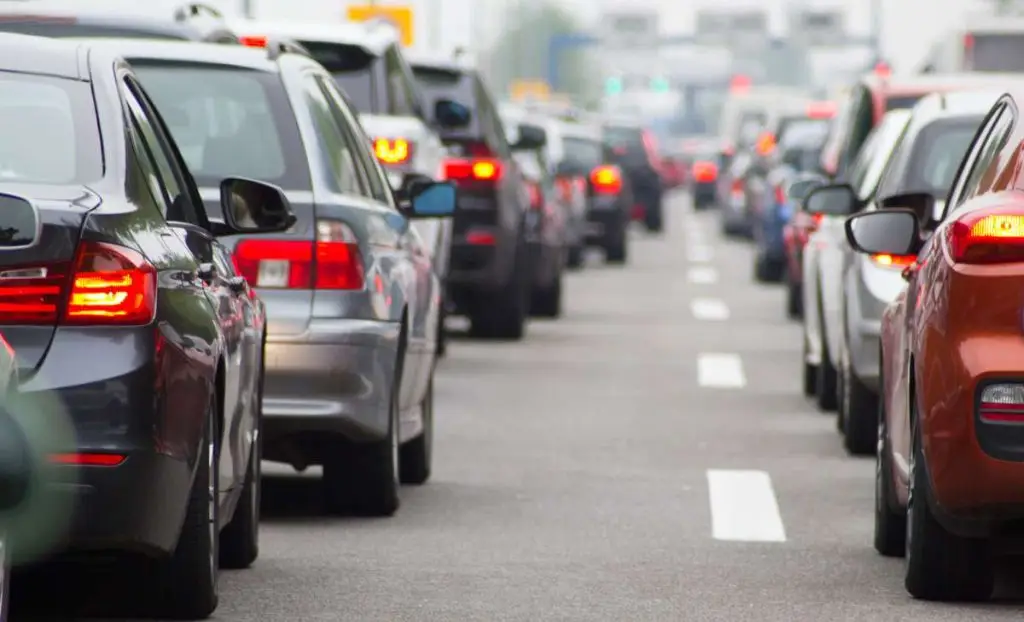
Many of the state’s special projects include lane expansions, the state’s remedy for traffic congestion. Research indicates that adding additional road capacity often fails to alleviate congestion and can even make it worse over time. Expansion also increases the number of miles driven over time, increasing the amount of greenhouse gases emitted into the atmosphere.
But, if the state decides to invest more in preventive maintenance to extend the life of pavement, the state could save money and have a modest reduction in greenhouse gas emissions.
Researchers have found that ensuring roads receive preventive maintenance can reduce greenhouse gases by 2% per year, can cut transportation agency spending by 10% to 30% and save drivers up to 5% per year in fuel consumption, tire wear, vehicle repair and maintenance costs due to smoother surfaces.
Groups like Transportation for America and the U.S. Public Interest Research Group said states should adopt a “fix-it-first” philosophy for spending the federal infrastructure windfall.
“Although it is true that the Department of Transportation’s memo does not carry the force of law, that doesn’t mean it’s not good guidance for states to follow,” said Matt Casale, U.S. PIRG’s environmental and transportation campaigns director. “We have prioritized building new roads for more than a century now, and that’s left us with a congested, polluting and dangerous transportation network. The IIJA provides states with an historic opportunity to make it easier, safer and more pleasant for people to get where they need to go. But to get there, we have to shift gears and spend the money wisely.”
[ad_2]
Source link
Trending Topics

Features
- Drive Toolkit
Download and distribute powerful vaccination QI resources for your community.
- Health Champions
Sign up now to support health equity and sustainable health outcomes in your community.
- Cancer Early Detection
MCED tests use a simple blood draw to screen for many kinds of cancer at once.
- PR
FYHN is a bridge connecting health information providers to BIPOC communities in a trusted environment.
- Medicare
Discover an honest look at our Medicare system.
- Alliance for Representative Clinical Trials
ARC was launched to create a network of community clinicians to diversify and bring clinical trials to communities of color and other communities that have been underrepresented.
- Reducing Patient Risk
The single most important purpose of our healthcare system is to reduce patient risk for an acute event.
- Victor Mejia
- Subash Kafle
- Subash Kafle