











- By FYH News Team
[ad_1]
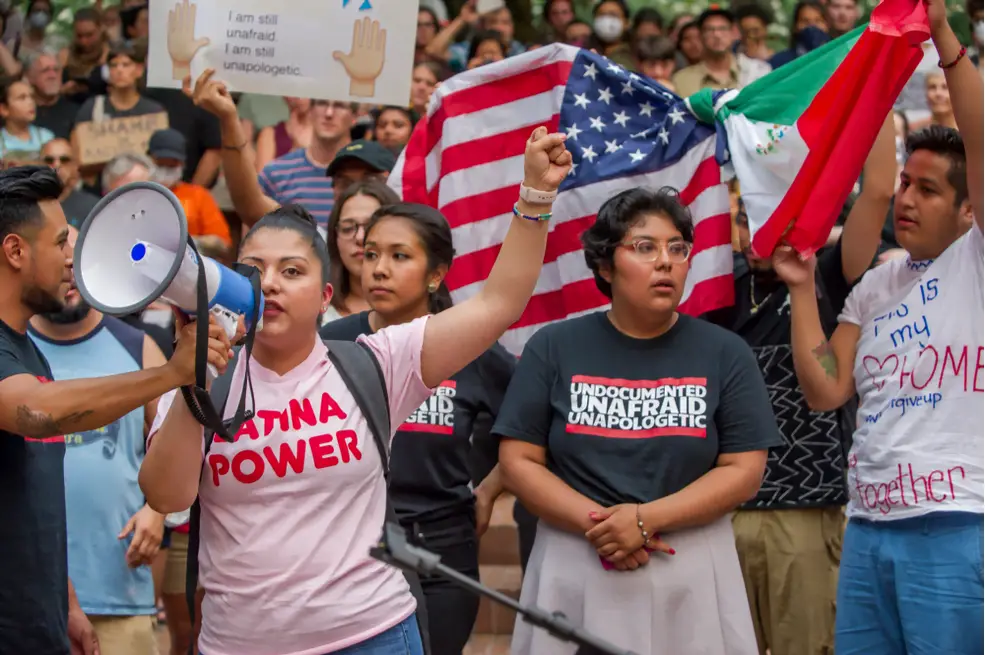
Between 2010 and 2020, Latinos accounted for more than half of the overall increase in U.S. population growth — more than any other racial and ethnic group. According to recent U.S. Census data, Latinos make up about 18% of the nation’s population. That’s 62.1 million people.
But despite the fact that Latinos make up an increasingly larger portion of the U.S. population, private funding for Latino communities remains disproportionately low. According to a report by Hispanics in Philanthropy, between 2009 and 2019, Latinos received about 1.3% of all philanthropic giving in the United States. Per LatinxFunders — a joint data lab by Candid and Hispanics in Philanthropy — between 2013 and 2019, funding for Latino communities and issues in the U.S. was $3.85 billion across 64,808 grants. To put that into context, during that same time period, total U.S. philanthropic giving was approximately $1.67 trillion, according to an Inside Philanthropy analysis of Giving USA data.
Latinos in the U.S. continue to face a number of significant issues, many of which remain largely underfunded. Perhaps the most pressing challenge at the moment is the COVID-19 pandemic and the disproportionate impact that it has had on Latinos across the nation. As of April 2022, Latinos make up about 25% of all COVID cases in the U.S., according to the CDC data tracker.
The Institute for Health Metrics and Evaluation (IHME) noted several possible reasons for this disproportionate impact, including that Latinos have increased work exposure — in other words, they are less likely to be able to work from home and are overrepresented among essential workers — and a need for greater spending on Latinos’ health care. IHME points to a study published in the Journal of the American Medical Association that found Latinos “received the least spending of U.S. health care dollars to their proportion of the population.”
Despite what many politicians believe, immigration is far from the only issue Latinos care about. In fact, a Pew Research Center survey found that the top issues for Latinos ahead of the 2020 election were the economy, health care, the COVID-19 pandemic, and racial and ethnic inequality.
Nevertheless, immigration has and continues to be an important area of concern. The Deferred Action for Childhood Arrivals (DACA) program, for example, was under threat during the Trump administration. And while President Joe Biden introduced an immigration bill that, if passed, would offer a path to citizenship for millions of undocumented immigrants in the U.S., the bill has stalled in Congress and is unlikely to pass.
In addition, Latinos continue to be underrepresented at all levels of government, with one estimate showing that they make up just 1% of all elected officials. In order to ensure that governments address Latino issues and concerns, leadership must be reflective of the growing Latino population in the U.S.
While Latino communities and Latino-serving organizations are still woefully underfunded, several philanthropists have stepped up to make a difference. To that end, here are five funders who are supporting Latino communities, issues and organizations.
Latino Community Foundation
The California-centered Latino Community Foundation (LCF) funds a wide array of Latino causes. In addition to building the Latino Giving Circle Network to help grow a movement of Latino philanthropists, LCF supports Latino-led nonprofit organizations that work to advance education, health and safety, civic engagement and youth leadership opportunities in California. It also works to increase civic and political participation of Latinos across the state.
Last year, LCF launched its five-year, $50 million Latino Power Fund to help build Latino power in California. Through this fund, LCF will seek to not only help Latino communities recover from the pandemic, but also address the systemic inequities that led to the pandemic’s undue impact on Latinos. LCF hopes to increase the number of Latinos in government and advance solutions to many of the issues facing Black and brown communities.
Silicon Valley Community Foundation
Based in California, the Silicon Valley Community Foundation (SVCF) is the largest community foundation in the world. Last year, SVCF partnered with the Castellano Family Foundation to launch a $10 million initiative called the LatinXCEL Fund, which will support Latino-led organizations that work to support Latino communities in Santa Clara and San Mateo counties.
SVCF also has a Latinx Giving Guide, to help funders find Latino organizations to support in the two counties.
The California Endowment
The California Endowment (TCE) is a racial equity-focused health foundation that works to advance health and wellness in underserved communities, including Latino communities. According LatinxFunders, TCE was one of the top funders of Latino issues in the U.S. Between 2013 and 2019, TCE invested $156.6 million in Latino communities. As part of its social bond, TCE provided $5 million to LCF and $3.5 million to the Dolores C. Huerta Foundation, among others.
Grantee-partners include Eunisses Hernadez of La Defensa in Los Angeles, who provides leadership to change the criminal justice system in the city; Jacqueline Martinez-Garcel, president and CEO of LCF; and Maria Lemus of Visión y Compromiso, an organization of health workers, social service providers, and community members that work in tandem to tackle health challenges.
Ford Foundation
Between 2013 and 2019, the Ford Foundation was the top funder of Latino issues in the U.S., giving a total of $734.9 million according to LatinxFunders (LatinxFunders only provides data for the years 2013 through 2019). Among the foundation’s many initiatives are the Latinx Artist Fellowship, established in partnership with the Andrew W. Mellon Foundation to provide $5 million in unrestricted funding to 15 Latino visual artists over a five-year period. Reclaiming the Border Narrative, a partnership with a number of other philanthropic organizations, supports authentic storytelling about the U.S.-Mexico border.
As part of its $75 million commitment to support advocacy and nonprofit organizations in the U.S. South, Ford provided grants to the Georgia Latino Alliance for Human Rights and the Texas Civil Rights Project.
W.K. Kellogg Foundation
Per LatinxFunders, between 2013 and 2019, the W.K. Kellogg Foundation gave at least $96 million to Latino causes in the United States. Examples of more recent grants are those awarded to the Latino Leadership Institute, which identifies, prepares and elevates Latino professionals, and El Centro de Igualdad y Derechos, an Albuquerque-based grassroots organization dedicated to protecting and expanding immigrant rights and worker justice. Kellogg helped fund Voces, a nonprofit organization dedicated to improving the lives of Latino families in Battle Creek, Michigan, and continues to provide general operating support to date.
The Kellogg Foundation has also awarded $1 million to one of its Racial Equity 2030 finalists, the Latino Community Development Center, and $2.5 million to the UCLA Latino Policy and Politics Initiative (LPPI) to support the creation of data hubs to identify and analyze policy issues facing Latinos.
—
Other major funders in this area include the Weingart Foundation, the Bill and Melinda Gates Foundation, the Robert Wood Johnson Foundation, and the Susan Thompson Buffett Foundation.
Finally, it’s important to note that the issues Latinos face don’t just affect Latinos; they’re problems that resonate across racial, ethnic and geographic lines. While funding remains low for Latino communities, the recent increase in racial justice funding and efforts to address the systemic roots of inequality may result in an increase in funding dedicated to Latino issues and causes.
[ad_2]
Source link
Trending Topics
Features
- Drive Toolkit
Download and distribute powerful vaccination QI resources for your community.
- Health Champions
Sign up now to support health equity and sustainable health outcomes in your community.
- Cancer Early Detection
MCED tests use a simple blood draw to screen for many kinds of cancer at once.
- PR
FYHN is a bridge connecting health information providers to BIPOC communities in a trusted environment.
- Medicare
Discover an honest look at our Medicare system.
- Alliance for Representative Clinical Trials
ARC was launched to create a network of community clinicians to diversify and bring clinical trials to communities of color and other communities that have been underrepresented.
- Reducing Patient Risk
The single most important purpose of our healthcare system is to reduce patient risk for an acute event.
- Jessica Wilson
- Subash Kafle