














Abstract and Introduction
Introduction
Disparities in COVID-19 death rates by race and ethnicity have been reported in the United States.[1,2] In response to these disparities, preventive, medical care, and social service assistance programs were implemented to lessen disparities in COVID-19 outcomes, including grants to support state, tribal, local, and territorial health department responses.[3] The potential impact of such efforts on annual changes in racial and ethnic disparities in mortality rates that identify COVID-19 as the underlying cause of death has not been previously reported. This analysis used U.S. provisional mortality data from death certificates collected by CDC’s National Vital Statistics System (NVSS) to estimate changes in COVID-19–related age-adjusted death rates (AADRs) by race and ethnicity during 2020–2021. Compared with non-Hispanic multiracial persons (the group with the lowest death rate), significant decreases in AADR ratios occurred during 2020–2021 among non-Hispanic American Indian or Alaska Native (AI/AN) persons (34.0%), non-Hispanic Asian (Asian) persons (37.6%), non-Hispanic Black or African American (Black) persons (40.2%), Hispanic persons (37.1%), and non-Hispanic White (White) persons (14%); a non-statistically significant 7.2% increase in AADR ratio occurred among non-Hispanic Native Hawaiian or other Pacific Islander (NH/OPI) persons. Despite reductions in AADR disparities from 2020 to 2021, large disparities in AADR by race and ethnicity remained in 2021. Providing effective preventive interventions, including vaccination and clinical care, to all communities in proportion to their need for these interventions is necessary to reduce racial and ethnic disparities in COVID-19 deaths.
CDC WONDER* mortality data from 2020 (final) and 2021 (provisional) reported to NVSS as of February 6, 2022, was used to assess annual changes in COVID-19 deaths among U.S. residents of any age during January 2020–December 2021. Cause of death codes from the International Classification of Diseases, Tenth Revision (ICD-10) were used to classify diseases as underlying causes of death†.[4] COVID-19 deaths were defined as deaths for which COVID-19 was listed on the death certificate as a confirmed or presumed underlying cause of death (ICD-10 code U07.1). AADRs and their SEs were downloaded using CDC WONDER Provisional Multiple Cause of Death data file “2018–last month” for numbers of decedents, mid-year resident populations, and crude death rates. The data included COVID-19 deaths by sex (female and male), age group (≤24, 25–44, 45–64, 65–74, and ≥75 years) and race and ethnicity (AI/AN, Asian, Black, Hispanic, NH/OPI, and White persons, and persons who were listed as non-Hispanic more than one race [multiracial]). Deaths that occurred among residents of U.S. territories and foreign countries were excluded.
At the time of this analysis, 2021 U.S. population estimates were unavailable; therefore, midyear U.S. Census Bureau population estimates (as of July 1, 2020) were used to calculate estimated COVID-19-related death rates (deaths per 100,000 population) for 2020 and 2021.§ Crude death rates were calculated by sex, age group, and race and ethnicity, and AADRs were calculated by race and ethnicity. Changes in AADR within each racial and ethnic group from 2020[5] to 2021 with 95% CIs and statistical tests of significance were calculated. Using the non-Hispanic multiracial group (the group with the lowest death rate) as the referent group,¶ changes from 2020 to 2021 in AADR ratios with 95% CIs and statistical tests of significance of differences between each racial and ethnic group and the referent group were calculated. The referent group consisted of persons who identified with two or more races (e.g., White and Asian, Black and AI/AN, or any other combination of races). Pearson’s chi-square tests of differences in the distribution of decedents by sex, age group, and race and ethnicity were compared with the estimated midyear U.S. Census Bureau population estimate. Z-tests of statistical significance were used to compare differences in the percent change in each measure of relative disparity. P-values <0.05 were considered statistically significant. Statistical analyses were performed using SAS software (version 9.4; SAS Institute). To detect and correct computational errors, the analyses were replicated by two analysts independently. To assess sensitivity of the results to changing the referent group, separate analyses were conducted with multiracial and non-Hispanic White persons as referent groups. This activity was reviewed by CDC and was conducted consistent with applicable federal law and CDC policy.**
Total COVID-19 deaths (and crude death rates) increased from 350,831 (106.5 per 100,00 population) in 2020 to 411,465 (124.9) in 2021 (Table 1). The numbers or percentages of decedents in 2020 and 2021 with missing values was small based on sex (the number was 0 for both years), age group (the numbers were 4 and 2, respectively), and race and ethnicity (0.4% and 0.2%, respectively). Persons who were male (54.9%–56.7%), those aged >65 years (68.0%–80.6%), Black persons (13.3%–16.1%), and White persons (59.6%–65.2%) were significantly overrepresented (p<0.001) among decedents compared with the standard population in both 2020 and 2021.
In 2020, AADR was lowest among multiracial persons (29.6 per 100,000 population) (Table 2). In 2020, compared with multiracial persons, the AADR ratio (relative disparity) was 5.9 for AI/AN, 2.1 for Asian, 4.8 for Black, 5.3 for Hispanic, 3.8 for NH/OPI, and 2.3 for White persons. Overall AADR increased by 19.2% from 85.0 in 2020 to 101.3 per 100,000 U.S. residents in 2021, including 3.8% among AI/AN, 57.1% among multiracial, 68.3% among NH/OPI, and 35.1% among White persons; and decreased by 1.9% among Asian, 6.1% among Black, and 1.2% among Hispanic persons. In 2021, the AADR relative disparity decreased by 34.0% for AI/AN, 37.6% for Asian, 40.2% for Black, 37.1% for Hispanic, and 14.0% for White persons. The increase among NH/OPI persons was not statistically significant (7.2%, from 3.8 in 2020 to 4.1 in 2021) (Figure). Using non-Hispanic White persons as the referent group yielded significant decreases in AADR ratios for AI/AN (−23.2%), Asian (−27.4%), Black (−30.5%), and Hispanic persons (−26.9%), but a significant increase for NH/OPI persons (24.6%).
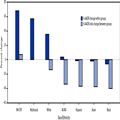
Figure.
Percent change in COVID-19 age-adjusted death rate and ratio,* by race/ethnicity† — United States, 2020–2021
Abbreviations: AADR = age-adjusted death rate; AI/AN = American Indian or Alaska Native; NH/OPI = Native Hawaiian or other Pacific Islander.
*Referent group was multiracial persons.
†Hispanic persons could be of any race; AI/AN, Asian, Black, NH/OPI, White, and multiracial persons were non-Hispanic.



