










[ad_1]
Overview: Latinos 55 and older who took Latin dance classes for eight months showed significant improvement in working memory over their peers who did not participate in Latin dance.
Source: University of Illinois
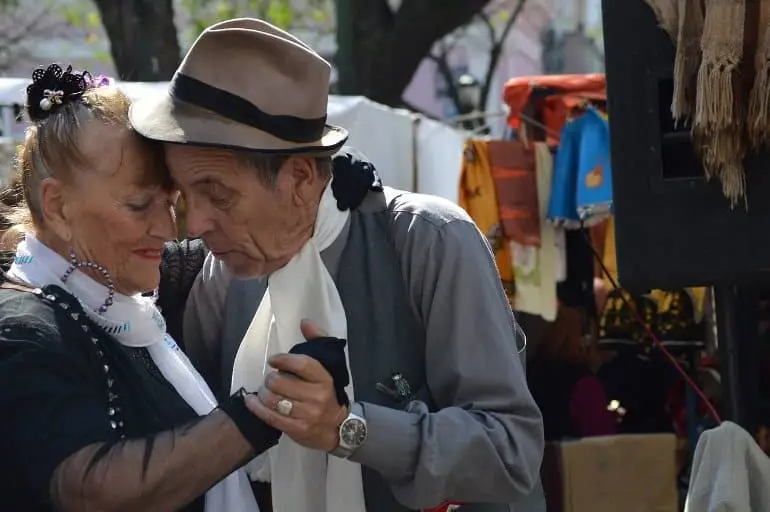
Dance is at the heart of Latin culture and is renowned for its social, historical and cultural significance. And new research suggests older Latinos who participate regularly may also help their brains stay healthy.
Latinos aged 55 and older who participated in a culturally relevant Latin dance program for eight months significantly improved their working memory compared to peers in the control group who attended health education workshops, according to the study’s lead author, Susan Aguiñaga, a professor of kinesiology and community health at the University of Illinois Urbana-Champaign.
Working memory — the ability to temporarily hold a small amount of information in mind while performing other cognitive tasks — is integral to planning, organization, and decision-making in everyday life.
The dance program used in the study, Balance and Activity in Latinos, Addressing Mobility in Older Adults — or BAILAMOS — showed promise in enticing older Latinos to become more physically active and helping prevent age-related cognitive decline, Aguiñaga said.
“Dance can be cognitively challenging,” Aguiñaga said. “When you learn new steps, you have to learn how to combine them into sequences. And as the lessons progress over time, remember the steps you learned in a previous lesson to add extra moves.
BAILAMOS was co-created by study co-author David X. Marquez, a professor of kinesiology and nutrition, and the director of the Exercise and Psychology Lab at the University of Illinois Chicago; and Miguel Mendez, the creator and owner of the Dance Academy for Salsa.
BAILAMOS includes four types of Latin dance styles: merengue, salsa, bachata and cha cha cha, said Aguiñaga, who has worked with the program since its inception when she was a graduate student at the U. of I. Chicago.
“It’s an attractive kind of physical modality,” she said. “Older Latinos are drawn to Latin dance because most grew up with it in one way or another.”
Latin dance can evoke positive emotions that prompt listeners to participate, increasing levels of physical activity in a population that tends to be sedentary, according to the study, published in the journal Frontiers in the aging of neuroscience.
More than 330 middle-aged and older Hispanic-speaking Latino adults were recruited into the study, primarily through community work in local churches. The participants were randomly assigned to the dance group or the control group, who met once a week for two-hour health education classes that covered topics such as nutrition, diabetes and stress reduction.
The participants in the BAILAMOS groups met twice a week for the dance sessions, taught for the first four months by a professional instructor and later by a “program champion” – an outstanding participant in each group who displayed enthusiasm and leadership qualities.
The champions of the program were selected and trained by the instructor to lead the sessions during the four-month maintenance phase.
During the several waves of the four-year study, the dance classes were taught at 12 different Chicago locations, such as neighborhood senior centers and churches that were well-known and easily accessible to participants, Aguiñaga said.
The participants’ working memory, along with their episodic memory and executive function, was assessed with a set of seven neuropsychological tests before the intervention began, after four months and again at the end of the maintenance phase.
Participants also completed questionnaires that measured the number of minutes per week they engaged in light, moderate and vigorous physical activity through tasks related to their work, leisure activities, household maintenance and other activities.
On average, the participants were about 65 years old with body mass indices that placed them in the obese category. About 85% of the study participants were female.
Similar to a previously conducted small pilot study by BAILAMOS, the current study found no differences in cognitive measures between the dance participants and their counterparts in the health education group after four months. After eight months, however, the people in the dance group performed significantly better on tests assessing their working memory.
“That’s probably one of the most important findings — we saw cognitive changes after eight months, with participants leading the dance classes themselves during the maintenance phase,” Aguiñaga said. “All of our previous studies lasted three or four months. The message we take home here is that we need longer programs to show effects.
“But to make these programs sustainable and create a health culture, we also need to empower participants to self-execute and internalize these activities.”
The study was also co-authored by Dr. David Buchner, the Shahid and Anne Carlson Kahn Professor of Applied Health Sciences; and Edward McAuley, professor emeritus of kinesiology and community health, both at the U. of I.’s Urbana campus.
Also see
Co-authors on the Chicago campus were Susan Hughes, professor emeritus of community health sciences; Michael Berbaum, the director of both the Methodology Research Core for the Institute for Health Research and Policy and the Biostatistics Core at the Center for Clinical and Translational Science; and biostatistician Tianxiu Wang.
Other co-authors were professor of health sciences, Navin Kaushal, of Purdue University, Indianapolis; Guilherme M. Balbim, a postdoctoral researcher at the University of British Columbia; professor of neuroscience Robert S. Wilson and professor of nursing JoEllen E. Wilbur, both of Rush University; public health professor Priscilla M. Vásquez, of the Charles R. Drew University of Medicine and Science; and Isabela G. Marques, of the CAPES Foundation in Brasilia, Brazil.
About this memory research news
Author: Sharita Forrest
Source: University of Illinois
Contact: Sharita Forrest – University of Illinois
Image: The image is in the public domain
Original research: Open access.
“Latin dance and working memory: the mediating effects of physical activity in middle-aged and older Latinos” by Susan Aguiñaga et al. Frontiers in aging neuroscience
Abstract
Latin dance and working memory: the mediating effects of physical activity in middle-aged and older Latinos
Background: Physical activity (PA) is a promising method to improve cognition in middle-aged and older adults. Latinos are at high risk for cognitive decline and engage in low levels of PA. Culturally relevant PA interventions for middle-aged and older Latinos are critical to reduce the risk of cognitive decline. We examined changes in cognitive performance in middle-aged and older Latinos participating in the BAILAMOS™ dance program or a health education group and compared the mediating effects of PA between group assignment and change in cognitive domains.
Methods: Our 8-month randomized controlled trial tested BAILAMOS™, a 4-month Latin dance program followed by a 4-month maintenance phase. A total of 333 older Latinos aged 55 years and older were randomized to either BAILAMOS™ or a health education control group. Neuropsychological tests were administered, scores were converted to z-scores and specific domains (ie, executive function, episodic memory and working memory) were inferred. Self-reported PA was assessed and we reported categories of total PA, total PA for leisure, and moderate to vigorous PA as minutes/week. A series of ANCOVAs tested changes in cognitive domains at 4 and 8 months. A mediation analysis tested the mediating effects of each PA category between group assignment and a significant change in cognition score.
Results: The ANCOVAs found a significant improvement in working memory scores in dance group participants at Month 8 [F(1,328) = 5.79, p = 0.017, d = 0.20]but not in executive functioning [F(2,328) = 0.229, p = 0.80, Cohen’s d = 0.07] or episodic memory [F(2,328) = 0.241, p = 0.78, Cohen’s d = 0.05]† Follow-up mediation models found that total PA mediated the relationship between group assignment and working memory, favoring the dance group (β = 0.027, 95% CI [0.0000, 0.0705]† Similarly, total leisure PA was found to mediate this relationship [β = 0.035, 95% CI (0.0041, 0.0807)]†
Conclusion: A 4-month Latin dance program followed by a 4-month maintenance phase improved working memory in middle-aged and older Latinos. Improvements in working memory were mediated by participation in leisure PA. Our results support the current literature that leisure PA influences cognition and emphasize the importance of culturally relevant PA modalities for Latinos.
Clinical Trial Registration: [www.ClinicalTrials.gov]identification [NCT01988233]†
[ad_2]
Source link