














- By Jessica Wilson
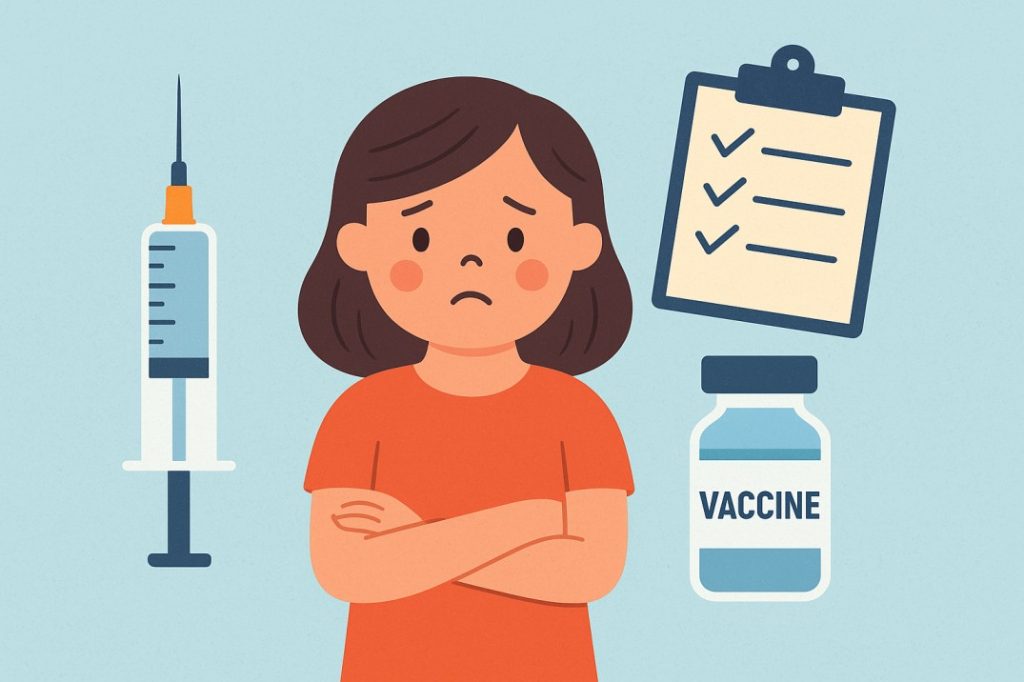
When the Make Our Children Healthy Again Strategy Report was released in May 2025, most of the headlines focused on its common-sense goals: healthier diets, more physical activity, and reducing exposure to harmful chemicals. These ideas are easy to visualize—more fresh produce in school lunches, more time outdoors, and fewer toxins in children’s environments.
But tucked within the plan is a section that could fundamentally reshape how the United States approaches vaccines. For decades, vaccines have been treated as a settled matter in public health: safe, effective, and essential. The MAHA strategy, however, reopens long-closed doors, proposing new research into vaccine injuries, stricter oversight of conflicts of interest, and even a reconsideration of the childhood immunization schedule.
A New Framework for Vaccines
The strategy outlines five vaccine priorities:
-
Revisiting the childhood schedule — assessing the number, timing, and spacing of recommended shots.
-
Building new NIH vaccine injury research centers — elevating adverse-event monitoring to a federal priority.
-
Strengthening scientific rigor — demanding more reproducibility, transparency, and independent review in vaccine studies.
-
Addressing conflicts of interest — publishing financial ties and enforcing stricter recusal rules for advisors.
-
Upholding “scientific and medical freedom” — signaling openness to debate beyond traditional public health messaging.
These proposals represent a departure from decades of consensus-driven policy. They reflect the reality that vaccine confidence has been shaken, especially in the wake of COVID-19, and that rebuilding trust requires more than repeating old talking points.
The Potential Upside
If implemented with care, these reforms could strengthen vaccine confidence:
-
Transparency about industry ties and advisory conflicts could reassure families that decisions are based on independent science.
-
Dedicated research into rare side effects could provide clarity for doctors and parents, replacing speculation with data.
-
Re-examining the schedule might identify refinements that improve safety or reduce burdens, showing the system is responsive and evolving.
In short, acknowledging skepticism instead of ignoring it could make vaccine policy more credible in the long run.
The Risks of Missteps
But the risks are just as real. Elevating vaccine injury research could unintentionally suggest vaccines are broadly unsafe, even though serious adverse events are rare. Revisiting the schedule might spark doubts about whether past recommendations were flawed. And greater transparency, while valuable, could be misused by misinformation campaigns to sow confusion.
The tension is clear: the very steps meant to build trust could erode it if communication falters.
Equity at the Center
For communities already underserved by the healthcare system, the stakes are especially high. Stronger safety research and independent oversight could help rebuild trust in populations that have long felt ignored. But if reforms are misinterpreted and vaccine uptake falls, preventable disease outbreaks could hit these same communities hardest. Equity must therefore guide how changes are explained and implemented. Families need more than raw data—they need dialogue, culturally responsive messaging, and representation in decision-making.
Global Implications
U.S. vaccine policy rarely stays within U.S. borders. If the U.S. alters its childhood immunization schedule or raises vaccine injury research to a new level of prominence, those shifts could influence global norms, supply chains, and perceptions of vaccine safety. In a world of instant communication, the ripple effects will be swift and far-reaching.
Conclusion: Trust Is the Real Test
The MAHA vaccine strategy signals a turning point. The era of unquestioned vaccine policy is ending, and a new phase—defined by transparency, reform, and debate—is beginning. Whether this strengthens public trust or fractures it further will depend on how policymakers, health professionals, and communities engage in the years ahead.
Vaccines remain one of the most powerful tools to protect children. But their effectiveness relies not only on science—it relies on trust. And that trust must be earned, protected, and renewed with every generation.
Trending Topics

Features
- Drive Toolkit
Download and distribute powerful vaccination QI resources for your community.
- Health Champions
Sign up now to support health equity and sustainable health outcomes in your community.
- Cancer Early Detection
MCED tests use a simple blood draw to screen for many kinds of cancer at once.
- PR
FYHN is a bridge connecting health information providers to BIPOC communities in a trusted environment.
- Medicare
Discover an honest look at our Medicare system.
- Alliance for Representative Clinical Trials
ARC was launched to create a network of community clinicians to diversify and bring clinical trials to communities of color and other communities that have been underrepresented.
- Reducing Patient Risk
The single most important purpose of our healthcare system is to reduce patient risk for an acute event.
- Jessica Wilson
- Subash Kafle


