












[ad_1]
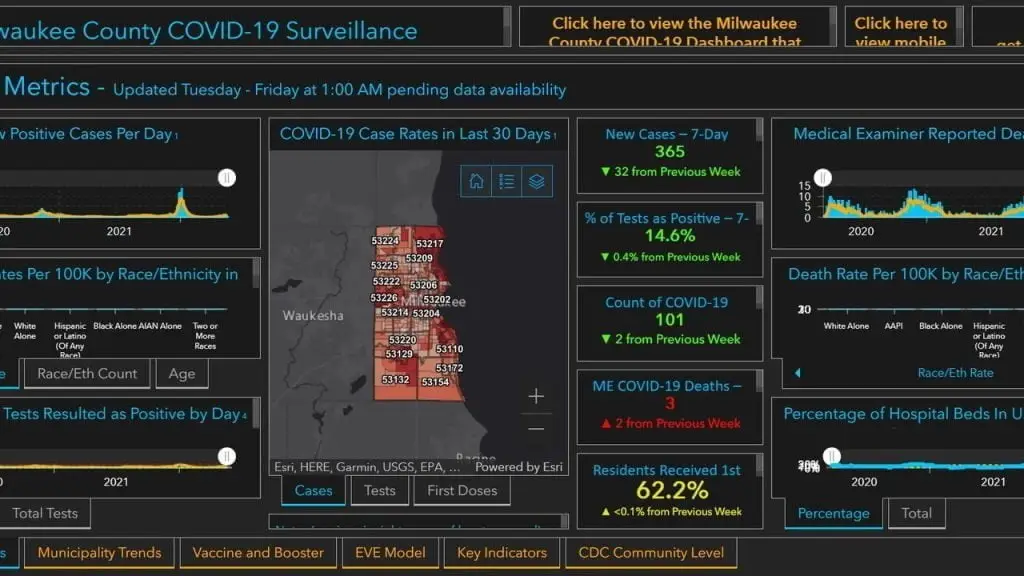
MILWAUKEE – Milwaukee County leaders announced on Thursday, May 26 significant updates to the county’s COVID-19 dashboard, the first dashboard in the country to display COVID-19 data broken down by race & ethnicity.
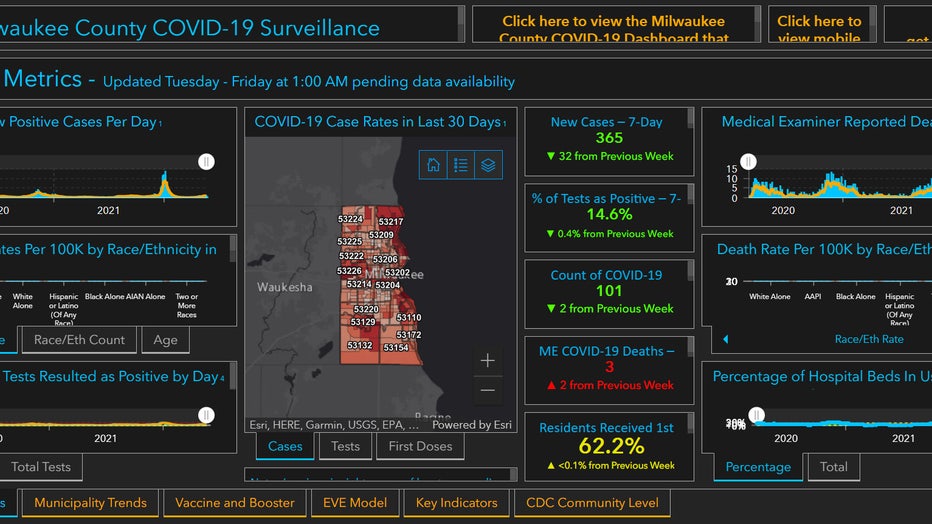
A news release says the updated dashboard pulls data from state and local sources to show the total number of cases, deaths, hospitalizations, testing, and percent positive, and uses a map to geographically demonstrate each of these categories.
The newest updates to the dashboard include a detailed view of demographic information related to both primary series vaccinations and booster vaccinations as well as municipal level vaccination trends.
SIGN UP TODAY: Get daily headlines, breaking news emails from FOX6 News
Since the launch of the dashboard in March 2020, data has been used to make decisions on everything from testing to resource allocation.
In 2021, the County developed the EVE Model which views community vaccination rates alongside the CDC Social Vulnerability Index to inform equitable allocation of vaccines. The news release says regularly mapping those results allowed for targeted messaging and resource allocation in a dynamic, needs-focused manner.
[ad_2]
Source link