









[ad_1]
MADISON, Wis.—As smoke from the Canadian wildfires crept down into Madison, Yyare Parra de Oliveira watched the air quality index as it moved into extremes most people in the area had never experienced before.
In addition to monitoring warnings issued by the Environmental Protection Agency and the Wisconsin Department of Natural Resources, Parra de Oliveira messaged her classmates at the Latino Academy of Workforce Development about their newly installed air quality monitors, which they had placed in neighborhoods with environmental justice concerns.
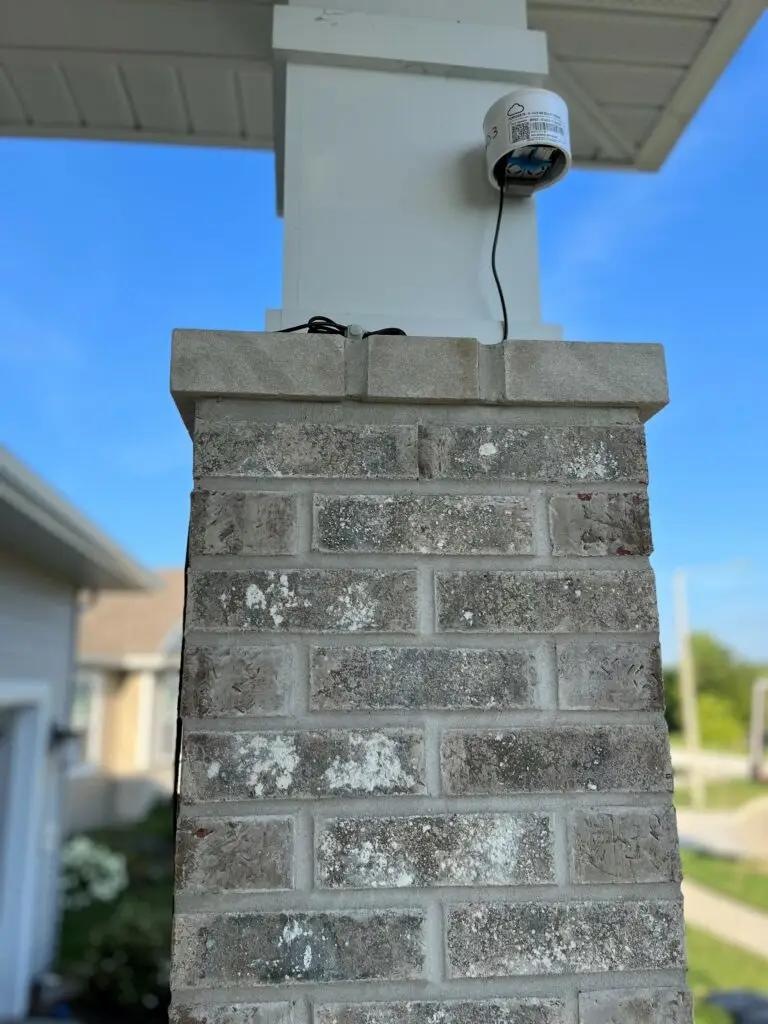
Parra de Oliveira, an environmental compliance officer now back in her native Venezuela working as a bilingual secretary, encountered problems placing the device in a community setting and went with a nearby solution: She put up a monitor on her house.
Looking at the online map of the purple air sensors her classmates had installed, Parra de Oliveira saw that most were red, indicating that members of sensitive groups might experience detrimental health effects from the air quality. But hers was a light purple, meaning the air quality at her house was even worse.
For Parra de Oliveira and her adult classmates, the shroud of wildfire smoke was unfortunate, but quite timely, and the air monitoring served as a vital means to an end: building leaders to educate, and advocate for, communities of color around climate change, air pollution and all the deleterious health impacts they create.
“Every time that we talk about this leadership academy, it’s not a place where we build leaders,” said Baltazar De Anda Santana, co-founder and executive director of the Latino Academy of Workforce Development, a nonprofit focused on building civic strength through bilingual adult education. “We are not one to build leaders. Leaders are already there. They just need that platform. They just need that microphone to be given to them.”
Reconnecting with the Environment
This “bilingual leadership academy” served as Parra de Oliveira’s introduction to the workforce development nonprofit. Students came into the program with different amounts of knowledge on environmental issues. Back in Venezuela, Parra de Oliveira earned her bachelor’s degree in environmental sciences and worked for the Venezuela’s Port and Aquatic Authority as a health, safety and environmental compliance specialist.
She currently works as a bilingual secretary for a local school district and was frustrated in having to leave her job in the environmental sciences when she moved to the United States. But she always hoped to engage with the topic again, and then her sister-in-law, who is involved in programs at the Latino Academy, referred her to the leadership class.
“So I think when I saw this opportunity with the Latino Academy, I felt like, ‘Oh, my gosh, this is it, at least to start with something, right? To reconnect with this area,’” Parra de Oliveira said. “And then we could understand what was happening on the particles and the particulate matter. And what was the reason why we were having that situation around here.”
For this session of the leadership class, the Latino Academy partnered with other local organizations with expertise in advocacy and the environment. The class’s teacher, Cristina Carvajal, founded one such group, Wisconsin Ecolatinos.
Carvajal is an engineer who worked in the oil industry early in her career. After having kids she stayed home with them and became involved in environmental organizations. She later founded the Wisconsin Ecolatinos to engage the Latino community in environmental conservation and climate change issues
Meeting once a week in the evening for two months, Carvajal taught students about recycling, sources of air pollution, specific contaminants and how air pollution affects human health. Then they did outreach projects where they talked to their families or other community members about what they learned.
Coming into the program, Carvajal said, most students have concerns, “but they usually don’t have the facts. They don’t have the knowledge of exactly what’s going on.”
By the end of the program, she had minted a leadership cadre: Parra de Oliveira and another student spoke on a local Spanish radio station about what they learned, and the entire class participated in a press conference at the end of the program.
Students came in “very, very shy,” De Anda Santana said, and left “outspoken.”
They were able to talk—in Spanish—about climate change and air quality and recycling, he said. “So that was very refreshing.”
Air Quality Monitoring
After learning about the causes of air pollution, Parra de Oliveira and her classmates installed PurpleAir monitors across their communities as part of an EPA environmental justice small grants program. Using the EJScreen, an EPA environmental justice mapping tool, students located areas with environmental justice issues, such as proximity to heavy industry, highways or landfills, in the south side of Madison and the suburbs of Fitchburg and Verona. Then they learned how to set up the monitors and connect them to the PurpleAir network, where each monitor’s current air quality reading shows up on a publicly available digital map.
“So we have Latinos living in areas like Fitchburg or the north side, and closer to highways. It’s going to increase the chances of having bad quality,” Carvajal said, “So it’s important for people to understand this situation.”
Tim Bertram, a professor of chemistry at the University of Wisconsin-Madison, said that the PurpleAir monitors aren’t held to the same standards as the highly accurate Department of Natural Resources’ monitors. They also don’t monitor the same range of contaminants, he said, but they do provide real time, accessible data. Bertram also noted that previous studies show that these types of air quality monitors tend to be concentrated in more affluent areas given the cost of each sensor, which often exceeds $200.
Parra de Oliveira initially tried to set up her monitor on a business building near Fish Hatchery Road, a major roadway that runs through the south side of Madison. After problems finding the necessary WiFi signal and power source, she decided to set up the monitor at her house in Verona, a suburb southwest of Madison.

“That’s something that I would have never thought that I could have next to my house, that I could just know how the air quality around many house is,” Parra de Oliveira said.
Wisconsin DNR monitors air quality using regulatory grade air quality monitors in order to comply with the Clean Air Act. The goal of these systems is to better understand regional air quality, with resolution at roughly the county level. But those systems are what Vijay Limaye, a senior scientist at the Natural Resources Defense Council who is not involved in the Latino Academy, said are “the minimum quality coverage standard that we have.”
About 120 million Americans, more than a third of the U.S. population, don’t live in counties with regulatory grade air quality monitors for monitoring compliance with the Clean Air Act. Only 27 of 72 Wisconsin counties have DNR air quality monitoring stations.
In Madison there are two regulatory grade federal monitors that help government agencies assess regional air quality. But these monitors aren’t near disadvantaged neighborhoods. The City of Madison is launching a separate air quality monitoring program and will install more monitors across the city.
“We’re really in a moment now where this kind of finer skill community air monitoring can help us to shed new light on what those exposures look like,” Vijay said.
Keep Environmental Journalism Alive
ICN provides award-winning climate coverage free of charge and advertising. We rely on donations from readers like you to keep going.
Within a city, the air quality can vary greatly. Even short term spikes in air pollutants can have detrimental effects on people’s health, and these spikes might not be detected by the existing air monitoring network, Vijay said. Therefore, gaining a better understanding of variation within the city can uncover places that have a higher burden from air pollution.
The Latino community already experiences a high burden from air pollution, according to one 2022 study. Researchers found that Latinos and other minority communities experience higher levels of PM2.5, a type of air particle pollution, than white and Native American populations.
PurpleAir monitor data is not currently used by the EPA or other government agencies for regulatory purposes, though the agency conducted evaluations to determine how these monitors compare to the regulatory grade sensors. Carvajal said this data is still evidence for members of the public, who can advocate and understand why they need to take action.

The class finished in late June, but Parra de Oliveira still keeps the tab with the air quality data from her class’s monitors open in her browser and checks it when she notices the monitors creeping back up to red again. And after learning in class about the importance of planting trees, she and her husband planted three in their backyard.
“It’s like, putting the seed in the ground, and then it will go on,” Carvajal said. “It’s gonna grow the movement.”

Fellow
Lydia Larsen is a 2023 AAAS Mass Media Science and Engineering Fellow with Inside Climate News. She’s a graduate of the University of Wisconsin-Madison where she studied genetics and genomics and life sciences communication. While at UW, Lydia worked as an undergraduate research assistant studying how copepods (tiny crustaceans) adapt to temperature and salinity shifts caused by climate change. She also joined a science communication research group that studied scientific misinformation on social media. Lydia covered the science beat as a writer and editor for The Badger Herald, an independent UW student newspaper.
[ad_2]
Source link