“The answer isn’t about reducing the use of health care when care is needed. This is not a remedy for systemic failure.”
Publishing date:
May 25, 2022 • 31 minutes ago • 4 minute read • Join the conversation
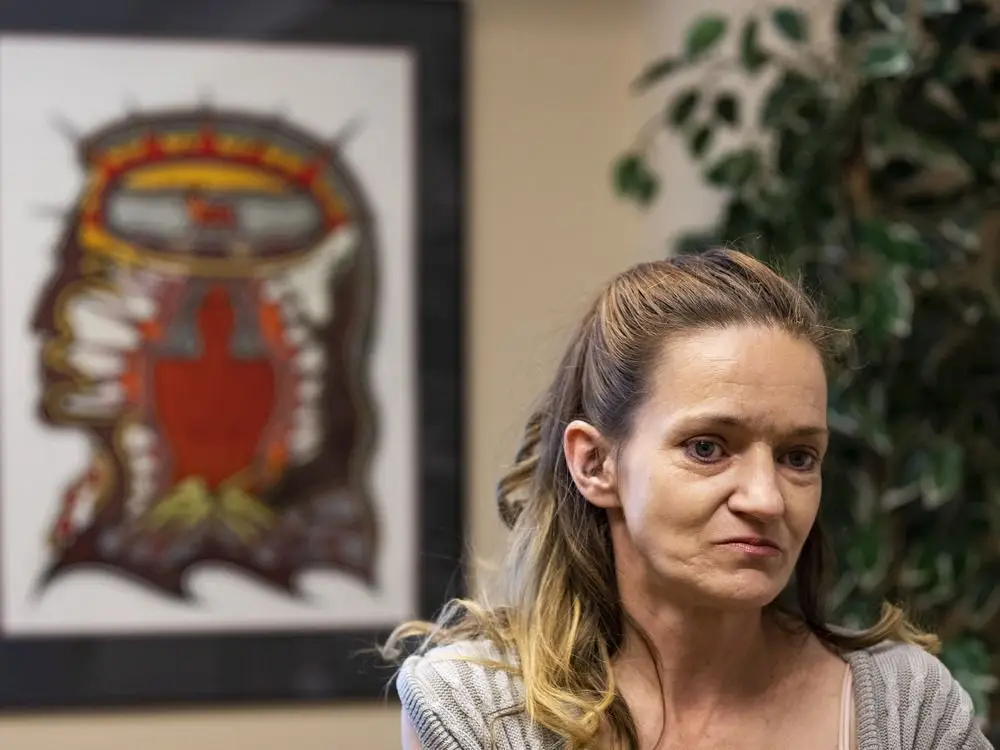
Nicolle Butler says her son Steven (“Butch”) died in April 2018 as a victim of hallway medicine and “dreadfully absent” palliative care. Photo by ERROL MCGIHON /Postmedia
Article content
When Nicolle Butler learned that a research project had been launched to allow Ottawa-area Indigenous people to share their experiences of racism in health care, she didn’t hesitate to tell the story of her son, Steven, known as “Butch.”
Advertisement 2
This advertisement has not loaded yet, but your article continues below.
Article content
Butch spent much of his 19 years in and out of hospitals after he was diagnosed with cystic fibrosis shortly after he was born. Eventually, he needed a liver transplant as a pediatric patient, but that was no longer an option when he moved to the adult system at 18.
Butch died in April 2018, the victim of hallway medicine and “dreadfully absent” palliative care.
Along the way, Butch and his family felt angered, hurt and betrayed by assumptions based on his Indigenous ancestry. One doctor said he was unlikely to prescribe a new pain medication for Butch because he was prone to addiction, said Nicolle, who was once accused of being a drug addict because she was thin and had bad teeth. She took a drug test to refute the accusation.
Advertisement 3
This advertisement has not loaded yet, but your article continues below.
Article content
Nicolle said her son, a proud Anishinaabe who loved nature and birds, was good-humoured and resilient despite his pain. There were bright spots in Butch’s treatment at CHEO, but the family was unsuccessful in its quest to speak to the medical staff at the Montfort Hospital on duty during Butch’s last, pain-filled hours.
“I’m so thankful that there were people at (CHEO) who didn’t make it hard for him to go there,” Nicolle said. “But I’m so disappointed in some of the people that knew him from birth and were there to protect him — and did the opposite.”
Nicolle’s voice was one of 208 in Share our Story, a report on anti-indigenous racism in health care released Wednesday at the Wabano Centre For Aboriginal Health.
The 208 people who offered their stories — First Nations, Inuit and Métis, plus witnesses and health care workers — reported 315 incidents of racism experienced in health care facilities across the Champlain region.
Advertisement 4
This advertisement has not loaded yet, but your article continues below.
Article content
Of those who told their stories, 69 per cent reported avoiding seeking health care when they needed it. Almost 60 per cent per cent said negative experiences had affected their physical well-being, while 73 per cent said bad experiences had affected their mental well-being.
More than three-quarters felt they would have received better health care if they were able to hide their Indigenous identity. Some said health-care workers ignored reports of pain or assumed they were seeking drugs.
“My last name is a different last name,” an Inuk woman said. “They asked me where I came from. Then I said I was Inuk … and then their behaviour started to change around me when I would ask for more meds.”
An Indigenous man said those with lighter skin experienced less discrimination in health care in Ottawa. “But, if you are brown, you are (screwed) from the minute you walk in the door — you are a lesser priority from the minute you walk in the door.”
Advertisement 5
This advertisement has not loaded yet, but your article continues below.
Article content
Indigenous people avoid health care to avoid racism and discrimination, said Allison Fisher, the health centre’s executive director.
“This means we are failing to seek care because we have no other option. We are sicker and in more dire need of care,” she said. “The answer isn’t about reducing the use of health care when care is needed. This is not a remedy for systemic failure.”
Five stereotypes appeared repeatedly in the stories: that indigenous people were racially inferior; that they were diseased, addicted and mentally unwell; that they were a burden; that they were angry and aggressive; and that they are bad parents.
One Inuk man who had gone to the hospital when his partner gave birth reported that a nurse said she would watch the newborn overnight while he and the baby’s mother rested. When they awoke, they were told the baby had vomited overnight and they hadn’t done anything about it. Workers tried to get them to sign their baby over to the Children’s Aid Society.
Advertisement 6
This advertisement has not loaded yet, but your article continues below.
Article content
“They said we were careless and not ready for our baby,” he said.
Caroline Lidstone-Jones, CEO of the Indigenous Primary Health Care Council, said most reports looked through an academic lens, focusing on statistics, but the stories and themes in this report were powerful pieces of evidence.
“These are the people who have lived through that experience, or are living through that experience. I think it’s challenging our system, even our traditional ways of how we look at research,” she said.
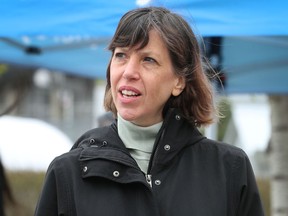
Dr. Vera Etches, Medical Officer of Health for Ottawa Public Health.Photo by Tony Caldwell /Postmedia
The Wabano Centre and the Ottawa Aboriginal Coalition are calling on political parties to end racism in health care. The report contains 27 recommendations, including hiring and training Indigenous health-care navigators and prioritizing the “hot spots” identified in the report, which include hospital emergency departments and maternity wards, community health clinics and family health teams and paramedic services.
Advertisement 7
This advertisement has not loaded yet, but your article continues below.
Article content
Health care is on the early part of the pathway to change, and learning and listening is an important part of that, said Dr. Vera Etches, Ottawa’s medical officer of health.
“We’re making sure every team at Ottawa Public Health has a basic understanding of what we’re talking about when we say that racism exists systemically, and it’s in all our systems in our organization,” she said. “We want people to understand that the real examples that happen in these stories is evidence.”
In a statement, the Montfort Hospital said it welcomed the report.
“We recognize that people who have lived through negative experiences with the health care system are reluctant to speak up, and that must change,” said Philippe Marleau, vice-president of quality and patient support services.
“We take all concerns seriously and it is with our patient’s feedback that we can better understand how they live through their journey of care and how we can better accompany them.”
Share this article in your social network
Advertisement 1
This advertisement has not loaded yet, but your article continues below.
Sign up to receive daily headline news from Ottawa Citizen, a division of Postmedia Network Inc.
By clicking on the sign up button you consent to receive the above newsletter from Postmedia Network Inc. You may unsubscribe any time by clicking on the unsubscribe link at the bottom of our emails. Postmedia Network Inc. | 365 Bloor Street East, Toronto, Ontario, M4W 3L4 | 416-383-2300
Thanks for signing up!
A welcome email is on its way. If you don’t see it, please check your junk folder.
The next issue of Ottawa Citizen Headline News will soon be in your inbox.
We encountered an issue signing you up. Please try again
Download and distribute powerful vaccination QI resources for your community.
Health Champions
Sign up now to support health equity and sustainable health outcomes in your community.
Cancer Early Detection
MCED tests use a simple blood draw to screen for many kinds of cancer at once.
PR
FYHN is a bridge connecting health information providers to BIPOC communities in a trusted environment.
Medicare
Discover an honest look at our Medicare system.
Alliance for Representative Clinical Trials
ARC was launched to create a network of community clinicians to diversify and bring clinical trials to communities of color and other communities that have been underrepresented.
Reducing Patient Risk
The single most important purpose of our healthcare system is to reduce patient risk for an acute event.