












Stanford School of Medicine plans to expand healthcare access for underserved populations

[ad_1]

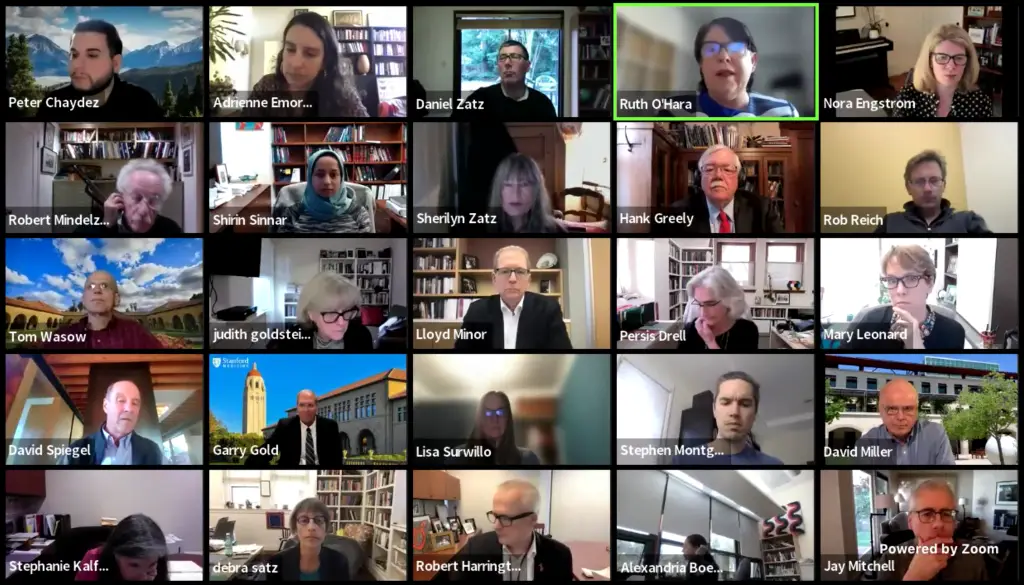
The Stanford School of Medicine plans to expand clinical research and healthcare access for historically marginalized and underserved populations, said faculty leaders during Thursday’s Faculty Senate meeting. 

While racial minorities represent 40% of the world’s population, 75% of participants in FDA approved clinical trials identified as white in 2020, according to Dean of the School of Medicine Lloyd Minor. To address this discrepancy, Minor said that Stanford Medicine aims to increase patient access to clinical trials such that Stanford can serve a more diverse set of communities. 

“Clinical trial expansion is the best opportunity for patients to receive state of the art care,” Minor said. 

The recent addition of two new hospital facilities in Palo Alto — Stanford Health Care Hospital in 2019 and Lucile Packard Children’s Hospital in 2018 — has allowed for around 30% growth in the number of both in-patient beds and emergency department bays, according to Minor. Beyond just serving Stanford and Palo Alto residents, the medical school’s growth strategy aims to encompass care for the greater Bay Area community with the addition of 82 outpatient locations through Stanford Health Care and 65 outpatient locations through Stanford Children’s Health, Minor added. 

The outpatient centers off the peninsula provide greater access to healthcare for communities in cities such as Oakland and San Jose — many of which are underserved, Minor said. He added that clinics like the South Bay Cancer Center and East Bay Oncology, both staffed by Stanford faculty, expand the network of clinical trials for rare diseases and cancer to a more demographically diverse population. 

This Bay-Area-wide system of care makes Stanford’s high-quality medical attention and innovative research more accessible, according to Minor, thus creating greater equity in access to clinical trials in patients’ home communities and decreasing the need to commute to on-campus facilities. Chair of the Department of Medicine Bob Harrington echoed the value of increased accessibility.

“The ability to reach our patients where they truly live … makes it easier for our patients to see us and for them to potentially participate in research,” Harrington said. “These ambulatory sites are a critical part of our future.”

Stanford’s Health Equity Committee, which aims to identify ways to better serve a diverse set of patients, is implementing a new health equity initiative entitled Racial Equity to Advance a Community of Health (REACH), according to Minor. With a recent $25 million gift, Stanford will fund over 700 students from historically underserved communities to pursue projects in the area of health equity over the next five years, Minor said. 

President and CEO of Stanford Children’s Health Paul King said that initiatives such as the Teen Van Program, which provides essential care and support to youth in underserved communities and high schools, also work to bridge the gap in healthcare disparities. 

For Minor, the initiatives are the beginning of a larger mission.

“This is just the start to the type of impact we want to have,” Minor said. “Disparities of health and healthcare that have always existed in our society have become clearly evident during COVID-19 … we should have an impact in this important area.”

Within the medical school, Minor said that 22.4% of the student body identifies as an underrepresented minority — a percentage that Minor expects to rise even further because all financial aid has become need-based and full grants are supported without medical school loans.

During COVID-19 updates portion of the meeting, Minor said that over one million PCR tests were provided through Stanford Health Care. 

Alongside testing milestones, Stanford Medicine saw the growing importance of telehealth as a way to reach a greater number of patients from a wide variety of backgrounds. Stanford telehealth services soared from 2% of out-patient visits to nearly 70% during the pandemic, according to President and CEO of Stanford Health Care David Entwistle. 

Virtual services, alongside the aforementioned off-site outpatient clinics, are examples of ways Stanford Medicine is spreading its resources, according to King.

“There are many things we can do that can be done safely and at very high quality in ambulatory settings, and even through the use of telehealth,” King said. 

In light of the recent death of Katie Meyer, as well as graduate students Jacob Meisel, Rose Wong and Dylan Simmons within the last year, Senators took time during the meeting to address the need for community support. 

“We are focusing on supporting the community during difficult times in the tragedy of Katie Meyer’s death,” said Stanford President Marc Tessier-Lavigne. 

“We’re doing everything we can, but it is something that requires everybody’s help,” added professor of radiology Garry Gold. “If anyone hears of a student who is talking in a way that makes them think they might be at risk, the best thing to do is seek help immediately.”

[ad_2]

Source link

Trending Topics

Features

Download and distribute powerful vaccination QI resources for your community.

Sign up now to support health equity and sustainable health outcomes in your community.

MCED tests use a simple blood draw to screen for many kinds of cancer at once.

FYHN is a bridge connecting health information providers to BIPOC communities in a trusted environment.

Discover an honest look at our Medicare system.

ARC was launched to create a network of community clinicians to diversify and bring clinical trials to communities of color and other communities that have been underrepresented.

The single most important purpose of our healthcare system is to reduce patient risk for an acute event.

Related Posts
The Communities Most Burdened by Disease Should Be the First to Benefit from Artificial Intelligence
Black and Asian Cancer Patients Wait Longer for Pain Relief in New Study
What Is Cyclosporiasis? The Foodborne Illness Showing Up in the News
Scroll to Top
Featured Articles
The Communities Most Burdened by Disease Should Be the First to Benefit from Artificial Intelligence
The Communities Most Burdened by Disease Should Be the First to Benefit from ...
Cancer Pain Care Access Gap Hits Black, Asian Patients
Black and Asian Cancer Patients Wait Longer for Pain Relief in New Study
What Is Cyclosporiasis Symptoms, Food Safety, and Reasons
What Is Cyclosporiasis? The Foodborne Illness Showing Up in the News
Why Minority Mental Health Awareness Month Matters More Than Ever
From Childhood Cancer to Alzheimer’s and ALS Celebrity Health Stories Spark National Conversation on Disease, Caregiving, and Equity
From Childhood Cancer to Alzheimer’s and ALS Celebrity Health Stories Spark N...
Learn How NMQF Is Transforming Early Disease Detection in Flint
Categories
AI
ATTR-CM
BIPOC News
Cancer
Clinical Trials
Covid19
Diseases of the Body
Environment
Health Data
Health Equity Events
Health Policy
Health Tips
Subscribe to our newsletter to receive our latest news​
All Stories
The Communities Most Burdened by Disease Should Be the First to Benefit from Artificial Intelligence
The Communities Most Burdened by Disease Should Be the First to Benefit from ...
Cancer Pain Care Access Gap Hits Black, Asian Patients
Black and Asian Cancer Patients Wait Longer for Pain Relief in New Study
What Is Cyclosporiasis Symptoms, Food Safety, and Reasons
What Is Cyclosporiasis? The Foodborne Illness Showing Up in the News
BIPOC News
The Communities Most Burdened by Disease Should Be the First to Benefit from Artificial Intelligence
The Communities Most Burdened by Disease Should Be the First to Benefit from ...
Why Minority Mental Health Awareness Month Matters More Than Ever
From Childhood Cancer to Alzheimer’s and ALS Celebrity Health Stories Spark National Conversation on Disease, Caregiving, and Equity
From Childhood Cancer to Alzheimer’s and ALS Celebrity Health Stories Spark N...
Environment
UV Safety Awareness Month Raises Urgency on Skin Cancer Prevention and Sun Protection Equity
UV Safety Awareness Month Raises Urgency on Skin Cancer Prevention and Sun Pr...
Extreme Heat Safety Tips 5 Ways to Protect Your Health This Summer fyh.news
5 Heat Safety Tips That Could Protect Your Health This Summer
Lupus Awareness Event in Baltimore Aims to Support Research and Shine a Light on Health Disparities
Lupus Awareness Event in Baltimore Aims to Support Research and Shine a Light...
Work Force
A multigenerational Black and Hispanic family sitting together in a park, showing how Social Security helps support older adults, people with disabilities, and families across generations.
Millions of Older Americans Could Face Smaller Social Security Checks by 2032...
dreamstime_s_243253251
The Caregiver Journey: The Hidden Backbone of American Healthcare
Families gather at a Bronx community festival with live music, kids’ activities, and health booths sharing SOMOS social care resources and free screenings.
Celebrating Hispanic heritage while learning about health care

[xyz-ips snippet=”Output-Source-Name”]

Clinical Trials
Clinical Trial Diversity Remains a Critical Challenge in Alzheimer’s Research
Healthcare professional collecting a blood sample from a diverse patient as part of multicancer early detection screening.
Bridging the Gap: How Multicancer Early Detection Can Advance Health Equity i...
dreamstime_s_174488289
PCOS to PMOS: Why the 2026 Name Change Matters for Women’s Health

[xyz-ips snippet=”Output-Source-Name”]

Vaccines and Outbreaks
A parent checking a child's temperature during summer, illustrating the changing RSV patterns and year-round respiratory virus risks.
Can You Get RSV During the Summer?
Michelle Lam, MBA, of NYC Health + Hospitals/Elmhurst & Amy Harris of NYC Health + Hospitals/Elmhurst
Healthcare Leaders Spotlight Vaccine Equity and Adult Immunization Strategies...
Measles Outbreaks Surge: Essential Facts and Prevention Strategies
Other Categories
AI
Read the latest AI News stories trending around the world
ATTR-CM
Cancer
Read the latest Cancer stories trending around the world
Covid19
Diseases of the Body
Read about the latest Diseases of the Body trending around the world
Friday Webinars
Every Friday, we bring you insightful webinars covering critical topics in healthcare, data equity, and policy reform.
Health Data
Read the latest Health Data stories trending around the world
Health Equity Events
Read the best Health Equity Events around the country.
Health Policy
Read the latest Health Policy stories trending around the world
Health Tips
Heart Health
Read the latest on Heart Health News, Stories and Tips.
kidney Health
Read more trending News about Kidney Health, Stories and Tips.



