













- By Adjoa Kyerematen
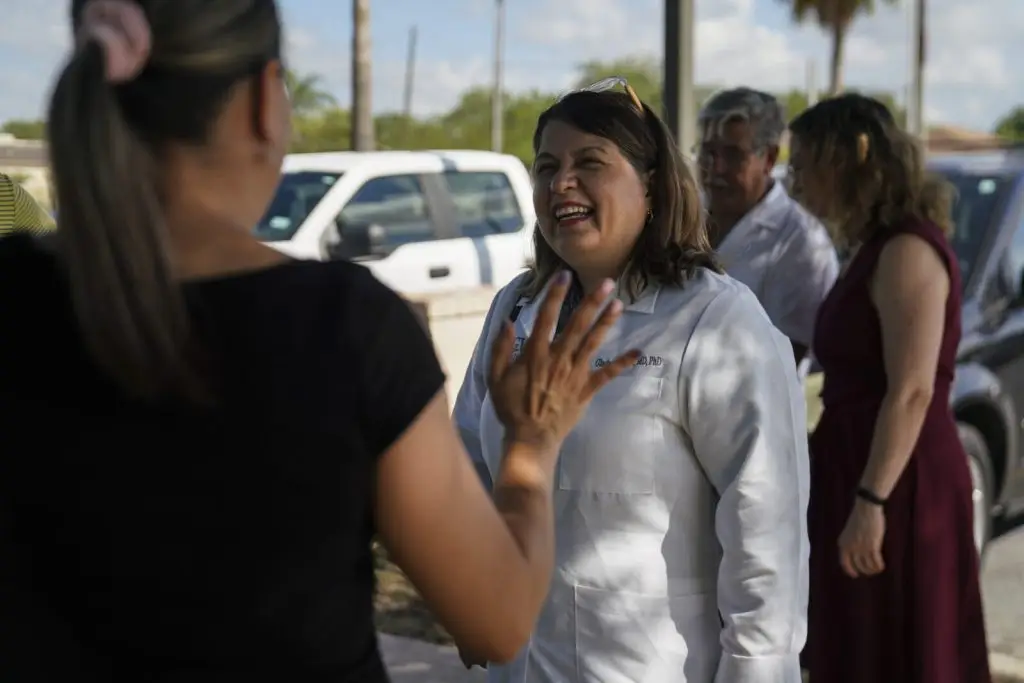
BROWNSVILLE, Texas — Gladys Maestre is on a scouting mission. The Alzheimer’s disease researcher is driving through Southmost, a Mexican American neighborhood just north of looming sections of the border wall and a checkpoint that leads to Mexico. She passes barking dogs and “no trespassing” signs, but doesn’t see a single person outside, despite the comfortable stuffed recliners, refrigerators, and shade canopies that furnish many yards.
“A house outside the house,” Maestre laughs, delighting in seeing these elaborate living spaces while acknowledging that the clear wariness of outsiders here demonstrates the need for her unorthodox approach to engaging the people she studies. “That’s where we could put a community center,” she says, pointing to a vacant house. “For yoga, or art classes.”
For decades, and really for as long as the field has existed, Alzheimer’s researchers have recruited patients for clinical trials in largely the same way: pulling them from specialty clinics, often at elite medical institutions that house the bulk of the nation’s federally funded Alzheimer’s Disease Research Centers. That’s led to patients in these trials, which sometimes offer new therapies available through no other channels, being overwhelmingly privileged, well-insured, and white.
Trending Topics

Features
- Drive Toolkit
Download and distribute powerful vaccination QI resources for your community.
- Health Champions
Sign up now to support health equity and sustainable health outcomes in your community.
- Cancer Early Detection
MCED tests use a simple blood draw to screen for many kinds of cancer at once.
- PR
FYHN is a bridge connecting health information providers to BIPOC communities in a trusted environment.
- Medicare
Discover an honest look at our Medicare system.
- Alliance for Representative Clinical Trials
ARC was launched to create a network of community clinicians to diversify and bring clinical trials to communities of color and other communities that have been underrepresented.
- Reducing Patient Risk
The single most important purpose of our healthcare system is to reduce patient risk for an acute event.
- Jessica Wilson
- Subash Kafle


